
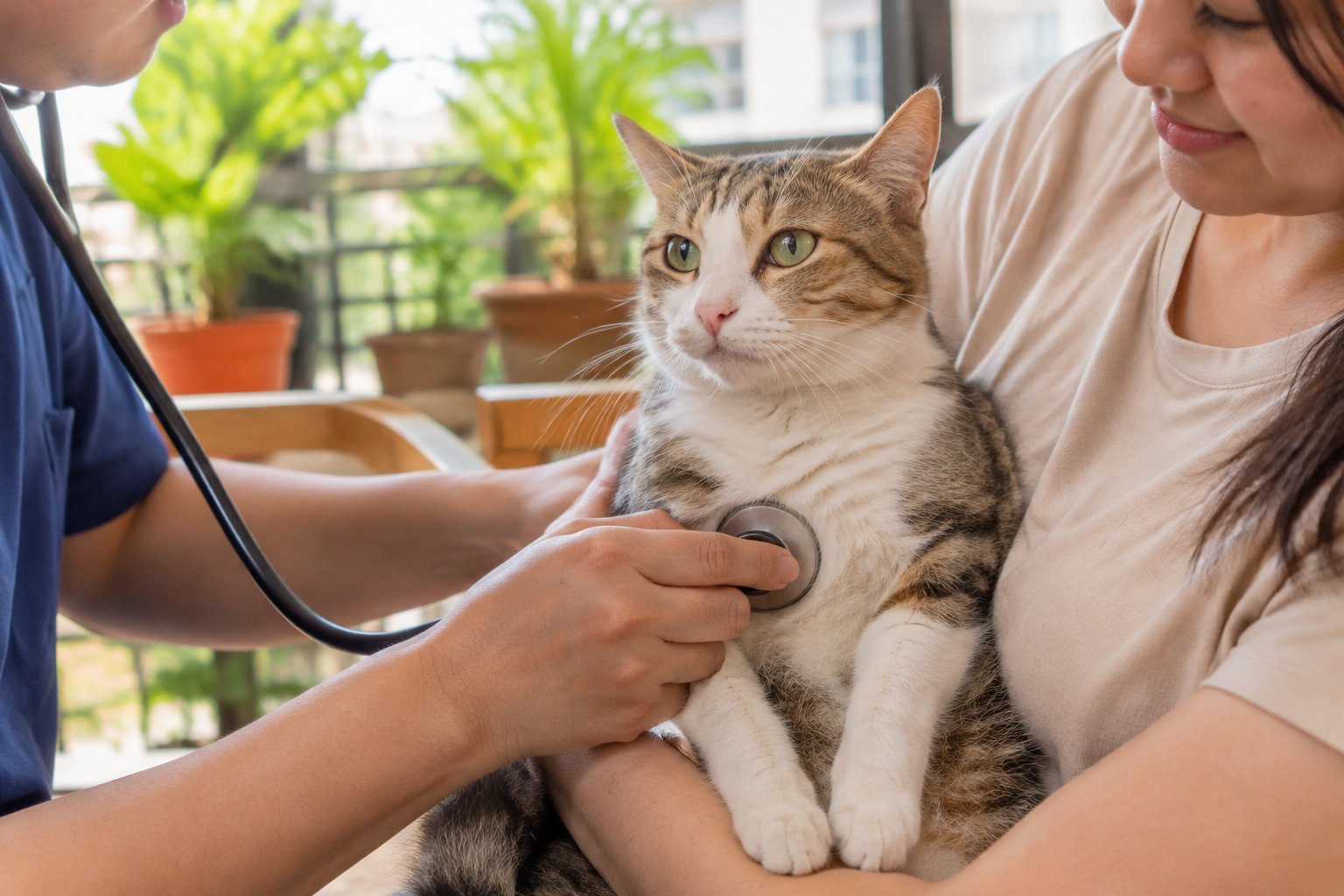
Start here: what to do in the first five minutes
A cat wound can look dramatic and still be minor, or look small and be serious. The first step is not cleaning — it is a quick safety check. If your cat is bleeding heavily, struggling to breathe, collapsed, or has a wound on the face, eye, chest or belly, stop reading and call a vet. For everything else, work through the steps below calmly and in order.
Keep your own safety in mind. Pain makes even a gentle cat bite and scratch. Wrap your cat in a thick towel with only the wounded area exposed, or ask someone to hold the towel while you work. Work on a non-slip surface such as a bathroom floor or a table covered with a towel. Have a torch or your phone light ready so you can actually see the wound.
Step 1: Assess the wound before you touch it
Look first, touch second. Ask yourself these questions:
- Is it bleeding? Slow oozing is common; steady dripping or spurting is an emergency.
- How deep is it? A wound that gapes open, shows fat or muscle, or looks like a hole needs a vet.
- What caused it? A clean cut from a sharp edge is different from a bite, a tear from a fence, or a burn.
- Where is it? Face, ears, paws, tail base and abdomen are higher-risk areas.
- Is your cat well in itself? Lethargy, hiding, refusing food or breathing fast changes the plan.
Wounds that need a vet now
| Wound type | Why it is urgent |
|---|---|
| Any bite wound, especially from another cat | Bites seal quickly and trap bacteria deep under the skin; abscesses are common |
| Puncture wounds from sticks, wire or teeth | Small opening, deep contamination |
| Wounds that will not stop bleeding after 5–10 minutes of pressure | Possible serious vessel damage |
| Deep or gaping cuts | May need stitches or surgical cleaning |
| Wounds on the face, eye, eyelid, ear canal or abdomen | Risk to eyes, breathing or internal organs |
| Burns, electrical injuries or chemical splashes | Tissue damage continues after the event |
| Wounds with embedded objects | Removing them can cause more bleeding |
| Any wound in a cat that is unwell, very young, elderly or pregnant | Lower reserve and higher risk |
If none of these apply, you can begin gentle home care.
Step 2: Control bleeding safely
For minor bleeding, apply firm, direct pressure with a clean gauze pad or a clean cloth for five to ten minutes. Do not lift the pad every minute to check — that disturbs the clot. If blood soaks through, add another pad on top rather than removing the first.
Do not use a tourniquet on a cat's limb unless a vet has told you to. Do not pour powder, flour or coffee grounds into the wound. Once bleeding has slowed to a slight ooze, move on to cleaning.
If bleeding restarts or does not slow after ten minutes of steady pressure, cover the wound with a clean pad and go to a vet.
Step 3: Clean the wound gently
Cleaning is the most important home step. The aim is to remove dirt and dilute bacteria without damaging tissue.
- Flush with saline or clean lukewarm water. Use a syringe without a needle, a squeeze bottle or a clean jug. Let the fluid run across the wound and off the edge, not straight into a deep hole.
- Avoid harsh products. Hydrogen peroxide, alcohol, iodine tincture and strong antiseptic soaps damage healing cells and hurt. Do not use human wound creams unless your vet has specifically approved one for cats.
- Remove visible debris only if it lifts easily. A grass seed or grit sitting on the surface can be gently rinsed away. Do not dig into the wound.
- Pat dry with clean gauze. Do not rub.
- Clip hair only if you can do it safely. Matted hair around a wound traps moisture. Use blunt-tipped scissors with a guard, or ask a vet nurse. Never cut close to skin folds.
If your vet has supplied a cat-safe antiseptic such as dilute chlorhexidine or povidone-iodine at a specified dilution, use it exactly as directed. Never make up your own dilution.
Step 4: Decide whether to cover the wound
Most small surface wounds heal best left open in a clean indoor space. Covering is mainly for wounds on the paws, wounds that ooze, or wounds a vet has dressed.
If you must cover a wound temporarily:
- Use a non-stick pad over the wound and a light self-adhesive wrap over that.
- Check every few hours that the toes are not swollen, cold or pale, and that the bandage has not slipped.
- Keep the bandage dry. In Malaysia's humid weather, a damp bandage becomes a bacterial breeding ground within hours.
- Remove and replace a soiled bandage promptly, and never leave a tight bandage on overnight without vet advice.
A soft cone or a recovery suit is often more useful than a bandage, because the biggest threat to healing is your cat licking the wound.
Step 5: Stop the licking
Cats lick wounds instinctively, but licking macerates the skin, adds bacteria and can reopen a healing edge. Options include:
- A soft fabric cone or a clear plastic cone sized correctly.
- A full-body recovery suit, which many cats tolerate better than a cone.
- Keeping the wound covered with a light dressing when you cannot supervise.
- Extra grooming, gentle play and food puzzles to redirect attention.
Never use human bitter sprays or chilli-based deterrents near a wound. If your cat cannot be stopped from licking, ask your vet about a longer-lasting barrier.

Step 6: Monitor daily with a simple checklist
Check the wound at least once a day, ideally at the same time. Photograph it with your phone so you can compare day to day. Use this checklist:
| Check | Good sign | Warning sign |
|---|---|---|
| Redness | Fading at the edges | Spreading outward |
| Swelling | Settling | Getting larger or firmer |
| Discharge | None or a little clear fluid | Pus, blood, or brown/green fluid |
| Smell | None | Unpleasant odour |
| Pain | Tolerates gentle touch | Flinches, cries, guards the area |
| Appetite and energy | Normal | Reduced eating, hiding, lethargy |
| Wound edges | Meeting or scabbing | Gaping wider or turning black |
A wound that is not clearly better within 48 hours deserves a vet call. A wound that is worse at any point deserves a vet visit the same day.
Step 7: Support healing at home
Healing needs more than a clean wound. Keep your cat indoors, restrict jumping and rough play, and provide a quiet, warm resting place. Fresh water and normal meals matter; if your cat stops eating, that is a health signal in itself.
Do not bathe your cat while a wound is healing. Keep the wound away from litter dust where possible, and change litter more often. Wash your hands before and after handling the wound, and keep other pets away from the area.

Common mistakes to avoid
- Using human antiseptics or creams without vet approval. Some are toxic to cats, and many slow healing.
- Letting the cat lick "because saliva heals". It does not; it contaminates and re-injures.
- Bandaging too tightly or leaving a wet bandage on.
- Ignoring bite wounds because the holes look tiny. Bite wounds commonly form abscesses days later.
- Delaying a vet visit to save time or money. Early treatment is usually simpler and cheaper than treating an abscess or infection later.
- Pulling out an embedded object yourself.
When to see a vet
Contact a veterinarian promptly if any of the following apply:
- Bleeding does not stop after ten minutes of firm pressure.
- The wound is deep, gaping, puncture-type, a bite, a burn or a chemical injury.
- The wound is on the face, eye, ear, paw pad, tail base or abdomen.
- There is pus, spreading redness, a bad smell, or the wound is getting larger.
- Your cat is lethargic, hiding, off food, vomiting, breathing fast or has a fever.
- Your cat is very young, elderly, pregnant or has a long-term illness.
- The wound is not improving within 48 hours, or your cat will not stop licking it.
- You are unsure. A phone call to a clinic costs little and can prevent a bigger problem.
At the clinic, expect the vet to assess depth and contamination, possibly clip and clean the wound, and decide whether stitches, a drain, antibiotics or pain relief are needed. Bring notes on when the wound happened and what you have already done.
A realistic Malaysian context
In a Kuala Lumpur apartment, a cat may cut a paw on a broken tile edge or a dropped glass, or burn a paw near a kitchen hob. The wound is easy to see, but the cat may hide under the bed, so check paws and flanks after any accident. In a Johor terrace house, cats may slip out through a window and return with a bite wound from a neighbourhood cat; those small holes often abscess a few days later. During Penang's rainy season, damp fur and humid air make bandages and skin folds slower to dry, so keep dressings minimal and check them more often.
Prevention beats treatment
- Store sharp tools, glass and needles out of reach.
- Check fences, wire and screen edges for sharp points.
- Keep cats indoors or in secure enclosures, especially at night.
- Supervise introductions between cats to reduce fight wounds.
- Keep claws trimmed and check paws weekly.
- Keep a small pet first-aid kit: saline, gauze, self-adhesive wrap, a soft cone, a towel and a torch.
Vet disclaimer
This article is general information for Malaysian cat owners and is not a substitute for veterinary examination. Wound severity can be impossible to judge from the surface, and cat bites and puncture wounds carry a high risk of hidden infection. Always consult a licensed veterinarian for diagnosis and treatment, and follow their instructions over any general advice here.
Related reading
- Cat Health Guide Malaysia: Symptom Check, Red-Flag Triage & When to See a Vet
- Cat Heatstroke Treatment in Malaysia: First Aid, Vet Care & Prevention
- Cat Licking Wounds: Why It Happens and How to Treat It in Malaysia
- Cat Poisoning Treatment in Malaysia: What to Do, What to Expect, and How to Prevent It
- How to Prevent Paracetamol Poisoning Around Cats: A Malaysian Safety Guide
- How to Treat Heatstroke in Cats at Home: First Aid, Cooling Steps and When to Get Help
- How to Treat Limping in Cats at Home: Safe Steps for Malaysian Owners
- Licking Wounds in Cats: Causes and Care (Malaysian Vet Guide)
- Lily Poisoning and Cats in Malaysia: Why Every Petal Is an Emergency
- Limping in Cats in Malaysia: Causes, Home Checks, and When to See a Vet
- Poisoning in Cats: Causes, Symptoms and Care (Malaysia Guide)
- Poisoning in Cats in Malaysia: Common Toxins, Signs and What to Do

