
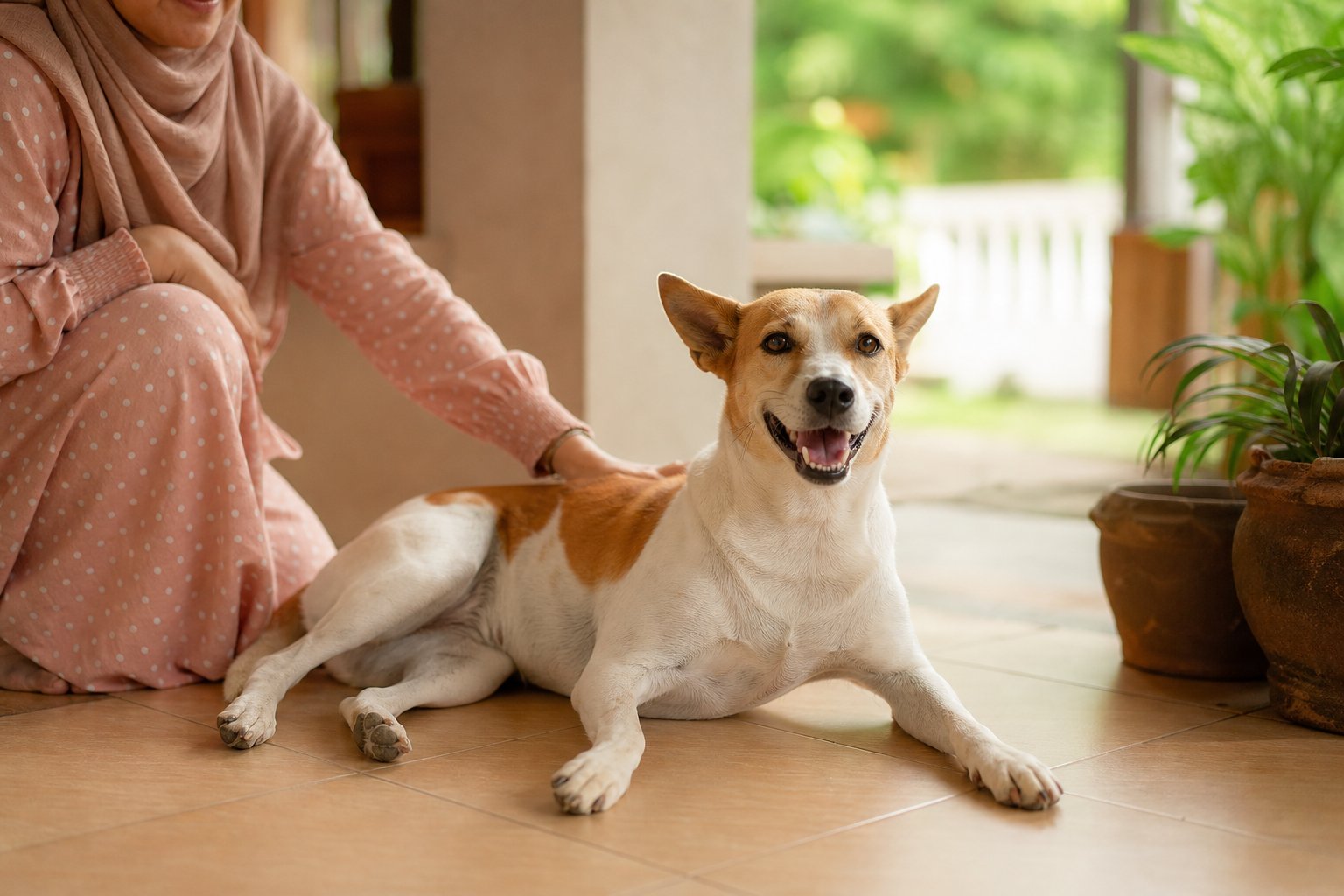
Chapter 1: Poisoning risks at home and what to do first
Many everyday items in a Malaysian home can poison a cat or dog if chewed or swallowed. Common offenders include human medicines such as paracetamol and ibuprofen, chocolate, grapes and raisins, onions and garlic, sugar-free sweets containing xylitol, and certain houseplants. Pesticide sprays, rat bait, ant powder, and leftover cooking oil or spoiled food also pose real risks. Even something as ordinary as a small piece of fried chicken bone or a scrap of grilled fish can cause serious harm.
This chapter is about reducing those risks before they become an emergency, and knowing exactly what to do in the first few minutes if something goes wrong. The aim is not to turn your home into a sterile zone, but to make the dangerous things harder to reach and to give you a clear plan when you are worried.
Mapping the risks in a Malaysian home
Walk through your home the way your pet does — nose to the floor, at paw height. In the kitchen, the biggest hazards are often the most ordinary: human medicines left on the counter, chocolate or raisins within reach of a counter-surfing cat, onions and garlic in low cupboards, and sugar-free sweets in an open handbag. Cooking oil that has been used and set aside, and spoiled food in a bin that does not close properly, are just as real a risk as any labelled poison.
In the bathroom and utility area, keep paracetamol, ibuprofen and other human medicines in a closed cupboard rather than on a shelf or in an open basket. Pesticide sprays, rat bait and ant powder should be stored where pets cannot reach them, and used according to the label — never leave bait stations or powder where a curious nose can find them.
Outdoors and on balconies, certain houseplants and garden plants can harm pets if chewed. In a tropical climate, plants grow quickly and pots are often moved around, so check what is within reach on balconies, in shared corridors, and near open windows. Cats in particular may reach plants on ledges or neighbouring balconies.
Warning signs to watch for
Recognising the warning signs early gives you a head start. Watch for vomiting, drooling, pawing at the mouth, tremors, weakness, unsteady walking, collapse, seizures, pale gums, or a sudden change in behaviour. Some poisons act fast; others cause damage that only shows up hours later, so never wait for obvious symptoms if you suspect your pet has eaten something dangerous.
Keep in mind that signs can be subtle at first — a pet that seems "a bit quiet" or is hiding more than usual may be showing early distress. In a hot, humid climate it is easy to dismiss drooling or lethargy as heat, so if you know or suspect your pet has eaten something risky, treat the behaviour change as a warning rather than a coincidence.
What to do first
Your first response matters. Do not force your pet to vomit unless a veterinary professional specifically instructs you to do so, because some substances cause more damage coming back up. If you can, safely collect a sample of what was eaten, along with the packaging, and take it with you. Call your vet immediately, or contact an emergency veterinary clinic if your usual practice is closed, and follow their instructions precisely while you travel.
While you wait or travel, keep your pet calm and confined — a carrier or a quiet room is safer than letting them roam, especially if they are unsteady or trembling. Do not offer food, water or any home remedy unless your vet tells you to. If other pets are in the home, move them away from the source of the poison so they cannot eat it too.
Checklist: poison-proofing your home
- Practical check: note one change you can make this week — secure bin lids, store human medicines in locked cupboards, or move toxic plants out of reach.
- Store all human medicines, including everyday painkillers, in a closed cupboard out of reach.
- Keep chocolate, grapes, raisins, onions, garlic and xylitol-containing sweets away from counters and open bags.
- Secure bin lids and dispose of spoiled food and used cooking oil promptly.
- Store pesticide sprays, rat bait and ant powder safely, and follow the label.
- Check balconies, corridors and open windows for reachable plants and food scraps.
- Keep your vet's number and the nearest emergency clinic's details somewhere easy to find.
- Local context: adapt the advice to your home, climate and routine in Malaysia — open windows and balconies, shared corridors, and hawker food scraps can all bring new risks into your pet's reach.
Common mistakes to avoid
- Inducing vomiting without veterinary instruction — this can cause more harm than good.
- Waiting for symptoms before calling for help when you already suspect a poisoning.
- Assuming "a little bit" is harmless; small amounts of some substances are dangerous.
- Leaving packaging behind — it helps your vet identify the poison and plan treatment.
- Forgetting that shared corridors, open windows and balconies bring outside risks indoors.
When to ask a vet
Call your vet or an emergency clinic straight away if you know or suspect your pet has eaten any of the items in this chapter, even if they seem well. Seek urgent help if you see vomiting, drooling, tremors, weakness, collapse, seizures, pale gums or a sudden change in behaviour. When in doubt, call — a quick conversation is far safer than waiting to see what happens.