
Why cat vet bills feel unpredictable
If you've ever left a vet clinic wondering why the bill was higher than expected, you're not alone. Cat owners often ask for a simple answer: how much does a vet visit cost? The honest answer is that there is no single price. A vet visit is not a product on a shelf; it's a professional service tailored to your cat's health. The cost reflects the time, expertise, equipment, and medicines involved.
In Malaysia, veterinary fees are set by individual clinics, not by a national tariff. That means two clinics in the same city can charge differently for what sounds like the same service. Understanding what goes into a vet bill helps you ask better questions, compare fairly, and budget without compromising your cat's care.
This guide breaks down the typical components of a vet visit cost for cat owners in Malaysia. It explains why prices vary, what you can do to manage costs, and when a visit is essential. It does not quote specific prices because those change over time and by location. Instead, it gives you a framework to make informed decisions.
The building blocks of a vet visit cost
Every vet bill is made up of several parts. Not all will apply to every visit, but knowing them helps you read an estimate.
Consultation fee
The consultation is the vet's professional time: taking a history, examining your cat, forming a diagnosis, and discussing a plan. This fee may be higher for specialist consultations, after-hours visits, or house calls.
Diagnostic tests
Tests such as blood work, urine analysis, faecal examination, X-rays, ultrasound, or specific tests for viruses (like feline leukaemia or immunodeficiency virus) add to the cost. Some clinics have in-house laboratories; others send samples to external labs, which can affect price and turnaround time.
Medications and supplements
Prescription medicines, parasite control, and therapeutic diets are charged separately. The type, brand, and duration of treatment influence the cost.
Procedures
Wound care, dental scaling, surgery, hospitalisation, and anaesthesia are priced according to complexity, time, and the equipment used. Emergency procedures usually cost more.
Other charges
Some clinics charge for disposal of sharps, bandages, or administrative fees. These are usually small but should appear on an itemised bill.
| Component | What it covers | Why it varies |
|---|---|---|
| Consultation | Vet's time and expertise | Clinic location, vet seniority, time of day |
| Diagnostics | Blood tests, imaging, lab work | In-house vs external lab, equipment |
| Medications | Drugs, parasite control, diets | Brand, duration, whether generic is available |
| Procedures | Surgery, dental, hospitalisation | Complexity, anaesthesia, length of stay |
| Other | Disposal, admin, bandages | Clinic policy |
Why prices differ between clinics and regions
Malaysia has a mix of small neighbourhood clinics, larger hospitals, and specialist centres. Each has different overheads. A clinic in a busy urban area may pay higher rent and employ more staff, which is reflected in fees. A rural clinic may have lower overheads but fewer diagnostic tools, meaning you might be referred elsewhere for tests.
Equipment matters too. A clinic with digital X-ray, ultrasound, and an in-house blood analyser has invested in technology that improves diagnosis but costs money to maintain. You are paying for access to that equipment when needed.
Vet experience and specialisation also play a role. A general practitioner and a board-certified specialist charge differently, just as in human medicine. For complex cases, the extra cost may be justified by better outcomes.
After-hours and emergency care carries a premium because staff are called in outside normal hours. If your cat needs urgent care at night, expect a higher consultation fee.
Finally, location within Malaysia can influence prices. Urban centres generally have higher costs than smaller towns, but this is a general trend, not a rule. Always ask your local vet for their fee schedule.
What a typical visit might include (without prices)
Let's walk through a common scenario: you notice your cat is eating less and seems lethargic. You book a appointment.
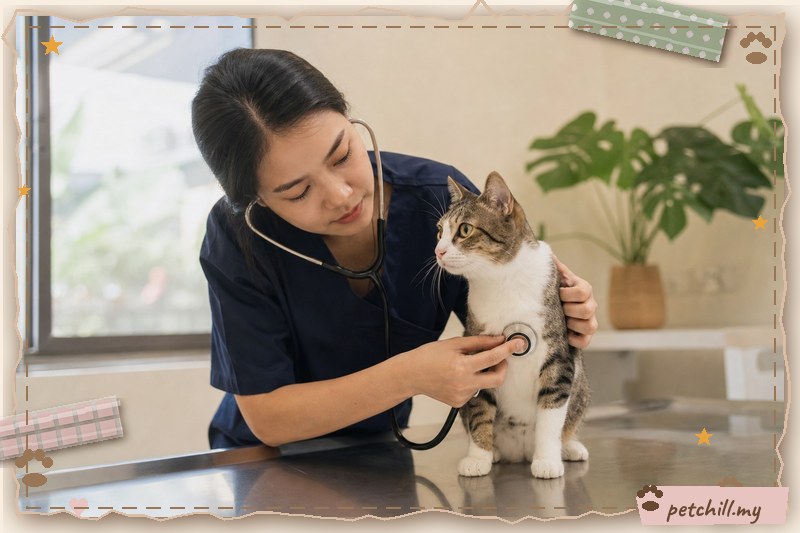
At the clinic, the vet will ask about your cat's history, diet, and behaviour. They will weigh your cat, take its temperature, listen to its heart and lungs, and palpate its abdomen. This is the consultation.
Depending on findings, the vet may recommend blood tests to check organ function, a urine test, or imaging. They may prescribe medication or a special diet. They will explain the plan and give you an estimate.
A simple visit for a minor issue might involve only a consultation and a course of medication. A more complex case could include multiple tests and a follow-up visit. The key is that the vet should discuss costs with you before proceeding, especially for non-urgent tests.
How to budget for cat vet care
Budgeting for vet care is easier when you plan ahead. Here are practical steps.
Create a pet emergency fund. Set aside a small amount monthly. Even modest savings can cover unexpected bills.
Consider pet insurance. Some insurers in Malaysia offer pet policies. Read the fine print: what's covered, what's excluded, and whether there are waiting periods. Insurance is not for everyone, but it can soften the blow of a large bill.
Ask for an itemised estimate. Before treatment, request a written estimate. This helps you compare and decide. Reputable clinics will provide one for planned procedures.
Discuss priorities. If cost is a concern, ask the vet which tests are essential and which can be staged. Sometimes treating symptoms first and monitoring is a reasonable approach.
Preventive care saves money. Regular check-ups, vaccinations, parasite control, and a good diet reduce the risk of expensive illnesses later. Keeping your cat indoors also lowers the risk of trauma and infectious disease.
Spay or neuter. This prevents unwanted litters and reduces the risk of certain cancers and infections, saving money and heartache in the long run.
Preventive care vs emergency care: a cost comparison
Preventive care is almost always cheaper than treating a crisis. The table below compares the general nature of costs, not specific prices.
| Aspect | Preventive care | Emergency care |
|---|---|---|
| Frequency | Planned, regular | Unpredictable |
| Typical components | Consultation, vaccines, parasite control | Emergency consultation, diagnostics, surgery, hospitalisation |
| Cost pattern | Lower, spread out | Higher, concentrated |
| Stress | Low | High |
| Outcome | Early detection, prevention | Treating advanced disease or trauma |
This is not to say emergencies can always be avoided, but regular preventive care reduces their likelihood and helps you catch problems early when treatment is simpler and less costly.

When to see a vet
Some signs should never wait. Contact your vet promptly if your cat shows:
- Difficulty breathing or open-mouth breathing
- Straining to urinate, especially male cats (this can be fatal within hours)
- Repeated vomiting or diarrhoea
- Refusing food for more than 24 hours
- Sudden weakness, collapse, or seizures
- Bleeding that doesn't stop
- Suspected poisoning or trauma
- Swelling, pain, or inability to bear weight
For less urgent issues, such as mild itching, occasional sneezing, or a small change in appetite, book a routine appointment. When in doubt, call your vet for advice; many clinics will triage over the phone.
Questions to ask before agreeing to treatment
Being prepared with questions helps you understand costs and make informed choices.
- What is the diagnosis or likely diagnosis?
- Which tests are essential right now, and which can wait?
- What are the risks and benefits of each option?
- Is there a generic or lower-cost alternative medication?
- What is the total estimated cost, and what happens if costs exceed the estimate?
- Do you offer payment plans?
- What follow-up is needed, and what will that cost?
Don't be shy about asking for an itemised bill. A good vet will welcome transparency.

Managing costs without compromising care
There are legitimate ways to reduce vet costs. Ask about generic medications; they are often cheaper than brand names and equally effective. Some clinics offer wellness plans that spread preventive care costs over monthly payments. Comparing quotes for non-urgent procedures is reasonable, but don't delay urgent care to save a small amount.
Avoid Dr Google. Trying to treat your cat at home with human medicines can be dangerous and lead to higher costs if your cat deteriorates. Always consult a vet.
The role of pet insurance in Malaysia
Pet insurance is growing in Malaysia. Policies typically cover accidents and illnesses, but may exclude pre-existing conditions, hereditary issues, or certain breeds. Some have annual limits and excess amounts. Before buying, check:
- Is your cat's age within the eligible range?
- Are consultations and diagnostics covered?
- Is there a waiting period?
- Are there exclusions for specific conditions?
- How do you make a claim, and how long does reimbursement take?
Insurance is a financial tool, not a substitute for preventive care. It works best when you also maintain a healthy lifestyle for your cat.
Final thoughts
Vet visit costs for cat owners in Malaysia are variable, but they are not mysterious once you understand the components. The best approach is to build a relationship with a vet you trust, ask for estimates, and prioritise preventive care. Your cat's health is priceless, but planning ahead makes the financial side manageable.
Disclaimer: This article provides general information only and is not a substitute for professional veterinary advice. Always consult a licensed veterinarian for diagnosis and treatment of your cat's health conditions.
Related reading
- Pet Care Guide Malaysia: Essential Tips for New Pet Owners
- Cat Food Budget Explained for Cat Owners: A Practical Guide to Feeding Costs in Malaysia
- Cat Insurance for Cat Owners in Malaysia: What It Covers and How to Choose
- Cat Litter Budget Explained for Cat Owners: A Practical Guide to Costs, Savings and Smart Choices
- Pet Care Guide Malaysia: Norwegian Forest Cat — Grooming, Climbing Space and Health
- Cat Food Budget for Cat Owners in Malaysia: A Practical Guide
- Absolute Holistic Buying Guide Malaysia 2026: Air-Dried, Canned & Bisque Explained
- Balinese Cat Care in Malaysia: Grooming, Company and Health Warning Signs
- Beagle in Malaysia: A Practical Care Guide for Our Climate and Homes
- Belgian Malinois in Malaysia: A Complete Guide for High-Drive Working Dogs
- Blue-Tongue Skink Care in Malaysia: Enclosure, UVB, Diet and Handling



