
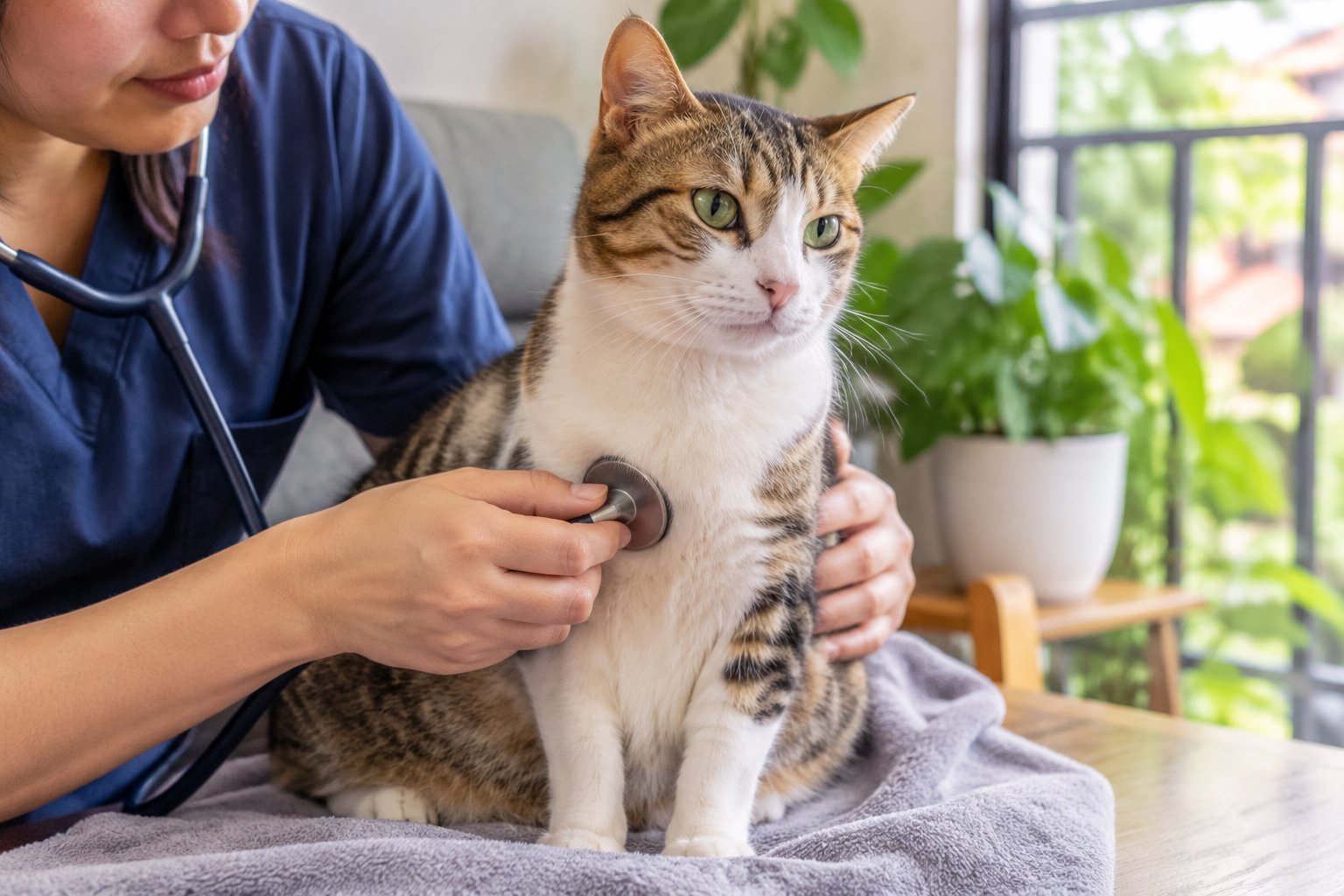
Why arthritis prevention matters for Malaysian cats
Arthritis, or osteoarthritis, is a degenerative joint disease that affects many cats as they age. It is not simply wear and tear from old age; it is a painful condition that changes how a cat moves, rests and behaves. In Malaysia's warm, humid climate, cats often spend more time resting on cool floors, and owners may miss subtle signs of stiffness because the cat is not shivering or limping dramatically.
The good news is that you can influence several risk factors. You cannot change your cat's genetics or erase old injuries, but you can manage weight, diet, activity and the home environment. This guide explains what arthritis prevention for cats looks like in practice, with examples suited to Malaysian apartments, terrace houses and rainy-season routines.
Understand what you are preventing
Feline arthritis usually develops slowly. Cartilage, the smooth tissue that cushions the ends of bones, thins over time. The joint lining can become inflamed, and bone may remodel. The result is pain, reduced range of motion and muscle loss.
Several factors raise risk:
- Age: risk increases from middle age onward, especially after seven years.
- Weight: excess body fat increases load on joints and releases inflammatory signals.
- Genetics and breed: some cats inherit joint problems, such as hip dysplasia in certain lines.
- Previous injury: fractures, dislocations or ligament damage can lead to arthritis later.
- Diet and nutrition: unbalanced diets, especially those with too much or too little of certain nutrients, can affect bone and joint health.
- Activity patterns: sudden high-impact activity after long inactivity can strain joints.
Prevention is not about wrapping your cat in cotton wool. It is about reducing avoidable load and catching problems early.
Weight control: the single most important step
If you do one thing for arthritis prevention, keep your cat lean. Excess weight is the most modifiable risk factor for joint disease in cats. Fat tissue is not inert; it produces inflammatory substances that can worsen joint damage. Carrying extra kilos also increases the force on hips, knees and elbows with every jump and landing.
How to assess body condition
Use body condition scoring rather than scales alone. A simple check at home:
- Run your hands along your cat's sides. You should feel ribs easily under a thin layer of fat.
- Look from above. There should be a visible waist behind the ribs.
- Look from the side. The belly should tuck up slightly toward the hind legs.
- Feel the spine and hip bones. They should be covered but not buried.
If ribs are hard to feel, your cat may be overweight. If bones are very prominent, your cat may be underweight, which also needs veterinary attention.
Feeding for a healthy weight
- Measure food with a scale or measuring cup instead of free-feeding.
- Ask your vet for a target weight and daily calorie guide.
- Use puzzle feeders and food-dispensing toys to slow eating and add activity.
- Limit treats to a small part of daily calories; many commercial treats are calorie-dense.
- Avoid feeding human food, especially fatty or salty table scraps.
- If you have multiple cats, feed separately so one cat does not eat another's portion.
Weight loss in cats must be gradual. Rapid weight loss can cause a serious liver condition called hepatic lipidosis. Aim for slow, steady loss under veterinary supervision.
Feed a balanced, joint-friendly diet
A complete and balanced commercial cat food is the foundation. Cats are obligate carnivores, so they need animal protein and specific nutrients, including taurine, vitamin A, vitamin D and calcium in the right ratios. Home-cooked diets are risky unless formulated by a veterinary nutritionist.
Some nutrients and ingredients are often discussed for joint support:
- Omega-3 fatty acids from fish oil may help manage inflammation. Use pet-specific products and follow dosing advice.
- Glucosamine and chondroitin are common in joint supplements. Evidence in cats is limited, but some vets use them as part of a broader plan.
- Green-lipped mussel extracts appear in some pet joint products. Quality and dosing vary.
- Antioxidants such as vitamin E may support general health, but more is not better.
Never give human supplements or painkillers to cats without veterinary advice. Paracetamol and ibuprofen are toxic to cats, and some human joint products contain ingredients that are unsafe.
Encourage daily movement without high impact
Cats are built for short bursts of activity, not long endurance runs. Gentle, regular play supports muscle strength, which helps stabilise joints. Muscle loss is common in arthritic cats, and strong muscles take pressure off joints.
Practical exercise ideas
- Short play sessions: two to three sessions of five to ten minutes daily with a wand toy or laser pointer (always end on a physical catch).
- Food puzzles: scatter kibble or use puzzle feeders to encourage walking and thinking.
- Climbing alternatives: provide sturdy scratching posts and low steps rather than expecting high jumps.
- Litter tray placement: keep trays on each floor of a multi-storey home so your cat does not need to climb stairs repeatedly.
- Water access: place water bowls in several spots to encourage movement between rest areas.
Avoid forcing exercise on a stiff cat. If your cat is reluctant, stop and consult your vet.
Set up a joint-friendly home
Your home layout can reduce daily strain. This matters in Malaysian apartments with tiled floors and in terrace houses with stairs.
Flooring and resting spots
- Add non-slip mats or rugs on smooth tiles, especially near food bowls and litter trays.
- Provide soft, warm bedding in quiet spots. Senior cats often prefer warmth for stiff joints.
- Use low-sided litter trays so your cat can step in without jumping.
- Raise food and water bowls slightly if your cat is stiff in the neck or forelimbs.
Furniture and jumping
- Place ramps or pet steps beside beds and sofas.
- Move favourite resting spots to lower surfaces.
- Avoid encouraging leaps from tall wardrobes or shelves.
- Provide scratching posts that allow stretching without jumping.
Multi-cat households
Competition for resources can force a stiff cat to move quickly or guard food. Provide multiple feeding stations, water bowls, litter trays and resting places. A arthritic cat should not have to compete for a quiet bed.
Grooming and hygiene support
Arthritic cats may struggle to groom hard-to-reach areas, especially the lower back and hind legs. Matting and skin problems can follow. Brush your cat gently several times a week, and check for mats, sores or soiled fur. Keep nails trimmed; overgrown nails can change gait and make walking uncomfortable.
If your cat is soiling outside the litter tray, do not punish it. Pain and reduced mobility are common reasons. Make trays easier to access and consult your vet.
Early screening and regular vet checks
Cats are experts at hiding pain. A cat that stops jumping onto the kitchen counter may simply be choosing a new spot, or it may be avoiding pain. Regular veterinary checks help detect problems before they become severe.
What to expect at a check-up
Your vet may:
- Observe your cat walking and jumping.
- Feel joints for swelling, thickening or reduced range of motion.
- Check muscle mass along the spine and hind limbs.
- Review weight and body condition.
- Ask about behaviour changes, appetite, grooming and litter box habits.
- Recommend further tests or imaging if needed.
From about seven years old, twice-yearly checks are reasonable. Younger cats benefit from annual checks. If you notice stiffness, reluctance to move or behaviour changes, book sooner.
Watch for early signs
Early detection allows earlier intervention. Look for:
- Reluctance to jump up or down.
- Stiffness after resting.
- Slower movement or shorter strides.
- Reduced grooming, especially on the back.
- Hiding or irritability when touched.
- Changes in appetite or weight.
- Accidents outside the litter tray.
- Sleeping more or choosing lower resting spots.
Keep a simple diary of changes and share it with your vet. Video clips of your cat walking can be helpful.
Comparison table: prevention strategies
| Strategy | What it involves | Impact on arthritis risk | Practical tip for Malaysian homes |
|---|---|---|---|
| Weight management | Measured meals, body condition scoring, gradual loss | High | Feed separately in multi-cat households; use puzzle feeders |
| Balanced diet | Complete commercial food, vet-guided supplements | Moderate | Avoid home-cooked diets unless vet-formulated |
| Daily exercise | Short play sessions, food puzzles | Moderate | Play on non-slip mats in apartments |
| Home modifications | Ramps, low-sided trays, soft bedding | Moderate | Add rugs on tiled floors and steps beside sofas |
| Grooming support | Regular brushing, nail trims | Low to moderate | Check for mats weekly, especially in long-haired cats |
| Vet screening | Annual or twice-yearly checks | High for early detection | Book checks before rainy season when cats move less |
When to see a vet
Book a veterinary appointment if your cat shows any of the following:
- Limping or favouring a limb.
- Stiffness that lasts more than a few days.
- Reluctance to jump or climb stairs.
- Crying or growling when picked up or touched.
- Sudden reluctance to eat or drink.
- Soiling outside the litter tray.
- Swelling, heat or pain in a joint.
- Weight loss or weight gain.
- Any sudden change in behaviour or mobility.
Some conditions mimic arthritis, including nerve problems, infections and injuries. A vet can examine your cat and recommend appropriate tests. Do not start painkillers or supplements without veterinary guidance.
A realistic prevention plan
Arthritis prevention is a long-term habit, not a one-off treatment. A practical plan looks like this:
- Weigh and score your cat monthly. Record the numbers.
- Measure meals. Adjust portions with your vet if weight changes.
- Play daily. Two short sessions are better than one long one.
- Modify the home. Add non-slip mats, ramps and soft beds.
- Groom regularly. Check for mats and nail overgrowth.
- Book vet checks. Annual for adults, twice yearly for seniors.
- Act early. Report stiffness or behaviour changes promptly.
Malaysian cat owners often live in apartments with tiled floors and limited outdoor access. That makes home setup and daily play especially important. In terrace houses, stairs can be a challenge for senior cats; place resources on each floor. During the rainy season, cats may move less, so keep indoor play consistent.
Final thoughts
You cannot control every risk factor, but you can control weight, diet, activity and home environment. These steps lower the load on your cat's joints and improve comfort. Early veterinary screening catches problems when they are easier to manage. If you are unsure where to start, ask your vet for a body condition score and a prevention plan tailored to your cat.
This article provides general information and is not a substitute for veterinary advice. Always consult a licensed veterinarian for diagnosis and treatment of your cat.
Related reading
- Cat Health Guide Malaysia: Symptom Check, Red-Flag Triage & When to See a Vet
- Arthritis in Cats: Causes and Care (Malaysia Guide)
- Arthritis in Cats in Malaysia: Signs, Diagnosis and Home Care
- Blood Test for Cats in Malaysia: What It Checks, Costs and When You Need One
- How to Treat Arthritis in Cats at Home: A Practical Guide for Malaysian Owners
- Kidney Disease Prevention for Cats: A Practical Guide for Malaysian Owners
- Signs of Arthritis in Cats in Malaysia: What Owners Should Look For
- Anemia Prevention for Cats: A Practical Guide for Malaysian Owners
- Cat Trembling Treatment in Malaysia: Causes, Home Care and When to See a Vet

