
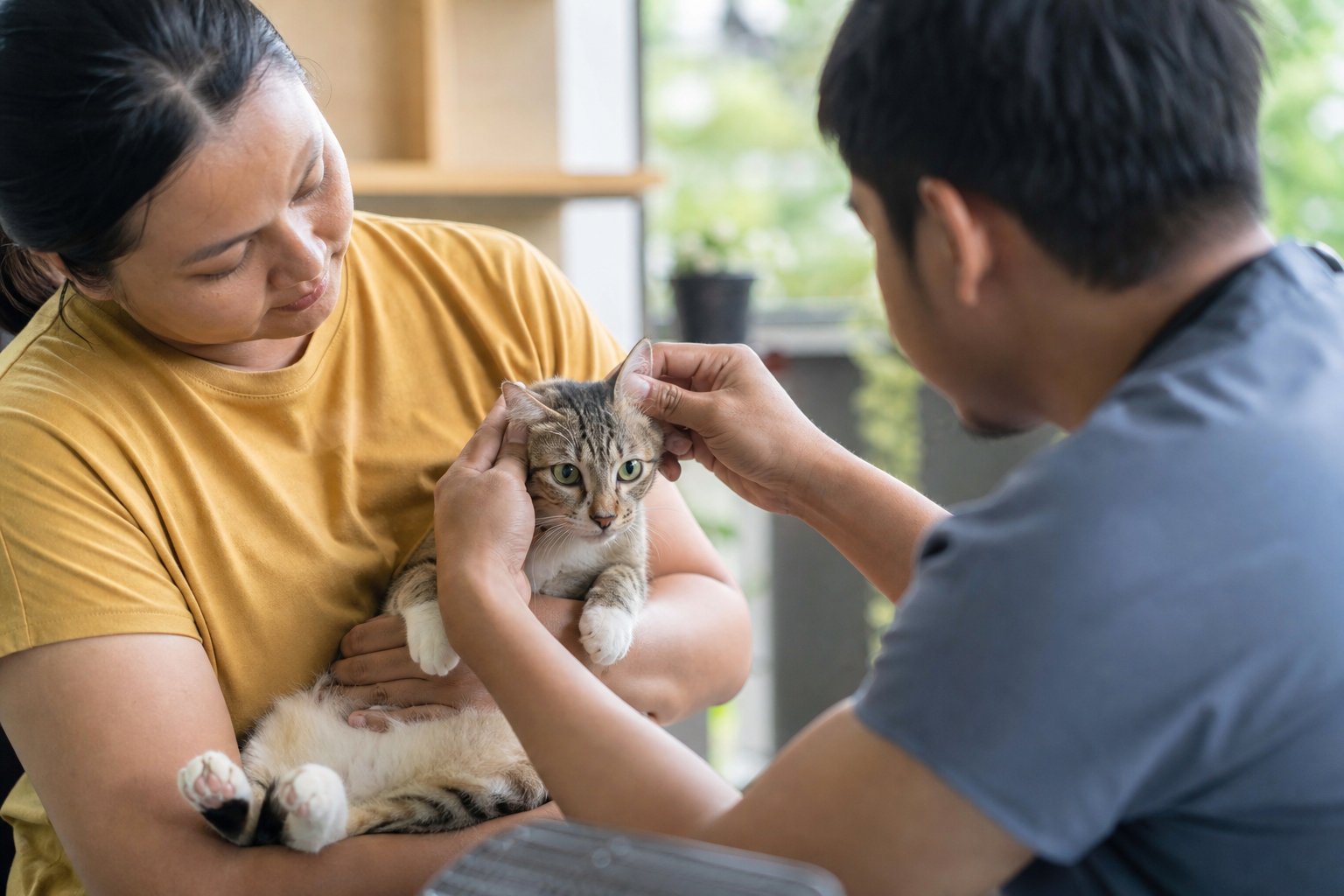
Start with the cause, not the cure
Hair loss in cats is a symptom, not a disease. Treating it at home means finding out why the fur is falling out, then removing that cause while you support the coat. If you simply buy a shampoo or a supplement and hope, you may waste weeks while an itchy, spreading or painful problem gets worse.
A useful first split is simple. Is your cat losing fur in a pattern that looks like normal shedding, or are there real bald patches? Normal shedding leaves an even coat with no bare skin. Bald patches, thinning along the belly and inner thighs, crusty spots, broken hairs or a cat that licks one area raw all point to something that needs attention.
This guide covers the safe home steps, the mistakes to avoid, and the point where a Malaysian vet should take over. It is general information, not a diagnosis for your individual cat.
The main causes of hair loss in cats
Most feline alopecia falls into a handful of groups. Knowing which group fits your cat narrows your home plan quickly.
| Cause | Typical look | Itchy? | Home care role |
|---|---|---|---|
| Normal shedding | Even thinning, no bare skin | No | Brushing, flea control |
| Flea allergy | Tail base, belly, back; specks in fur | Often intense | Strict flea control for all pets |
| Ringworm | Round patches, scaly edge, broken hairs | Mild or none | Cleaning; vet treatment needed |
| Over-grooming from stress | Symmetrical bald belly, inner thighs | Licking, not scratching | Reduce stress, enrich environment |
| Over-grooming from pain | One area, often flank or leg | Licking | Vet check for underlying pain |
| Food or environmental allergy | Face, ears, paws, belly | Yes | Vet diagnosis; diet trial |
| Poor diet or grooming | Dull coat, mats, dandruff | No | Better diet, gentle brushing |
| Hormonal or internal disease | Symmetrical thinning, dull coat, other signs | Variable | Vet blood tests |
Notice how many rows end with a vet. Home care is genuinely useful, but it works best alongside proper diagnosis.
Step 1: Check for fleas and parasites
In a warm, humid country, fleas are one of the most common reasons a cat over-grooms and loses fur. Cats are fastidious, so you may never see a flea jump. Instead, look for dark grit near the tail base, small red bites on the belly, or a coat that looks chewed rather than brushed.
Your home routine:
- Part the fur and inspect the tail base, lower back, belly and inner thighs.
- Comb over a white sheet of paper; dark specks that turn reddish when damp suggest flea dirt.
- Treat every cat and dog in the household with a product your vet recommends, and repeat on schedule.
- Wash pet bedding in hot water and vacuum floors, sofa seams and under furniture.
- Keep up monthly prevention even after the fur regrows, because fleas return easily.
Do not use dog flea products on cats, and do not use permethrin-based products on cats at all. Some over-the-counter products are unsafe for felines. Ask a Malaysian vet or a reputable pet retailer for a cat-safe option, since brands and availability vary locally.
Step 2: Look for ringworm and skin infection
Ringworm is a fungal infection, not a worm. It often shows as circular patches with a scaly or crusty edge, broken hairs and sometimes mild redness. It can spread to other pets and to people, so it matters.
At home you can:
- Wash your hands after touching the cat or its bedding.
- Keep the cat's bedding separate and wash it regularly.
- Vacuum shed hair and disinfect grooming tools.
- Avoid letting the cat sleep on your pillow while patches are active.
What you should not do is apply random human antifungal creams or strong disinfectants to your cat. Cats lick themselves, and many human products are not safe to ingest. Ringworm usually needs a vet-confirmed diagnosis and a proper treatment course, which may include topical or oral medication. Home cleaning supports treatment; it does not replace it.
Step 3: Reduce over-grooming and stress
Symmetrical bald patches on the belly, flanks and inner thighs are a classic sign of over-grooming. The cat is not losing hair from the root; it is licking or chewing it off. Stress, boredom, changes at home, a new baby, a new pet, moving house or a neighbourhood cat outside the window can all trigger it. Pain and itch also trigger licking, so over-grooming is a sign to investigate, not just a habit to scold.
Practical home steps:
- Add vertical space: shelves, cat trees or a window perch so the cat can get away.
- Set predictable play sessions, two short ones a day, with wand toys and a chase-and-catch finish.
- Feed part of the daily food in puzzle feeders or scatter it for foraging.
- Keep litter trays clean and provide one more tray than the number of cats.
- Use plug-in or spray pheromone products only as a support, not a cure.
- Give safe hiding spots and avoid sudden changes where possible.
If the licking continues despite a calmer routine, or the cat is licking one spot rather than a symmetrical pattern, book a vet visit. Pain, parasites and allergies need to be ruled out before anyone calls it behavioural.
Step 4: Groom gently and protect the skin
Good grooming supports coat health, but rough handling makes skin worse.
- Brush short-haired cats weekly and long-haired cats several times a week with a soft slicker or rubber brush.
- Work in the direction of the coat, and stop if the skin looks red or the cat flinches.
- Never cut mats out with scissors near the skin; ask a groomer or vet instead.
- Bathe only when needed, using a cat-safe shampoo, and dry the coat fully.
- In Malaysia's rainy season, damp coats and humid bedding encourage skin problems, so dry towels and bedding thoroughly.
Avoid daily bathing, harsh shampoos and human medicated products unless a vet prescribes them. Over-washing dries the skin and can increase itching.
Step 5: Review diet, water and weight
Fur is built from protein, fat and micronutrients. A complete cat food that meets recognised nutrient profiles supports a healthy coat. If your cat eats a poorly balanced homemade diet, mostly scraps, or has stopped eating properly, the coat often shows it first.
Home steps that are safe:
- Feed a complete, balanced commercial cat food appropriate to your cat's life stage.
- Transition foods gradually over about a week to avoid stomach upset.
- Keep fresh water available and consider a water fountain for cats that drink little.
- Do not add random oils, raw egg or human supplements without veterinary advice; some are unbalanced or unsafe.
- Keep your cat at a healthy weight; obesity makes grooming the lower back difficult and mats form.
If you suspect a food allergy, do not guess. A proper elimination diet is a structured veterinary process, and doing it halfway tells you nothing.
Step 6: Track progress with a simple log
Home care works better when you measure it. Keep a short weekly note:
- Where the bald patches are and whether they are growing or shrinking.
- Whether the cat is scratching, licking or chewing, and when.
- Any new food, litter, cleaning product or visitor in the house.
- Flea treatment dates and bedding wash dates.
- Photos taken in the same light each week.
This log is also useful at the vet, because skin disease can look similar across causes and history helps narrow it down.
Common home-care mistakes to avoid
- Applying human creams, oils or antiseptics without veterinary advice.
- Using a dog flea product on a cat.
- Shaving the cat to "fix" the coat without knowing the cause.
- Assuming hair loss is just shedding when bare skin is visible.
- Changing food every week instead of giving one plan time to work.
- Ignoring a cat that is hiding, eating less or losing weight alongside the fur loss.
When to see a vet
Book a veterinary appointment if any of these apply:
- Bald patches are spreading, or new patches keep appearing.
- The skin is red, crusty, bleeding, oozing or smells.
- Your cat is scratching or licking constantly, or seems uncomfortable.
- You see round scaly patches, especially if people in the home have a new rash.
- The cat is losing weight, eating less, drinking more, vomiting or lethargic.
- The hair loss is symmetrical on the belly and flanks and does not improve with stress reduction.
- A kitten, senior cat or pregnant cat is affected.
- Nothing improves after about four weeks of consistent home care.
A vet can examine the skin, use a Wood's lamp or fungal culture for ringworm, check for parasites, and run blood tests if hormonal or internal disease is suspected. In Malaysia, general practice and specialist clinics are available in major cities and many towns, but services vary by location, so call ahead to confirm what diagnostics are offered.
A realistic home-care timeline
| Timeframe | What to expect |
|---|---|
| Week 1 | Start flea control, cleaning, gentle brushing and stress reduction |
| Weeks 2-4 | Mild irritation settles; small patches may start to refill |
| Weeks 4-8 | Clear improvement if the cause was simple; vet review if not |
| Beyond 8 weeks | Ringworm, allergies and internal disease may need longer treatment |
Fur regrowth lags behind healing, so a cat can look bald for a while after the skin is healthy. Judge progress by itch, redness and new patches, not only by fur coverage.
Final word
Treating hair loss at home is mostly about careful observation and consistent basics: parasite control, gentle grooming, a good diet, a calm environment and a clean, dry coat. Those steps help many mild cases and never harm a cat when done sensibly. The key is knowing when the pattern does not fit simple shedding and letting a vet diagnose the rest.
This article is general information for Malaysian cat owners and does not replace examination, diagnosis or treatment by a licensed veterinarian. If your cat is unwell or the hair loss is spreading, seek veterinary care.
Related reading
- Cat Health Guide Malaysia: Symptom Check, Red-Flag Triage & When to See a Vet
- Diabetes Prevention for Cats: A Practical Guide for Malaysian Owners
- How to Treat Itching in Cats at Home: A Practical Guide for Malaysian Owners
- How to Treat Skin Fungus in Cats at Home: A Practical Malaysian Guide
- Licking Wounds Prevention for Cats: How to Stop the Lick Cycle and Let Skin Heal
- Ringworm in Cats: Causes, Symptoms and Care (Malaysia Guide)
- Signs of Hair Loss in Cats in Malaysia: What to Look For and When to Worry
- Skin Fungus in Cats: Causes, Signs and Care (Malaysia Guide)

