
Quick answer
Vomiting in cats is a symptom, not a diagnosis. The main signs are retching, heaving, bringing up food, foam, bile or hairballs, drooling, lip-licking and refusing food. A single hairball in a long-haired cat may be harmless, but repeated vomiting, blood, lethargy, diarrhoea or more than 24 hours without eating means you should see a Malaysian vet promptly.
What vomiting actually looks like in cats
Many owners use the word vomiting loosely. In veterinary terms, vomiting is an active process. The cat's belly muscles contract, the head lowers, and there is usually retching or heaving before something comes up. The material may be undigested food, partly digested food, yellow bile, white foam, clear fluid, hair, or sometimes blood.
Regurgitation is different. It is passive. Food slides back out, often soon after eating, with little or no retching. The food usually looks almost unchanged. Regurgitation often points to problems in the oesophagus, such as eating too fast, a narrowed oesophagus or a foreign object stuck in the throat.
Knowing which one your cat is doing helps your vet. Before you call, note:
- Whether there was retching or heaving
- How soon after eating it happened
- What the material looked like and whether it contained hair, blood or foreign material
- How often it happens per day or per week
- Whether your cat is still eating, drinking, playing and using the litter box normally
A short video on your phone is very useful. Malaysian vets often ask owners to show footage because cats may not vomit in the clinic.
Common signs that go with vomiting
Vomiting rarely happens alone. Watch for these accompanying signs:
| Sign | What it may suggest |
|---|---|
| Drooling and lip-licking | Nausea, mouth pain, poisoning |
| Going off food | Nausea, gut disease, fever, pain |
| Hiding or withdrawing | Pain or feeling unwell |
| Diarrhoea | Gut infection, parasites, food upset |
| Weight loss | Chronic disease, poor absorption |
| Swollen or painful belly | Obstruction, fluid, serious illness |
| Straining to vomit with nothing coming up | Possible obstruction or bloat, urgent |
| Blood in vomit | Ulcer, foreign body, poisoning, urgent |
| Bad breath | Dental disease, kidney disease |
| Increased thirst and urination | Kidney disease, diabetes, thyroid disease |
| Pale gums | Anaemia, internal bleeding, shock |
A cat that vomits once and then eats breakfast normally is very different from a cat that vomits three times, hides under the bed and refuses dinner. The second cat needs veterinary attention.
Common causes of vomiting in cats
Causes range from minor to life-threatening. A vet will narrow them down using history, examination and sometimes blood tests, X-rays or ultrasound.
Dietary and hairball causes
- Eating too quickly
- Sudden change of food
- Hairballs, especially in long-haired cats
- Food intolerance or allergy
- Eating grass or non-food items
Gut causes
- Intestinal worms and other parasites
- Gastritis or stomach ulcers
- Inflammatory bowel disease
- Constipation or megacolon
- Foreign body obstruction, such as string, rubber bands or bones
- Viral infections, especially in unvaccinated cats
Whole-body causes
- Kidney disease
- Liver disease
- Diabetes
- Hyperthyroidism
- Pancreatitis
- Poisoning, including lilies, human medicines, insecticides and some plants
- Cancer
Stress and motion
- Car travel
- Changes at home, such as a new pet or moving house
In Malaysia, several local factors matter. Hot, humid weather can spoil food left out too long, so wet food should not sit in the bowl for hours. Air-conditioned rooms and tiled floors are common in Malaysian apartments, and cats may groom more when shedding. Long-haired cats in a Kuala Lumpur apartment may bring up hairballs more often during shedding season, which owners sometimes mistake for illness. Conversely, a cat that lives indoors in a Johor terrace house and never goes outside still needs parasite control, because worm eggs can be carried in on shoes and by insects.
Hairballs versus real vomiting
Hairballs are common in cats that groom a lot. A typical hairball is a cylindrical mass of hair, sometimes with food or bile. Occasional hairballs, perhaps once every few weeks in a long-haired cat, are usually not a crisis.
However, frequent hairballs are not normal. If your cat brings up hair every week or more, consider:
- Overgrooming due to stress, fleas or skin allergy
- Excessive shedding
- Gut motility problems
- Underlying skin or internal disease
Regular brushing helps. So does flea control and a good diet. Hairball remedies are sold in Malaysia, but ask your vet before using them, especially if your cat has other health problems.
When vomiting is an emergency
Some signs mean you should not wait. Seek urgent veterinary care if your cat:
- Vomits blood, or the vomit looks like coffee grounds
- Has a swollen, hard or painful abdomen
- Strains to vomit repeatedly with nothing coming up
- Collapses, has seizures or seems weak
- Shows pale or white gums
- Has eaten something poisonous, such as lily plants, human medicine, rat bait or antifreeze
- Is unable to keep water down for more than a few hours
- Is a young kitten or an elderly cat with repeated vomiting
Kittens and senior cats dehydrate quickly. A kitten that vomits several times in a day can become dangerously weak by evening.
Home checks before you call the vet
You can gather useful information at home without treating your cat yourself.
Check hydration. Gently lift the skin at the back of the neck. If it springs back quickly, hydration is probably okay. If it stays up or is slow to return, your cat may be dehydrated. Also look at the gums: they should be pink and moist, not tacky or pale.
Check the litter box. Note whether there is urine and stool, and whether the stool is normal, soft or bloody. A cat that is vomiting and not passing stool may have a blockage.
Check temperature and behaviour. Do not take your cat's temperature with a human thermometer unless your vet has shown you how. Instead, note whether your cat is warm to the touch, hiding, shivering or unusually quiet.
Keep a vomit diary. Record time, what came up, amount, and what your cat ate before. Take photos. This is especially helpful for cats that vomit intermittently.
Remove temptations. Put away string, rubber bands, plastic bags, lilies and human medicines. In Malaysian homes, keep cats away from open bins, insect baits and gardening chemicals.
What to feed a vomiting cat
If your cat is otherwise bright and has vomited only once, you can offer small amounts of water and bland food. Do not force food. If your vet has given you a plan, follow it.
General principles:
- Offer small, frequent meals rather than one large bowl
- Use a shallow bowl or a plate to slow fast eaters
- Warm wet food slightly to make it more appealing
- Avoid sudden food changes
- Do not give cow's milk, as many cats cannot digest it
- Do not give human anti-vomiting drugs
If your cat refuses all food for more than 24 hours, call your vet. Cats that stop eating can develop serious liver problems.
How vets investigate vomiting
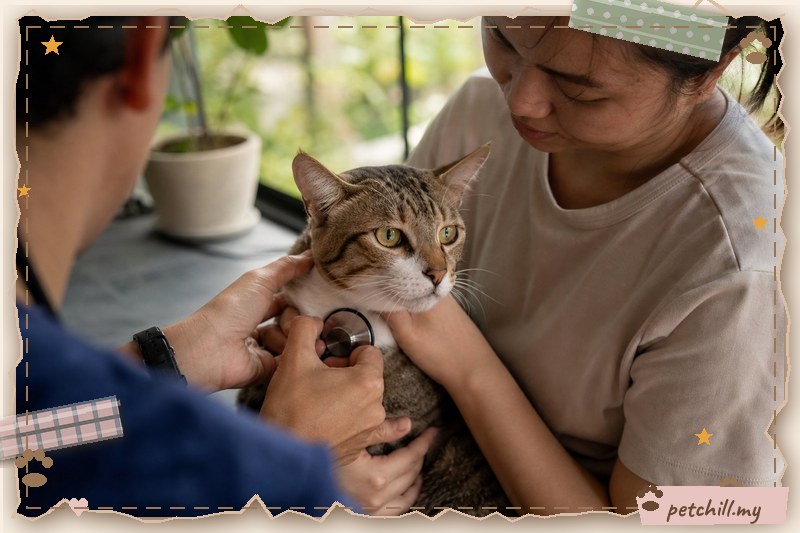
A Malaysian vet will usually start with a full history and physical examination. They may check your cat's mouth, abdomen, hydration and weight. Depending on findings, they may recommend:
- Faecal examination for parasites
- Blood tests for kidney, liver, thyroid and other problems
- X-rays or ultrasound to look for foreign objects or masses
- Viral testing in unvaccinated cats
- Dietary trials for suspected food allergy
Treatment depends on the cause. It may include fluids, anti-nausea medication, deworming, a prescription diet, or surgery for obstruction. Never assume vomiting is harmless just because your cat seems fine between episodes.
Preventing vomiting where possible
You cannot prevent every cause, but you can reduce risk:
- Feed good-quality food and store it properly in Malaysia's humid climate
- Change foods gradually over seven to ten days
- Brush long-haired cats regularly
- Use flea and worm control as advised by your vet
- Keep lilies, human medicines and chemicals out of reach
- Provide fresh water daily
- Use puzzle feeders or slow-feed bowls for fast eaters
- Schedule annual vet checks, more often for senior cats
When to see a vet
See a vet if your cat vomits more than once in 24 hours, vomits for more than two days, stops eating, has diarrhoea, seems lethargic, or if you notice blood. See a vet urgently if there is a swollen belly, repeated unproductive retching, collapse, seizures or suspected poisoning. Kittens, senior cats and cats with existing illness should be seen sooner rather than later.
This article is general information only and is not a substitute for veterinary examination. Always consult a licensed veterinarian in Malaysia for diagnosis and treatment of your cat.
Related reading
- Harga Pasir Kucing in Malaysia: What Drives the Price and How to Choose
- How to Treat Anemia in Cats at Home: What You Can Safely Do (and What You Can't)
- How to Treat Diarrhea in Cats at Home: A Practical Malaysian Guide
- Signs of Dehydration in Cats in Malaysia: Early Warning Signs & What to Do
- Signs of Eye Infection in Cats in Malaysia: What Owners Should Look For
- Vomiting in Cats: Causes and Care (Malaysia Guide)
- Vomiting in Cats in Malaysia: When It's Normal and When to Worry

