
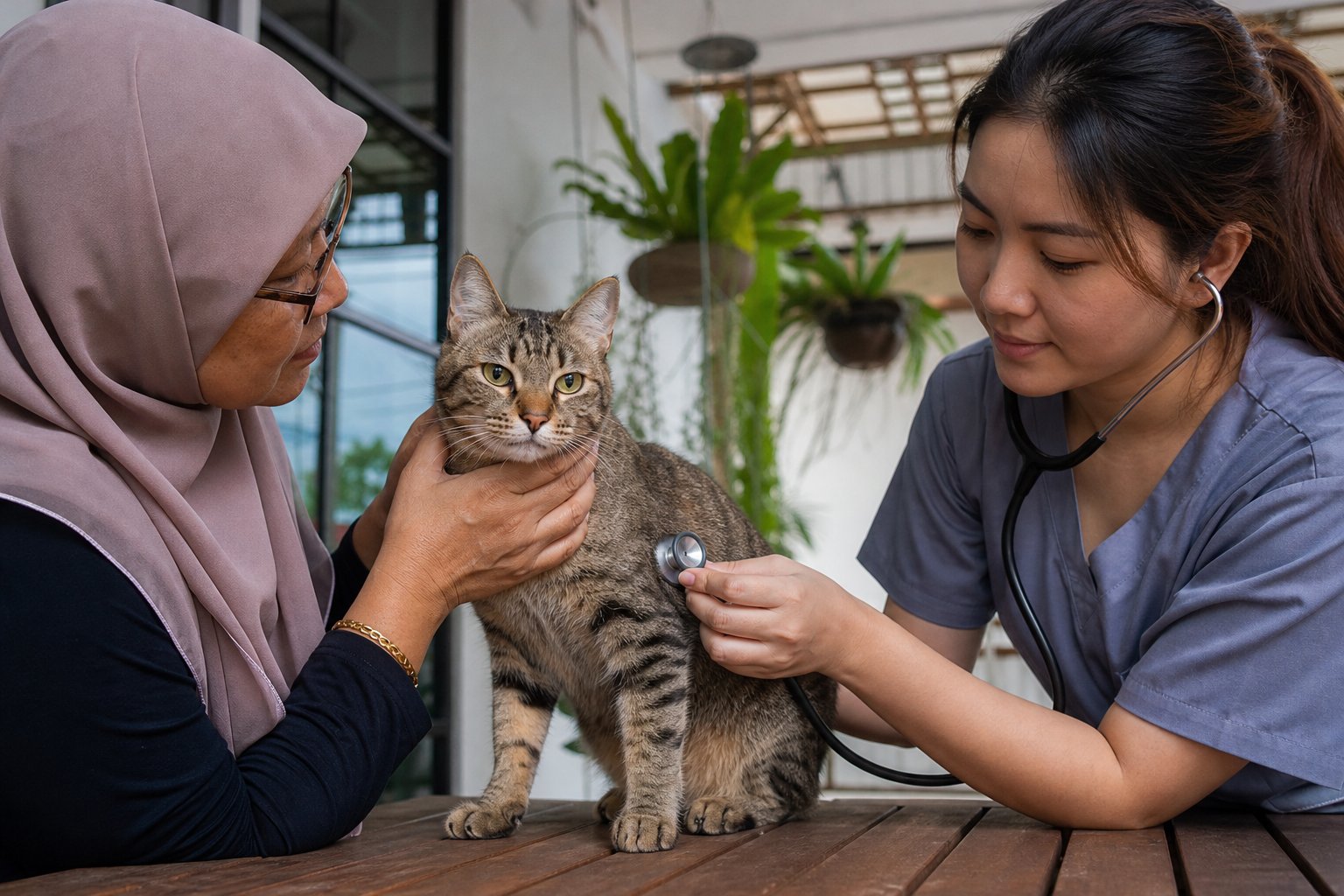
What is an ultrasound, and why would my cat need one?
An ultrasound scan uses high-frequency sound waves to build a moving picture of what is inside your cat's body. A small handheld probe is placed on the skin, and the echoes that bounce back are turned into images on a screen. Unlike X-rays, ultrasound shows soft tissues such as the liver, kidneys, bladder, intestines and heart in real time, and it does not use radiation.
Vets reach for ultrasound for many reasons: a suspected pregnancy, repeated vomiting, weight loss, a bladder problem, a heart murmur, or to guide a needle for a sample. It is also used to check whether a lump is solid or fluid-filled. The scan is one piece of the puzzle, so your vet will combine it with your cat's history, a physical exam and sometimes blood tests or X-rays.
For Malaysian cat owners, ultrasound is widely available in urban clinics, but the equipment and expertise can vary. It helps to ask what type of ultrasound is offered and whether a specialist is available if the findings are complex.
Step 1: Booking and asking the right questions
Before you book, clarify a few practical points. Ask whether the clinic does the scan in-house or refers you elsewhere, whether the vet performing it has experience with cats, and what the fee includes. A scan fee may or may not cover sedation, a written report, or lab tests on samples.
Questions worth asking:
- What will the scan look for, and will it change how we manage my cat's condition?
- Does my cat need to fast, and for how long?
- Should I withhold water?
- Will my cat be sedated? If so, what are the risks for my cat's age and health?
- Will I get a written report or images to keep?
- What is the total estimated cost, including any follow-up?
If your cat is anxious, mention it at booking. Some clinics schedule quieter appointments or allow you to bring a familiar blanket. In Malaysia, traffic can make appointment timing tricky, so build in buffer time, especially for morning slots in Kuala Lumpur or Penang.
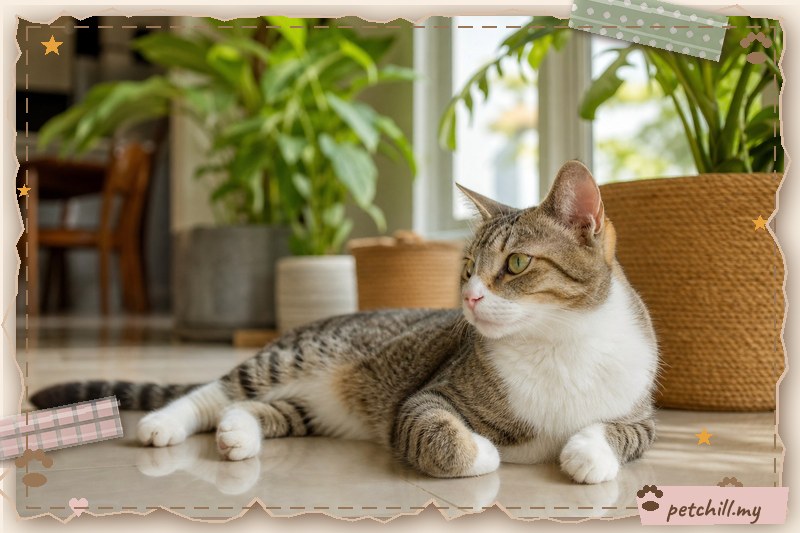
Step 2: Preparing your cat at home
Preparation is usually simple. If fasting is required, remove food for the recommended period but leave water available unless told otherwise. Fasting reduces gas and food in the stomach and makes organs easier to see. For a cat with diabetes or another condition, never fast without specific veterinary advice.
Practical preparation checklist:
- Confirm fasting instructions and whether water is allowed.
- Bring your cat in a secure carrier with a familiar-smelling blanket.
- Pack any medications, especially if your cat takes them on a schedule.
- Bring previous records, blood test results and X-rays if you have them.
- Note your cat's symptoms, appetite changes, litter box habits and weight changes.
- For long car rides, place a towel over the carrier to reduce visual stress.
If your cat becomes very stressed in the car, ask your vet about calming options before the day. Do not give any sedative or supplement without veterinary guidance.
Step 3: Arriving at the clinic
On arrival, the vet or nurse will weigh your cat and ask about the problem. They may shave a small patch of fur over the area to be scanned. Fur traps air, and air blocks sound waves, so clipping is necessary for a clear image. The shaved patch is usually small and grows back within a few weeks.
Your cat will be positioned on a table, often lying on its side or back. A water-based gel is applied to the skin, and the probe is moved slowly over the area. Most cats tolerate this well, but some need a gentle hold or a towel wrap. If your cat is very anxious or painful, the vet may recommend mild sedation. Sedation is also common if a biopsy or fluid sample is planned.
You may be allowed to stay in the room, which can help keep your cat calm. Ask beforehand, as some clinics prefer owners to wait outside to reduce distraction.
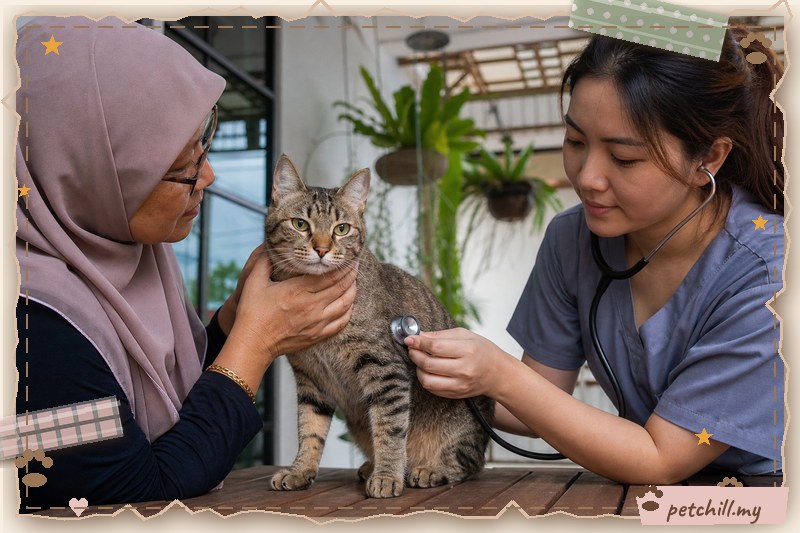
Step 4: During the scan
The scan itself is quick. A focused examination may take 10 to 15 minutes, while a full abdominal study often takes 20 to 30 minutes. The vet will move the probe to view different organs and may ask a nurse to hold your cat. You might hear the whoosh of blood flow if Doppler is used to check vessels or the heart.
Ultrasound is painless, but the pressure of the probe can feel odd. Most cats lie still with gentle restraint. If your cat struggles, the vet will pause and may suggest sedation rather than force the issue. The quality of the image depends on the cat's body condition, the area being scanned and the equipment, so a clear answer is not always possible in one session.
Step 5: What the images can show
Ultrasound is good at answering specific questions. It can show the size and texture of organs, detect fluid, identify stones in the bladder, check for thickened bowel walls, and confirm pregnancy. It can also guide a needle to collect a sample of tissue or fluid for lab testing.
| What ultrasound can help assess | What it cannot always do |
|---|---|
| Bladder stones, inflammation and wall thickening | See through bone or gas-filled bowel |
| Kidney size, shape and fluid | Give a definitive diagnosis without other tests |
| Liver and gallbladder changes | Replace X-rays for bone or lung problems |
| Intestinal wall thickness and movement | Assess the whole body in one scan |
| Pregnancy and fetal heartbeats | Guarantee a diagnosis if image quality is poor |
| Heart chamber size and function (with training) | Measure some deep organs clearly in large cats |
Your vet will interpret the images alongside your cat's signs. Sometimes the scan is normal, which is still useful information. Other times it shows a problem that needs blood tests, a biopsy or a repeat scan later.
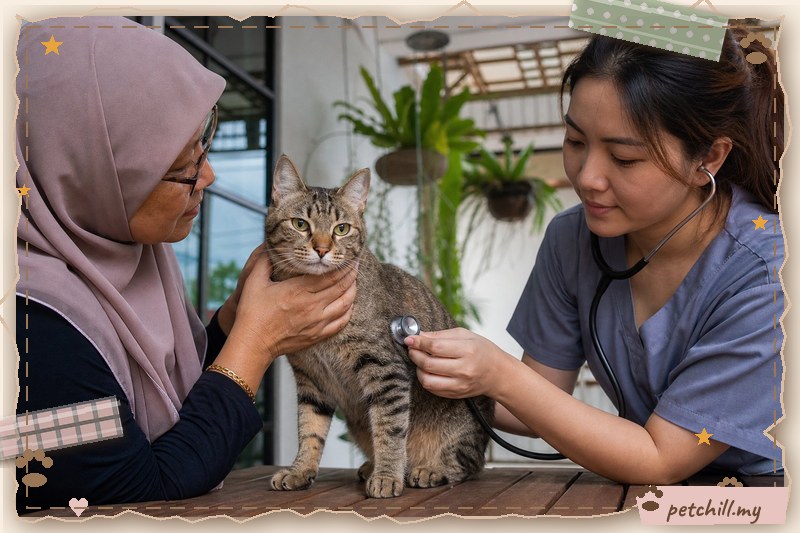
Step 6: After the scan
After the scan, the gel is wiped off and your cat can usually go home. If sedation was used, your cat may be sleepy for a few hours and should be kept indoors, warm and quiet. Offer water and a small meal only when fully awake, unless your vet says otherwise.
Ask for the findings in writing. A short report with key measurements and recommendations is helpful for follow-up or a second opinion. If a sample was taken, results may take several days. Keep the shaved area clean and watch for irritation, though this is uncommon.
Step 7: Costs and practical considerations in Malaysia
Ultrasound fees in Malaysia vary by clinic, location, equipment and whether sedation or sampling is included. There is no single national price, and it is not possible to give a reliable figure without asking the clinic. Urban clinics with advanced equipment may charge more than rural practices, and emergency or after-hours scans often cost extra.
To manage costs:
- Ask for a written estimate that lists the scan, sedation, report and any lab fees separately.
- Ask whether a follow-up scan is included or charged again.
- Check whether pet insurance or a wellness plan covers imaging.
- Compare a few clinics, but prioritise experience and clear communication over the lowest price.
If cost is a barrier, tell your vet. They may suggest a focused scan first or discuss which tests are most urgent.
Step 8: Special situations
Pregnancy checks. Ultrasound can confirm pregnancy and check fetal heartbeats. Timing matters, so ask your vet when to book based on the suspected mating date.
Emergency scans. In a sudden illness, such as a cat straining to urinate, ultrasound can quickly show a blocked bladder. This is an emergency, especially in male cats, and needs immediate veterinary care.
Heart scans. Echocardiography is a specialised ultrasound of the heart. It requires specific training and equipment, so not every clinic offers it. If your cat has a murmur or breathing difficulty, ask whether a referral is needed.
Anxious or painful cats. Sedation is kinder than forcing a painful cat to lie still. Discuss the risks and benefits with your vet, especially for older cats or those with heart or kidney disease.
When to see a vet
Seek veterinary advice if your cat shows any of the following:
- Straining to urinate, especially male cats, or no urine produced.
- Repeated vomiting, diarrhoea or refusal to eat for more than a day.
- Weight loss, increased thirst or changes in litter box habits.
- A distended abdomen, pain when touched, or sudden weakness.
- Breathing difficulty, collapse or a suspected pregnancy with complications.
These signs may need urgent assessment, and ultrasound may be part of that work-up. Do not wait if your cat seems in pain or is not passing urine.
Quick comparison: ultrasound vs X-ray
| Feature | Ultrasound | X-ray |
|---|---|---|
| Radiation | None | Yes, low dose |
| Best for | Soft tissue, fluid, pregnancy, heart | Bone, lung, foreign bodies, overall shape |
| Real-time movement | Yes | No |
| Sedation | Sometimes | Sometimes |
| Shaving | Usually a small patch | No |
Your vet may recommend one or both. They answer different questions, and neither is automatically better.
Final thoughts
Ultrasound is a safe, useful tool that can give you and your vet fast answers about your cat's health. The key steps are simple: ask questions at booking, follow fasting advice, keep your cat calm, and request a written summary afterwards. In Malaysia, availability and cost vary, so a direct conversation with your vet is the best way to plan. If your cat is unwell, especially with urinary or breathing signs, seek veterinary care promptly rather than waiting for a routine scan.
This article is general information only and is not a substitute for veterinary advice. Always consult a licensed veterinarian about your cat's health.
Related reading
- Cat Health Guide Malaysia: Symptom Check, Red-Flag Triage & When to See a Vet
- Arthritis in Cats: Causes and Care (Malaysia Guide)
- Cat Dehydration Treatment in Malaysia: Signs, Home Care and When to See a Vet
- Deworming Schedule for Cats: What to Expect (Malaysia Guide)
- How to Treat Excessive Urination in Cats at Home: A Practical Malaysian Guide
- How to Treat Eye Infection in Cats at Home: Safe Steps for Malaysian Owners
- Kidney Disease in Cats Malaysia: Signs, Stages, Diet & Care

