
Manx
Manx · Cat · Malaysia
Quick answer
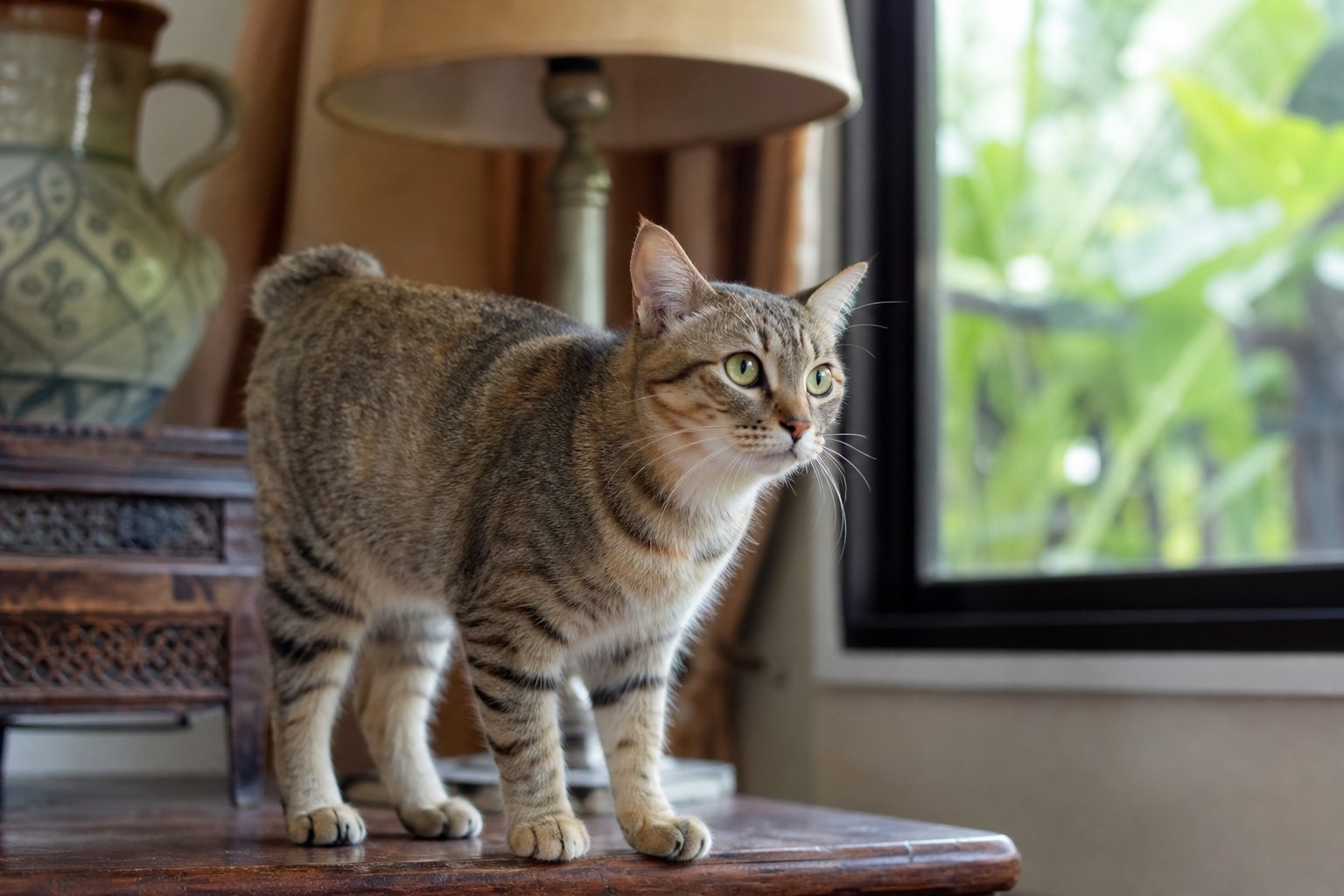
The Manx is a calm, people-oriented tailless cat that suits Malaysian apartments well. Keep it indoors, brush weekly, watch its weight, and see a vet early if you notice hind-leg weakness or toileting problems.
Quick facts
- Origin
- Isle of Man
- Size
- Medium
- Lifespan
- 12-14 years
- Weight
- Medium build, typically around 3.5 to 5.5 kg
- Coat
- Medium-length, dense double coat; weekly brushing
Personality
- Calm
- People-oriented
- Gentle
- Sociable
- Adaptable
The Manx is a medium-sized cat from the Isle of Man, known for its rounded build and naturally short or absent tail. In Malaysia's hot, humid climate it does best as an indoor companion in a condo or apartment. This guide covers temperament, daily care, health watch-points, and what to consider before bringing one home.
Temperament: A Calm, People-Oriented Companion
The Manx is typically gentle, sociable, and strongly attached to its people. It tends to follow family members from room to room, settle quietly nearby, and greet visitors with curiosity rather than hiding. Many Manx enjoy play but rarely demand constant attention, which makes them a comfortable fit for Malaysian households where owners work long hours. They usually get along with children and other pets when introduced patiently. Because they are calm rather than highly strung, they cope reasonably well with apartment living, provided they have vertical space and a quiet corner to retreat to. Loud households and constant handling can overwhelm them, so a relaxed home suits this breed best. Early socialisation helps keep their friendly nature steady.
Daily Life in a Malaysian Home
In Malaysia's hot, humid weather, the Manx is happiest as an indoor cat with air-conditioning or good cross-ventilation. Its medium coat is fairly dense, so provide cool tiled floors, shaded resting spots, and fresh water at all times. Condo living suits this breed well because it is calm and not overly vocal, though balcony safety matters: mesh any open balcony so the cat cannot slip through. Keep a quiet indoor resting spot away from busy doorways and loud appliances. Daily life should include short play sessions, a scratching post, and a litter tray placed in a quiet, accessible area. Because some tailless cats have toileting difficulties, keep the tray easy to reach and clean it often.
Grooming: Simple Weekly Care
The Manx coat is medium-length and fairly easy to maintain. A weekly brushing removes loose hair and distributes natural oils, and during warmer or shedding periods you may brush two or three times a week. In Malaysia's humidity, check the skin under the coat for dampness or irritation, and keep the coat dry after any bath. Trim nails every few weeks, wipe the ears gently when needed, and brush the teeth regularly if the cat tolerates it. The tailless rear needs a little extra attention: keep the area around the anus clean, especially if stools are soft, because the shortened spine can affect posture during toileting. A quiet grooming routine builds trust with this gentle breed.
Exercise: Short, Gentle Play Sessions
The Manx is moderately active but not hyperactive. Two or three short play sessions a day with wand toys, soft balls, or puzzle feeders keep it fit and mentally engaged. Because extra weight stresses the spine and hind legs of a tailless cat, exercise is a health tool as much as enrichment. In a Malaysian apartment, use vertical space such as cat trees and window perches rather than relying on outdoor access. Avoid encouraging high jumps from slippery tiled surfaces, and provide non-slip mats near favourite landing spots. Gentle chase games and food puzzles suit this breed's calm nature. Watch for any reluctance to move or play, which can be an early sign of discomfort.
Training: Patient, Reward-Based Learning
Manx cats are intelligent and respond well to calm, reward-based training. They are not usually eager performers, but they learn household routines quickly and can be taught to use a scratching post, come when called, and accept handling. Keep sessions short, use food or gentle praise as a reward, and never punish. Litter training is usually straightforward, but because some tailless cats develop toileting problems, praise correct tray use and keep the tray location stable. Crate or carrier training early makes vet visits in Malaysia less stressful. Socialise your cat to household sounds, visitors, and gentle handling while it is young. Consistency matters more than intensity with this breed.
Diet: Portion Control for a Sturdy Build
The Manx has a rounded, sturdy build and can gain weight easily, especially in a sedentary indoor setting. Feed a complete, balanced cat food suited to its age, and measure portions rather than free-feeding. Because extra load stresses the spine and hind legs of a tailless cat, keeping the cat lean is one of the most useful things an owner can do. In Malaysia's heat, ensure fresh water is always available and consider wet food to support hydration. Treats should be small and occasional. If your cat becomes less active or gains weight, adjust portions with veterinary guidance rather than guessing. Avoid sudden diet changes, and introduce any new food gradually.
Health: What Manx Owners Should Watch
The Manx is generally a robust breed with a lifespan of around twelve to fourteen years, but its tailless genetics can affect the spine and hind end. Some tailless cats develop mobility or toileting problems, so see a vet early if you notice weakness, an odd gait, or incontinence. Keep weight in check, because extra load stresses the spine and hind legs. Regular veterinary check-ups in Malaysia help catch problems early, and local vet access is generally good in urban areas. Watch for constipation or difficulty passing stool, and mention any changes in jumping or climbing. Dental care and routine parasite prevention should also be part of the yearly plan.
Manx syndrome
Watch for: Hind-leg weakness, an unsteady gait, difficulty jumping, or a messy rear end after toileting.
Care: See a vet early if you notice weakness or incontinence; keep the cat lean and provide easy-access litter trays and non-slip surfaces.
Spinal and hind-end stress
Watch for: Reluctance to climb or jump, stiffness after rest, or sensitivity around the lower back and hips.
Care: Maintain a healthy weight, offer gentle exercise, use ramps or low steps, and have a vet assess any change in movement.
Constipation
Watch for: Straining in the litter tray, small or hard stools, or reduced frequency of bowel movements.
Care: Ensure good hydration, feed a balanced diet, keep the tray clean and accessible, and consult a vet if straining persists.
Choosing a Manx in Malaysia
Before choosing a Manx, spend time with the cat or kitten and ask about its health history, especially any signs of hind-leg weakness or toileting difficulty. A responsible source will let you observe the cat moving, playing, and using the litter tray. Confirm the cat has been vet-checked and vaccinated, and ask for records rather than relying on verbal claims. Consider whether your home suits an indoor cat: mesh balconies, provide cool resting spots, and plan for daily play. If you rent a condo, check building pet rules first. Choose a calm, people-oriented cat that approaches you willingly, and avoid any cat showing reluctance to move or obvious discomfort.
Caring in Malaysia
- Some tailless cats develop mobility or toileting problems; see a vet early if you notice weakness or incontinence.
- Keep weight in check: extra load stresses the spine and hind legs of a tailless cat.
- Weekly brushing and a quiet indoor resting spot suit this calm, people-oriented breed.
Frequently asked questions
Is the Manx suitable for apartment living in Malaysia?
Yes, the Manx is generally well suited to Malaysian apartments because it is calm and not overly demanding. It does best as an indoor cat with cool resting spots, vertical space, and a securely meshed balcony. Keep the litter tray accessible and provide daily play to keep it fit.
How often should I brush a Manx cat?
Brush your Manx about once a week, and more often during shedding periods. Its medium coat is fairly easy to maintain, but Malaysia's humidity means you should check the skin underneath for dampness or irritation. Keep the rear area clean, especially if stools are soft.
Do Manx cats have health problems?
Some tailless Manx cats develop mobility or toileting problems linked to their shortened spine. Watch for hind-leg weakness, an unsteady gait, or incontinence, and see a vet early if these appear. Keeping the cat lean reduces stress on the spine and hind legs. Not every Manx is affected.
How much exercise does a Manx need?
Two or three short play sessions a day are usually enough for a Manx. Use wand toys, soft balls, or puzzle feeders, and offer vertical space such as cat trees. Avoid encouraging high jumps onto slippery tiles. Gentle, regular activity helps keep weight down and supports hind-leg strength.
Are Manx cats good with children?
Manx cats are typically gentle and sociable, and many do well with children who handle them calmly. Teach children to let the cat approach and to avoid picking it up roughly. Early socialisation helps. Supervise young children, and give the cat a quiet retreat where it can rest undisturbed.
What should I feed a Manx cat in Malaysia?
Feed a complete, balanced cat food with measured portions rather than free-feeding. The Manx gains weight easily, and extra load stresses the spine and hind legs of a tailless cat. In Malaysia's heat, keep fresh water available and consider wet food for hydration. Introduce any diet change gradually.
Related breeds
Cat breed guides →
Related articles
- Bengal Cat Guide Malaysia: Personality, Energy Needs and Health Care
Bengal cats are striking, muscular and famously energetic. This guide explains what they need in a Malaysian home, from wall shelves in a Kuala Lumpur apartment to daily play routines and health checks.
- Bengal Cat Personality in Malaysia: What to Expect From This High-Energy Breed
Bengal cats are curious, confident, high-energy and highly interactive. This guide explains what that means for Malaysian homes, from apartment living to training and vet care.
- Birman Cat Disadvantages in Malaysia: 8 Real Costs Before You Adopt
Birman cats are gentle and sociable, but they are not low-maintenance. Here are the eight real costs Malaysian owners should know before bringing one home.
- Abyssinian Cat Disadvantages in Malaysia: 7 Honest Truths Before You Adopt
Abyssinians are brilliant, busy cats that demand daily play, cat-proofed homes and a long-term health budget. This guide lists the seven genuine drawbacks and how Malaysian owners can manage each one.
- Abyssinian Lifespan in Malaysia: How Long They Live and What Actually Extends It
Abyssinians usually live 12–15 years, and well-managed cats often pass 15. The lifespan gap comes down to three things: PK deficiency screening, kidney checks from age eight, and daily dental care. Here is how Malaysian owners can work all three.
- Abyssinian Personality in Malaysia: The 'Cat That Works With You' Explained
The Abyssinian is not a lap cat that sleeps beside you — it is a colleague cat that follows you around the house and wants to be involved in everything. This guide explains the breed's five core traits, its lock-picking intelligence, its social needs, and the honest weakness: poor tolerance of long alone time.
- American Shorthair Colours in Malaysia: Tabby, Bicolour and What Actually Matters
American Shorthairs come in dozens of accepted colour and pattern combinations, but in Malaysia the ones you will actually see are silver tabby, brown tabby and various bicolour 'add-white' cats. This guide explains what those labels mean, how colour affects grooming and photography rather than health or personality, and how to check a kitten's paperwork instead of paying for symmetry.
- American Shorthair Disadvantages in Malaysia: 7 Honest Trade-Offs Before You Adopt
The American Shorthair is hardy and low-maintenance, but it is not problem-free. Here are seven real trade-offs Malaysian owners should budget time and money for, plus how to manage each one.
Related products at PetChill



Sources
Last reviewed: 2026-11-16
For health concerns, consult a licensed veterinarian in Malaysia.