
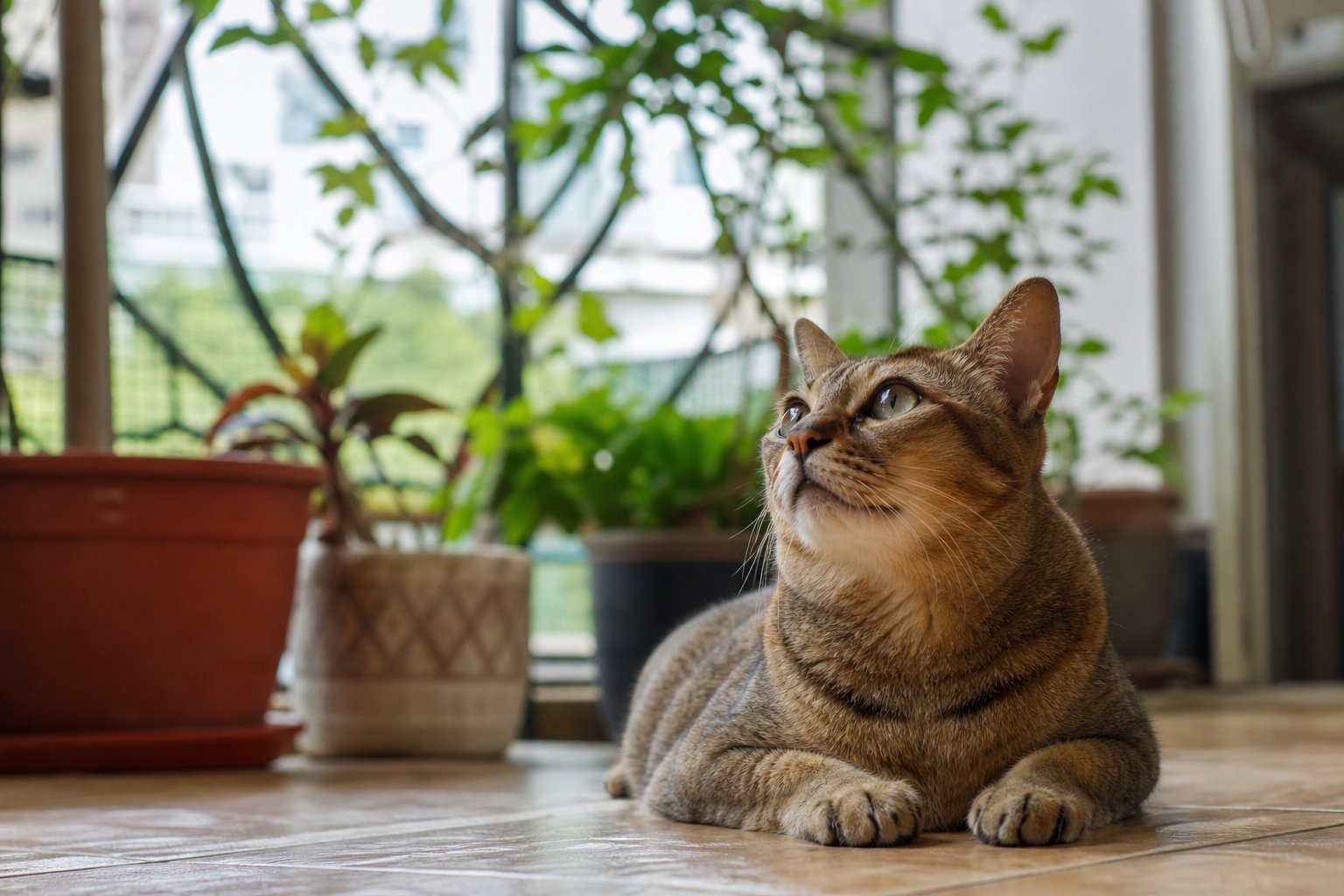
Quick answer: can a senior cat eat pear?
Yes — with strict limits. A healthy senior cat at normal weight can have a small amount of fresh, peeled, seeded pear flesh: roughly 10 g per 4.5 kg of body weight, which works out to one or two 1 cm cubes, no more than two or three times a week. The core and seeds must be removed every time. Diabetic, overweight, pancreatitis-prone and sensitive-stomach cats should not be fed pear at all, while cats with kidney or heart disease or on daily medication need your vet's approval first.
Pear is not toxic to cats, but "not toxic" and "worth feeding" are two different questions. This guide covers the three things that actually matter: the portion ceiling, the safe way to prepare it, and the medical situations where a single cube is already too much.
What pear actually offers a senior cat
Cats are obligate carnivores. Taurine, arachidonic acid and preformed vitamin A must come from animal tissue, so fruit carries no nutritional necessity for them. Pear flesh is roughly 85% water, about 10 g of sugar per 100 g (mostly fructose and glucose), around 3 g of fibre, and about 57 kcal per 100 g.
Those numbers read well for a person. For an ageing cat they translate into water, sugar and a little fibre — none of which an older cat needs to obtain from fruit.
Seniors carry extra baggage with every sweet mouthful: kidneys that concentrate urine less efficiently, insulin sensitivity that is drifting downward, worn teeth that make chewing uncomfortable, and slower gut movement that turns extra fibre into diarrhoea rather than relief.
Here is how each component breaks down:
| Component | Limited upside for a senior cat | Real risk or limitation |
|---|---|---|
| Water (~85%) | Extra fluid for a cat that drinks little | Cannot replace water; sugar comes along for the ride |
| Fibre (~3 g/100 g) | Tiny amounts may support gut movement | Too much means gas and loose stools; constipation has real causes |
| Sugar (~10 g/100 g) | Highly palatable, so cats accept it | Blood sugar swings, weight gain, plaque buildup |
| Vitamin C, potassium | Beneficial in humans | Cats make their own vitamin C; potassium must follow kidney status |
| Soft texture | Eatable even with sore teeth | Sweetness encourages treat-picking over the main meal |
| Calories (~57 kcal/100 g) | A brief appetite trick | About 6 kcal per 10 g — cannot substitute for a meal |
Watch the constipation myth closely. Older cats who struggle on the litter tray are usually dealing with low water intake, slower gut transit, hairballs, old pelvic injuries or dehydration from kidney disease. A few cubes of pear will not fix any of those, and treating them late can escalate to enemas or surgery. A cat going several days without stool, straining noisily or passing tiny hard pellets belongs at a clinic, not on fruit.
Daily portion limits by body weight
The numbers below are conservative ceilings, built on the general veterinary nutrition principle that treats should not exceed 10% of daily calories, then trimmed further for ageing digestion. They are caps, not targets — feeding nothing at all is equally correct.
| Senior cat weight | Maximum per serving (peeled, seeded flesh) | Weekly frequency | Extra requirement |
|---|---|---|---|
| Under 3 kg (small or thin) | About 5 g (one 1 cm cube) | 1–2 times | Investigate weight loss instead of snacking over it |
| 3–5 kg | About 10 g (1–2 cubes) | 2–3 times | Cut roughly 6 kcal from that day's main meal |
| 5–7 kg | 10 g, no more | 1–2 times | Overweight cats are better off skipping it |
| Over 7 kg | 0–5 g | 0–1 time | Build a weight plan with your vet first |
Why 10 g? A 4.5 kg senior typically needs around 200–250 kcal a day, so a tenth of that is 20–25 kcal. Ten grams of pear contributes about 6 kcal — deliberately far under the ceiling, leaving room for the rest of the diet and for a sensitive stomach.
Four practical rules:
- Weigh it, do not eyeball it. A basic kitchen scale reading grams is the only reliable method. Without one, treat a 1 cm cube as roughly 5 g.
- First time, one cube only. Watch 24–48 hours for vomiting, diarrhoea, gas or scratching before repeating.
- Do not make it daily. Frequent sweets teach picky eating, and a cat expecting dessert often eats less of the meal that matters.
- Chronic illness resets the maths. Diabetes, kidney disease, pancreatitis, heart disease and thyroid cases all need a portion decided against bloodwork and medication, not by a table.
In a Kuala Lumpur apartment where a senior cat already gets measured meals twice a day, it helps to log the pear in the same notebook you use for food — a single line with the date and cube count makes weekly calorie accounting painless.
Five safe preparation steps
The same fruit is harmless or hazardous depending entirely on how it is handled.
| Part or product | Feed it? | Reason |
|---|---|---|
| Flesh (peeled, seeded, cut small) | Yes, tiny amounts | Sugar and fibre are already the limit |
| Skin | Not recommended | Waxed surface and possible pesticide residue; sensitive guts react |
| Core | Never | Hard and large — choking and blockage risk |
| Seeds | Never | Contain cyanogenic glycosides that can release cyanide when crushed |
| Stem and leaves | Never | Also carry cyanogenic glycosides |
| Pear juice | Never | Fibre removed, sugar concentrated |
| Syrupy canned pear | Never | Added sugar loads the pancreas |
| Dried pear | Never | Sugars concentrated, easy to overeat, sometimes sulphited |
| Pear puree or fruit baby food | Never | Usually sweetened or mixed with other ingredients |
Preparation sequence, each step under a minute:
- Rinse and peel. Run the fruit under water for 30 seconds, then remove the peel. Peeling is the real barrier; washing alone is not enough assurance.
- Cut across and lift out the core. Work the knife around the core in one piece so no fragments remain.
- Remove every seed. Inspect the flesh closely. This is the single most important step in the article.
- Cut under 1 cm. Cubes or fine shreds; for a cat with worn or painful teeth, go down to about 2 mm.
- Warm and weigh. Bring refrigerated fruit back to room temperature (around 20–25°C) before serving, then weigh it against the cap.
Add no seasoning at all. Sugar, honey, yoghurt and milk stay out — most adult cats are lactose intolerant, and dairy would only add another route to loose stools.
Which senior cats should skip pear or ask a vet first
| Senior cat situation | What to do | Why |
|---|---|---|
| Diabetes, unstable readings, insulin injections | Do not feed | Sugar disrupts glucose curves and insulin dose planning |
| Chronic kidney disease | Ask the vet first | Fluid, potassium and phosphorus are set by blood results |
| Pancreatitis history or high blood lipids | Do not feed | Anything outside the main diet can trigger a relapse |
| Overweight or on a diet | Do not feed | 6 kcal per 10 g is not worth a reduced meal |
| Gingivitis, stomatitis, missing teeth | Do not feed, or cut to 2 mm | Chewing pain and aspiration risk; pain kills appetite |
| Sensitive stomach, recurring diarrhoea, inflammatory bowel disease | Do not feed | Fructose and sugar alcohols cause gas and loose stools |
| On daily medication (heart, thyroid, anti-seizure) | Ask the vet first | Diet shifts can alter drug action and monitoring results |
| Prior fruit reaction, itchy skin or recurrent ear inflammation | Do not feed | No treat justifies repeating a reaction |
Diabetes and pancreatitis are hard stops — portion size is not even a discussion. Kidney cases and medicated cats need a conversation because a harmless-seeming cube introduced during a monitoring window can make bloodwork harder to interpret, and the treatment decision gets delayed instead of the treat.
During the Penang rainy season, a senior cat's dry food can pick up humidity and lose crunch, which already nudges owners toward wet or fresh extras. Resist the urge to compensate with fruit; adjust storage and meal frequency with your vet's advice instead.
Common feeding mistakes to avoid
| Mistake | What goes wrong | Do this instead |
|---|---|---|
| Letting the cat gnaw the core and seeds | Cyanide potential plus blockage risk | Core and seeds out, flesh cut small |
| Serving syrupy canned pear or juice | Concentrated sugar, glucose spikes, diarrhoeat | Fresh peeled flesh only, in tiny amounts |
| Treating pear as a laxative | Delays the real cause of constipation | Vet visit, not fruit |
| Offering pear instead of a meal | Severe protein and taurine shortfall | Keep the age-appropriate complete diet central |
| Cutting one large chunk | Choking, loose stools, uncontrolled portions | Under 1 cm, max one to two cubes |
| Serving it fridge-cold | Stomach upset and vomiting | Warm to room temperature first |
| Guessing the weight | Actual portions can differ several-fold | Kitchen scale; 1 cm cube ≈ 5 g |
| Increasing portions because the cat enjoys it | Picky eating, refused meals, weight creep | Hold the weekly frequency cap |
Senior nutrition should come from a complete diet formulated for older cats. If you are shopping, ask a Malaysian pet retailer which age-appropriate options they carry — packaging, sizes and prices vary by store and season, so confirm current pricing in person or on the retailer's own listing rather than relying on any figure quoted elsewhere.
If you do switch foods, transition over 7 to 14 days. Cats already on a veterinary prescription diet — kidney, diabetes or urinary formulas — must not be changed without the vet, since the nutrient ratios are tuned to the condition.
The 48-hour observation checklist
Feeding is not the end of the task. Older cats often react to dietary changes with a delay.
- Digestion. Note any vomiting (how many times, what came up), stool consistency and frequency. One episode of soft stool may still warrant watching; ongoing diarrhoea means a same-day vet visit.
- Appetite. Did the next meal get finished? Picky behaviour or waiting for treats means fruit stops for at least a week.
- Demeanour and movement. Is the cat responding, jumping to usual perches, and not suddenly hiding? Hiding is a common sign of discomfort.
- Mouth. Drooling, head tilting while chewing, or pawing at the face signals dental pain or oral inflammation.
- Skin and ears. Scratching, facial swelling or red, inflamed ears — rare with pear, but stop and seek care if they appear.
- Weight. Weigh weekly at the same time of day. The trend tells you far more than any single meal.
When to see a vet
Contact your vet the same day for any of the following: vomiting more than once, ongoing diarrhoea, a hard or painful belly, rapid breathing, swelling of the face or eyelids, drooling, dullness, hiding for more than half a day, or no food at all for 12–24 hours.
If you suspect the cat crushed or swallowed the core or several seeds, treat it as a possible obstruction — vomiting, refusal to eat, constipation — and get to a clinic fast. Do not induce vomiting yourself, and do not administer oil or milk; leave handling to the vet.
Any senior cat who is off food, vomiting repeatedly or visibly depressed needs same-day attention. Kidney patients in particular can deteriorate within hours.
Related reading
- Senior Cat Care Guide Malaysia: 7+ Health Checks, Kidneys, Joints & Daily Care
- Senior Cat Care in Malaysia: Age Signs, Check-ups and Daily Home Adjustments
- Senior Cat Care Hub Malaysia: Kidney, Joints, Cognition, Diet and Check-Up Timetable for Cats Aged 7 and Above
- Senior Cat Food in Malaysia: What to Change After Age Seven (And What Not To)
- Cat Blood Calcium Disorders in Malaysia: High and Low Calcium, Fatigue Signs, Ca/Phosphorus/PTH Tests and Diet
- Caring for a Cat With Neurological Damage in Malaysia: Home Safety, Rehab and Long-Term Support
- Senior Cat Care in Malaysia: 10 Ageing Warning Signs and a Practical Daily Care Checklist
- Senior Cat Not Eating in Malaysia: 8 Causes, Warning Signs & Practical Appetite Tips
- Senior Cat Arthritis in Malaysia: Signs, Home Fixes and What Supplements Can Really Do
- Senior Cat Care in Malaysia: Daily Routine and Home Checklist from Age 7
- Senior Cat Checkups in Malaysia: Start at Age 7, Plus What Every Blood Panel Should Cover
- Senior Cat Cognitive Dysfunction in Malaysia: Why Your Old Cat Yowls at Night, Wanders and Misses the Litter Box