
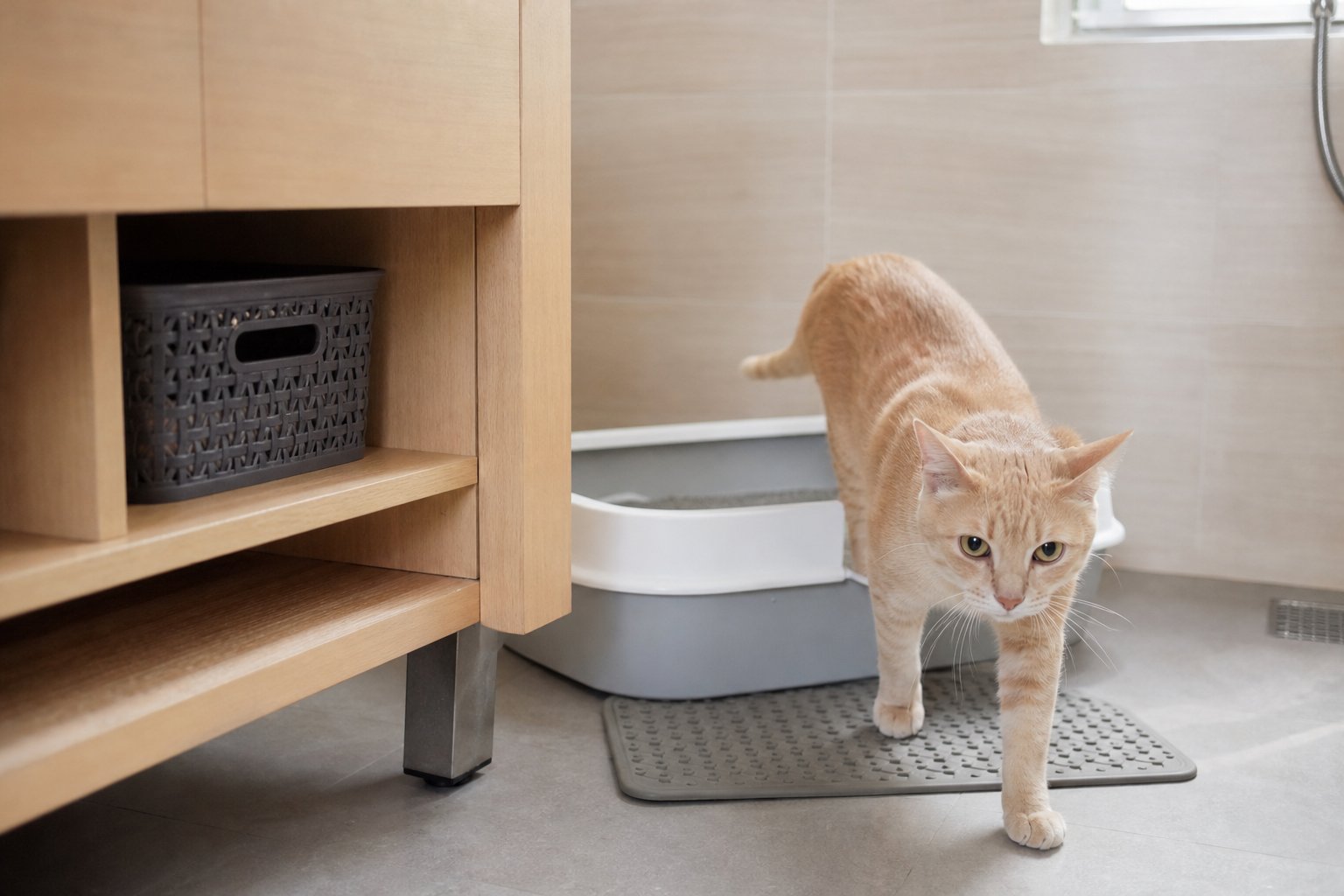
Short answer: Your older cat's midnight yowling, aimless wandering and accidents outside the litter tray are classic signs of cognitive dysfunction — feline dementia. But treatable illnesses such as an overactive thyroid and high blood pressure produce exactly the same signs, so the first step is a vet visit to rule those out. There is no cure, but fixed daily interaction, mental stimulation and a stable environment genuinely slow the decline.
Cats get dementia too
Cats go through age-related cognitive decline in much the same way dogs do. As they age, metabolism, eyesight and hearing all dull — and so does the brain's ability to navigate, remember routines and recognise familiar faces. The cat that always knew where the food bowl stood may now pause beside it, confused; the cat who never missed the tray may start missing it entirely.
The first thing to accept is what this is not. It is not naughtiness, it is not revenge, and it is not a grudge over something you did. It is a brain that is ageing. Owners who grasp that distinction scold less — and that matters, because scolding a disoriented cat only layers fear onto confusion.
Timing is worth keeping straight too. Cats are generally considered middle-aged from around seven to ten years and senior from eleven onwards, so decline has usually been creeping for a while before it becomes obvious. Progression is gradual rather than dramatic: small lapses at first — a longer pause at the bowl, one missed tray overnight — accumulating over months into clearer confusion. Normal ageing and cognitive decline overlap as well. Stiffer joints, slightly cloudier eyes and slower reactions are ordinary, which is why "she's just old" is never a sufficient explanation for a genuinely new behaviour.
Symptom checklist
Here is what cognitive dysfunction tends to look like at home.
| What you notice | What is happening | How it plays out |
|---|---|---|
| Repeated visits to the food bowl | The cat has forgotten eating | Back at the bowl meowing half an hour after a meal |
| Aimless wandering | Classic sign of disorientation | Pacing the house at 2am with no destination |
| Toileting in the wrong place | Memory and spatial decline | Missing the tray, or standing beside it unable to start |
| Reversed sleep cycle | Internal clock disrupted | Sleeping all day, yowling and pacing all night |
| Failing to recognise people or rooms | Cognitive decline | Staring at you like a stranger, or getting lost in a familiar flat |
| Loud night-time yowling | Confusion plus anxiety | Piercing calls that stop the moment you respond, then start again |
The crucial distinction is speed. Cognitive decline creeps: it appears over weeks or months and gradually worsens. If a cat's behaviour changes completely within a day or two, pain or acute illness is far more likely — that warrants an immediate vet visit, not a dementia label.
It helps to keep a simple written log for two or three weeks. Note the time of each night-time episode, how long it lasts, what the cat eats, and how often it uses the tray. A log turns vague worry into something you can actually show your vet, and it makes real improvement or real deterioration much easier to spot than memory allows.
Rule out treatable causes first
This is the most important section of the whole guide. An overactive thyroid (hyperthyroidism) is common in older cats and classically produces early-morning or night-time yowling — and it is a treatable condition. High blood pressure causes restlessness and irritability. Kidney disease and diabetes alter thirst and urination. Arthritis makes climbing into a tray painful. Failing eyesight and hearing make a familiar home feel foreign.
So the sensible order is:
- Blood work — thyroid level (T4), kidney values and glucose
- Blood pressure — elevated readings are common in older cats and cause agitation
- Sensory check — vision and hearing; some cloudiness is normal ageing, but a vet must separate normal from disease
- Pain and joint assessment — discomfort explains both night-time calling and tray avoidance
Only once these are cleared does a cognitive diagnosis make sense. Test panels and check-up fees vary between clinics, so ask your own Malaysian vet what a senior blood panel and a blood-pressure check would include before booking. If your cat is difficult to handle, ask about scheduling a calm, unhurried appointment rather than forcing visits — a stressed cat gives misleading readings.
What actually helps
There is no cure, but there is a genuine, practical care plan. The direction that works best is predictable human contact plus mental stimulation.
Fixed daily interaction. Aim for ten to fifteen minutes at roughly the same time each day — a gentle wand toy, a slow grooming session, quiet talking, or simply letting the cat sit on your lap. It does not have to be energetic play. The value is in the regularity: a predictable routine gives a confused brain something it can rely on.
Mental stimulation. Food puzzles and slow feeders make the cat think for its meal. A window perch for watching birds is low-effort brain work. Cardboard boxes and paper bags with the handles removed cost nothing. Introduce one or two new things at a time — overwhelming a senior cat with a dozen new toys achieves nothing. Two favourites it will actually use beat ten it ignores.
Environmental stability. A disoriented cat navigates from memory, so moving furniture, food bowls or litter trays is like erasing its map. Keep positions fixed. Leave a dim night light on so 2am wandering is not blind panic. Add a second, low-entry tray closer to where the cat already spends its time.
Nutrition. Senior-specific formulas from international brands such as Royal Canin and Hill's provide age-appropriate protein and calories. Some vets point owners towards antioxidant-rich diets; the evidence for "brain-boosting" supplements on sale is mixed, so check with your vet before buying anything marketed for cognition.
Your vet's role. Where anxiety or sleep disruption is severe, prescription medication is a legitimate option to discuss rather than a last resort. Regular re-checks let you and your vet track how fast things are changing and adjust the plan.
Start in middle age. Brain health is a long game, not something that begins at twelve. From seven to ten years old, keep daily play going, offer novelty — a new box, a new window spot — teach simple rewarded tricks such as a paw touch or a target touch, and keep meals balanced. Learning and rewards keep a cat's brain working, and those habits become your best tools if decline does start.
A workable daily rhythm for a senior cat might look like this: breakfast at a set time, a short play or grooming session in the late afternoon, dinner at a set time, a quiet lap or cuddle session before bed, and a dim light left on overnight. Nothing exotic — the structure is the point.
Toileting accidents
Before assuming dementia, run through the physical list: bladder inflammation, kidney trouble, arthritis that makes stepping over a high tray rim hurt, a tray that is too far away, too deep-sided, or sitting next to a noisy appliance.
Then fix what is fixable. Swap in low-entry trays, add one or two more rather than relying on a single central tray, put them where the cat already goes, use unscented litter, and scoop more often. Clean previous accidents with an enzymatic cleaner so the lingering smell does not draw the cat back to the same spot.
Never scold. A cat with cognitive decline is not doing this deliberately; punishment only layers anxiety onto confusion, and the accidents get worse. Quiet cleanup, every time, is the standard the whole household should follow.
Night-time yowling and reversed sleep
Daytime sleeping combined with night-time pacing and loud calling is the classic picture: the internal clock has flipped, the cat is disoriented, and the calling is anxiety. Note the pattern — the yowling usually stops the moment you respond, then resumes. That is a lost cat calling for help, not a cat manipulating you.
Practical steps: keep a dim light on overnight, keep the home quiet and unchanged, and answer calmly rather than shouting the cat into silence. Do not chase the cat around the house at night; that raises arousal and makes the next episode worse. If the calling is prolonged every night, or the cat seems anxious for long stretches, ask your vet about medication. Treating sleep disruption and anxiety is a normal part of managing this condition.
Living with it: the household mindset
The hardest part of caring for a cat with cognitive decline is usually the human. Broken sleep, wiping up accidents, repeating the same reassurance at 3am — all of it is exhausting, and all of it is love.
Three rules keep the household sane. First, never scold the cat; it cannot help what it is doing. Second, keep a fixed routine for both of you — feeding, play and bedtime at set times make the whole house more predictable. Third, keep quality of life under review, and be willing to ask your vet honestly how your cat is doing, including the hard question of whether the good moments still outnumber the bad.
Household agreement matters just as much. Agree on one set of rules — everyone cleans accidents quietly, nobody tells the cat off. Divide the duties: who feeds, who cleans trays, who listens for night-time calls. Explain to children in plain terms that the cat's brain is forgetting things and that gentleness is the rule — it is genuinely good life education. Where night calling is intense, take turns responding so one person does not carry every wake-up.
Sensory decline changes how you handle the cat. Speak before touching — a deaf cat will bolt if grabbed unexpectedly. Offer your hand to sniff before petting, approach slowly and announce yourself, and keep night lights on. A cat losing both sight and hearing startles far more easily, so every contact should be slow and pre-warned.
When to see a vet
Get veterinary advice promptly if you notice any of the following:
- Behaviour that changed suddenly, within a day or two
- Night yowling accompanied by weight loss, increased thirst or urination
- Straining, crying or frequent trips to the tray with little passed
- Not eating for a full day
- Limping, stiffness or reluctance to jump
- Any breathing change, collapse, or repeated vomiting
- Disorientation that persists for days in a familiar room
- Any behavioural change after a fall or a jump from a height
Also book regular senior check-ups even when nothing seems wrong. Early detection is what keeps treatable causes such as thyroid disease and high blood pressure in the picture, and a routine senior visit typically covers a physical examination, weight tracking, blood work and a blood-pressure reading. Ask your vet how often your cat should be seen given its age and history. National veterinary and animal-welfare bodies publish general guidance on responsible ownership and senior-animal care that is worth browsing alongside this article.
This article is general information for cat owners and is not a diagnosis or a treatment plan. Please consult a qualified veterinarian for advice about your own cat.
Related reading
- Senior Cat Care Guide Malaysia: 7+ Health Checks, Kidneys, Joints & Daily Care
- Senior Cat Care in Malaysia: Age Signs, Check-ups and Daily Home Adjustments
- Senior Cat Care in Malaysia: 10 Ageing Warning Signs and a Practical Daily Care Checklist
- Senior Cat Arthritis in Malaysia: Signs, Home Fixes and What Supplements Can Really Do
- Senior Cat Care Hub Malaysia: Kidney, Joints, Cognition, Diet and Check-Up Timetable for Cats Aged 7 and Above
- Senior Cat Care in Malaysia: Daily Routine and Home Checklist from Age 7
- Senior Cat Quality of Life in Malaysia: A Practical Guide to Comfort Care and Hard Decisions
- Senior Cat Quality of Life in Malaysia: Weekly Checks, Comfort Care and the Hardest Decision
- Cat Blood Calcium Disorders in Malaysia: High and Low Calcium, Fatigue Signs, Ca/Phosphorus/PTH Tests and Diet
- Caring for a Cat With Neurological Damage in Malaysia: Home Safety, Rehab and Long-Term Support