
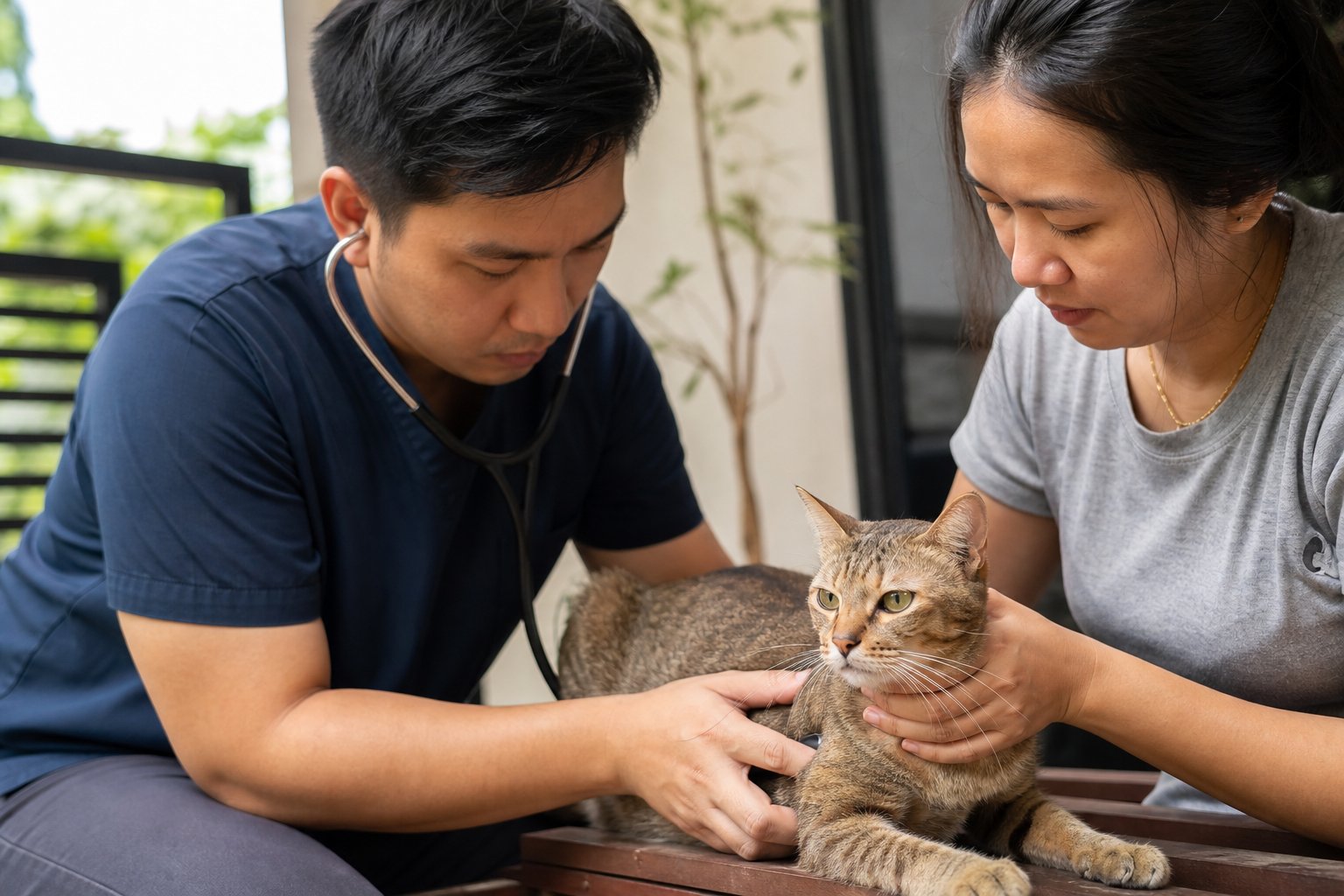
Short answer: from age seven, book a senior health check every six months, and from age ten every three to six months. The core panel is a physical exam, full blood count, kidney and liver biochemistry, thyroid T4, urinalysis and blood pressure, with X-rays or ultrasound added only when indicated. Bring your own home observations — they often tell your vet more than any single number.
Why seven is the starting line
Cats are skilled at masking discomfort. They will quietly reduce their activity, hide away, or simply stop jumping, and by the time the change is obvious to you, the underlying problem is rarely in its earliest stage. That is the whole argument for scheduled screening rather than symptom-driven visits.
Ageing also arrives on a recognisable timetable. The general rule of thumb used in cat care references is that three months of a cat's life is roughly equivalent to a year of a human's, which places a seven-year-old cat somewhere around a human in their mid-forties. From that point onward, the incidence of cancer climbs noticeably; between nine and ten years old a range of geriatric conditions starts appearing; and beyond ten, periodontal disease, overactive thyroid function, chronic kidney insufficiency, tumours, arthritis and cognitive decline all become substantially more common.
The value of regular checks is that they pull diagnosis forward by months, or even years. Kidney markers may not yet exceed the reference range but are creeping upward each visit. Thyroid T4 may sit in the upper half of normal while drifting. Blood pressure may be climbing quietly. None of these trends are visible from the outside, and none can be judged from a single reading — they only appear when results are compared against each other.
That comparison depends on having something to compare with. The first senior panel establishes your cat's own healthy baseline, which is far more informative than any population average, because a value that is normal for your cat may still represent a change for your cat.
How often to schedule the check
| Age or status | Suggested frequency | Reason |
|---|---|---|
| 7 to 9 years | Every 6 months | Organ function and immune resilience begin to decline |
| 10 years and over | Every 3 to 6 months | Peak period for age-related conditions |
| Already diagnosed with a chronic condition | As your vet directs, usually more often | Monitoring disease progression and medication response |
Use the same arithmetic as above to judge the gap: six months without a check is roughly equivalent to two human years without seeing a doctor. For a cat that may be fifteen or twenty years old, the difference between annual and six-monthly screening is the difference between catching kidney disease while it is still compensated and catching it during a crisis.
A cat already under treatment for hyperthyroidism, diabetes or kidney disease will usually be seen more frequently still, because the schedule is then tracking treatment effect as much as screening.
What the checkup actually covers
Physical examination. Coat and skin condition, ear scope, mouth and gums, eyes, and listening to the heart and lungs. Small clues surface here: a murmur, a click, tartar with inflamed gums, or a coat that has become dull because the cat has stopped grooming properly.
Palpation. An experienced vet's hands are a genuine diagnostic tool. Feeling along the body can reveal a surface lump that may be an early tumour, kidneys that have shrunk and become irregular (suggesting advanced kidney disease or polycystic changes), an enlarged or firm liver and spleen, a distended bladder pointing to urinary obstruction, or faecal build-up in the intestines. In a cat that has become lame, palpation localises the pain and helps distinguish a joint problem from a fracture or a slipped kneecap.
Blood count. Red cells, white cells and platelets together flag anaemia, inflammation and infection, and they provide context for interpreting everything else on the report.
Biochemistry. Kidney markers such as BUN and creatinine, liver enzymes, blood sugar, electrolytes and total protein. These are the workhorses of a senior screen.
Thyroid T4. An essential test in older cats. Overactive thyroid is among the most common hormonal disorders in seniors, and its classic signs — eating ravenously yet losing weight, restless yowling at night — are routinely mistaken for normal ageing.
Urinalysis. Crucial for kidney disease and diabetes. Urine specific gravity tells you whether the kidneys are still concentrating properly, and that information often changes before blood values do.
Blood pressure. High blood pressure in older cats is common and usually produces no visible signs until damage has occurred. Left unmanaged it can damage the eyes and cause retinal detachment and blindness, and it also stresses the kidneys and heart.
Imaging, when indicated. X-rays give a picture of the heart, lungs and skeleton; abdominal ultrasound shows the structure of individual organs; an echocardiogram is arranged when a murmur or rhythm abnormality is heard on auscultation.
What to note at home before you go
Half the value of the appointment depends on what you bring with you. Go through this list in the week before the visit and write down anything that applies, with the date it started.
- Drinking more than before — can point to kidney disease, liver disease, diabetes or pancreatitis
- Larger or more frequent urine clumps in the litter tray
- Reduced appetite or refusing food — inflamed gums caused by tartar are a common reason
- Gradual weight loss — chronic gut inflammation, overactive thyroid, and tumours; many cancers announce themselves only as unexplained thinning in the early stages
- Accidents outside the tray — urinary tract or bladder problems
- Reduced mobility — reluctance to jump, stiffness, or using furniture to climb down instead of jumping
- Hiding, or sudden irritability and scratching — can indicate failing eyesight or hearing
Behavioural changes matter just as much. A cat that no longer greets you at the door, has abandoned its favourite high perch, or has begun hissing at another cat in the household may be compensating for pain, vision loss or cognitive change.
Record the pattern rather than a vague impression: "since the middle of last month, two or three times a week" is far more useful to a vet than "he seems a bit off lately". A written note takes a minute to produce and can save a whole appointment of guesswork.
For a cat living alone in a Kuala Lumpur apartment, the indoor setting makes some changes easier to catch — you know exactly how many clumps are in the tray — but it also means the cat has nowhere to burn off discomfort, so subtle drops in activity are easy to miss. In a Johor terrace house with a cat that slips outdoors, weight is harder to track by eye, so a scheduled weigh-in at the clinic becomes your most reliable measurement.
How to read the report
You do not need to interpret every line, but five markers are worth keeping in your own records so that you can compare visits.
| Marker | What to watch | Why it matters |
|---|---|---|
| BUN and creatinine | Steady upward movement across visits | Kidney function declining; a mild single increase must be read alongside urine specific gravity |
| Urine specific gravity | Persistently low concentration | Often the earliest kidney clue, sometimes preceding abnormal blood values |
| Total T4 | Above range, or sitting high-normal and climbing | Overactive thyroid; high-normal values deserve a recheck |
| Blood glucose | Repeatedly elevated | Stress can raise sugar once; confirmation needs a repeat test or a fructosamine level |
| ALT and ALP | Any sustained abnormality | Liver enzymes need a cause found; early liver disease in cats is often silent |
The guiding principle is that trends beat single numbers. That is also why consistency helps: having follow-up samples taken at the same clinic, ideally with the same analyser, makes the comparison far more reliable. If you move or change clinics, carry printed copies of previous results with you.
When the vet discusses the report, ask two questions rather than one: not only "is it normal?" but "is it higher or lower than the last time?" The second question is where senior screening earns its keep.
Preparing for the appointment
Tell the clinic it is a senior check. Longer appointments are usually needed for an older cat, and you can ask in advance which items the clinic normally includes so nothing is quietly left out.
Ask what is itemised. Blood sampling, laboratory analysis, urine collection, blood pressure measurement and imaging are often billed separately, and blood pressure in particular is sometimes only performed if you request it. Ask for a written breakdown before you agree.
On cost: pricing differs widely between clinics, regions and laboratory setups, and packages vary in what they include. Local prices can also change, so confirm current rates directly with your Malaysian vet or retailer rather than relying on figures quoted elsewhere.
Transport. Use a secure carrier with a familiar towel or an old t-shirt carrying your scent. Older cats tolerate travel poorly, so keep the journey smooth, the air conditioning moderate and the waiting room quiet if you can. Bring water for after.
Fasting. Most blood tests are best interpreted after six to twelve hours without food, with water available throughout. Ask when you book, because clinic requirements differ. Never stop prescribed medication or withhold food from a diabetic cat without explicit instructions from your vet.
Records. Collect printed or digital copies of every result. Keeping a simple folder — or a note on your phone — means your cat's history stays with you even if you change clinics.
What happens on the day
A typical visit runs in a predictable order. The cat is weighed and its temperature taken, the vet performs the physical exam and palpation, blood is drawn — usually from a jugular vein or a foreleg, and it takes only a few minutes — and a urine sample is collected. Some clinics give you a special litter substitute to collect a sample at home beforehand, which spares your cat the stress of a full bladder during the visit.
Imaging is often done the same day. If sedation or general anaesthetic is required for an ultrasound or clear radiographs, expect to leave your cat for an extra hour or two of observation before discharge.
Results are not all immediate. Blood count and chemistry are often available the same day, while pathology review and bacterial culture can take several days. Ask how you will be notified and whether a follow-up call is included in the fee.
Before you leave, confirm three things: which values need rechecking, when the next senior check is due, and what signs should bring you back sooner than that.
When to see a vet
Do not wait for the next scheduled screening if your cat shows any of the following:
- Straining repeatedly in the litter tray with little or no urine produced — a veterinary emergency, especially in males
- Not eating for more than 24 hours in an older cat
- Open-mouth breathing, panting or obvious breathing effort
- Collapse, sudden severe weakness, or inability to stand
- Repeated vomiting, particularly with lethargy
- Sudden blindness signs: bumping into walls, disorientation, dilated pupils
- Visible bleeding, a rapidly growing lump, or unexplained severe pain
Between visits, keep the home watch going. A normal report covers a window of a few weeks only, so any new change in drinking, urinating, appetite, weight, energy or behaviour is grounds for an earlier appointment rather than a wait until the calendar says so.
Related reading
- Senior Cat Care Guide Malaysia: 7+ Health Checks, Kidneys, Joints & Daily Care
- Senior Cat Care in Malaysia: Age Signs, Check-ups and Daily Home Adjustments
- Senior Cat Care in Malaysia: 10 Ageing Warning Signs and a Practical Daily Care Checklist
- Senior Cat Not Eating in Malaysia: 8 Causes, Warning Signs & Practical Appetite Tips
- Cat Blood Calcium Disorders in Malaysia: High and Low Calcium, Fatigue Signs, Ca/Phosphorus/PTH Tests and Diet
- Caring for a Cat With Neurological Damage in Malaysia: Home Safety, Rehab and Long-Term Support
- Senior Cat Arthritis in Malaysia: Signs, Home Fixes and What Supplements Can Really Do
- Senior Cat Care Hub Malaysia: Kidney, Joints, Cognition, Diet and Check-Up Timetable for Cats Aged 7 and Above
- Senior Cat Care in Malaysia: Daily Routine and Home Checklist from Age 7
- Senior Cat Cognitive Dysfunction in Malaysia: Why Your Old Cat Yowls at Night, Wanders and Misses the Litter Box
- Senior Cat Cognitive Dysfunction in Malaysia: Night Yowling, Wandering and Accidents Explained