
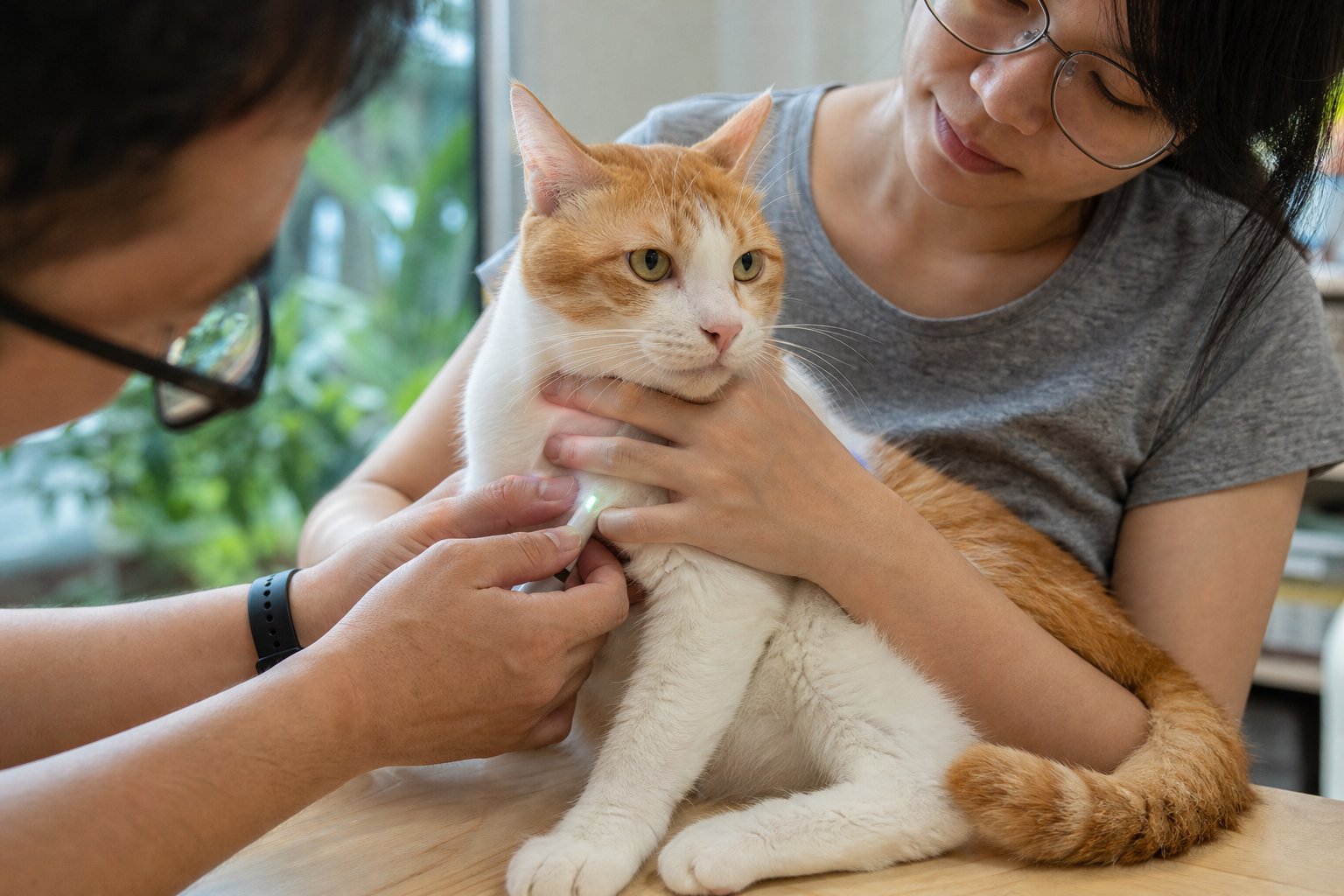
Quick answer: A cat counts as senior from about seven years old, when organ function and metabolism begin to slow even though the animal still looks lively. Most cats live 14 to 16 years, and many reach 19 or 20 with careful attention. Good senior care comes down to a fixed routine, small frequent meals, daily observation of water and appetite, grooming, an easier-to-use home, and a health check every three to six months.
When does a cat become a senior?
Seven years is the widely used cut-off, and it surprises many owners because a seven-year-old cat usually looks identical to a three-year-old one. The difference is happening underneath: metabolic rate and organ reserve are quietly declining, and the conditions of old age begin to appear one after another. Think of seven as roughly human 44, ten as human 56, fifteen as human 75, and twenty or beyond as human 100.
It also helps to know the pace. Cats age much faster in their first two years, then roughly three months of cat life equates to a year of human life thereafter. That matters for how you respond: leaving a problem for a couple of weeks is, in feline terms, the equivalent of a human ignoring something for months. A slow-to-recover illness in an older cat is never a small delay.
| Cat age | About human age | What to focus on |
|---|---|---|
| 3 years | 28 | Physically and emotionally settled adult |
| 7 years | 44 | Senior stage begins; start routine screening |
| 10 years | 56 | Age-related conditions become common; longer sleeps |
| 15 years | 75 | Weaker claw retraction; monthly claw trims needed |
| 20+ years | 100 | Increasingly reachable for indoor cats with good care |
Indoor cats, cats that are neutered and well fed, and cats that receive preventive care tend to live longer, so reaching the high teens is no longer unusual. Your job from seven onwards is not to wait for visible decline but to make decline visible early.
What changes inside the ageing body
Keep five areas in mind during everyday handling, because each one produces changes you can actually observe at home.
Eyesight. Vision gradually dulls with age. Because smell and touch stay sharp and movement slows down, the loss is easy to miss until the cat startles at something right in front of it. Cataracts and high blood pressure can both end in blindness, which is why eye checks and blood pressure readings belong in senior visits.
Hearing. Sensitivity to normal household sounds drops. A cat that does not answer when called may not be ignoring you — it may genuinely not have heard. Startle responses and sudden timidity often trace back to hearing or sight loss rather than a behaviour problem.
Digestion. The gut becomes less efficient at extracting value from food. Older cats generally do better on energy-dense, highly digestible formulations designed for seniors, introduced gradually rather than swapped in one day.
Grooming and claws. Flexibility declines, so the cat cannot reach the back and flanks as effectively, and the coat dulls or tangles — a particular issue for long-haired cats. From around fifteen the claws stop retracting fully, stay exposed, and are filed down less often by scratching.
Adaptability. Older cats cope badly with sudden change. A new food, a moved litter tray or a rearranged room all register as disruption. Anything you need to change should be introduced in small steps over several days.
Beyond these, the common background conditions are reduced kidney function, arthritis, overactive thyroid, gum and periodontal disease, and cognitive change. None of them announce themselves loudly at the start.
A daily routine that works
Consistency is the whole point. Cats regulate their sense of safety around predictable events, and an older cat is less able to cope when the pattern shifts. Fix the feeding times, keep the bowls and tray in the same places, and try not to rearrange furniture around the cat's key stations.
| Time of day | What to do | What to watch for |
|---|---|---|
| Morning | Fresh water, first meal, quick brush-over | Water intake, appetite, brightness |
| Midday | Litter tray check, top up water, short gentle play | Urine clumps and stool consistency |
| Evening | Main meal, 10–15 minutes of light play | Willingness to move, gait, any limping |
| Weekly | Weight check by feel, coat and skin look-over | Loss of muscle over the back or ribs showing |
| Monthly | Claw trim, especially the non-retracting claws | Redness, splitting or thickened claw beds |
For cats of ten and over, splitting the daily ration into three smaller meals is generally kinder than one or two large ones — it eases the load on the digestive system and keeps energy more even. Measured portions matter more than ever, because obesity adds stress to joints already carrying arthritis, while unexpected weight loss is one of the earliest signs of internal disease. Weigh regularly and note the number.
Feeding and hydration
Start with water. Dehydration and kidney strain are recurring themes in older cats, and many simply do not drink enough from a single bowl. Put out several bowls in different rooms, consider a circulating fountain for cats that prefer moving water, and lean on wet food to contribute fluid. Refresh bowls daily and note whether the amount consumed changes — a noticeable increase often precedes a diagnosis.
On food, look for a senior formulation that is digestible and calorie-appropriate, and transition over several days by mixing increasing proportions. Keep the brand and flavour stable; older cats notice and resent changes. Treats should stay a small fraction of the daily intake and must never be used to disguise a poor appetite.
If your cat stops eating, treat that as urgent rather than fussy. Check first: is the cat refusing everything, or eating less of the usual food? Tartar and inflamed gums are among the most common reasons an older cat backs away from the bowl. Ongoing weight loss raises other possibilities, including thyroid disease, chronic intestinal inflammation and, less commonly, tumours. Do not stretch the wait beyond a day, and do not try to entice eating with premium treats — the underlying cause still needs identifying through an oral examination and blood work. The opposite problem deserves equal attention: a cat that seems permanently hungry, waits at the bowl and vocalises for food may be showing an early endocrine change such as diabetes or an overactive thyroid.
Making the home easier to live in
Small structural changes buy a lot of comfort.
- Temperature. Keep the environment neither hot nor cold. In a Kuala Lumpur apartment that often means running the air-conditioning during the hottest part of the day and providing a warm, draft-free bed for the evenings; older cats lose body heat more readily and appreciate a heated pad or a spot away from the fan.
- Access. Lower the entry on litter trays so the cat does not have to haul itself over a high lip on sore joints. Place food and water at a comfortable standing height rather than forcing a deep dip. Add a step or ramp to favourite resting spots instead of expecting jumps.
- Traction. Hard floors become slippery under unsteady paws. Rugs or mats beside the bed, bowls and tray give confident footing and reduce the chance of a fall.
- Water points. Several bowls in different locations, plus a fountain, encourage regular drinking and make it easier to notice when intake changes.
- Litter trays. Provide more trays than cats, keep them spotless, and never relocate them abruptly. A dirty or awkward tray leads to holding on, and a cat that holds on is a cat that develops avoidable urinary trouble.
- Routine stability. Leave the layout alone where you can. If you must move something, shift it a little each day.
In a Penang rainy season, humidity and damp can aggravate stiff joints and encourage musty bedding, so wash and dry bedding more often and make sure the sleeping spot stays dry and warm. Whichever climate you are in, the principle is the same: reduce physical effort, remove slipping hazards, and keep the cat's core temperature comfortable.
Behaviour changes are warning signs
Cats are experts at concealing weakness — an inherited survival strategy from wild ancestors that avoided showing vulnerability to predators. The consequence is that illness in an older cat usually shows up first as a subtle change in behaviour rather than a dramatic collapse. Run through this list mentally each week:
- Drinking and urinating more. Larger or more frequent urine clumps can indicate kidney disease, diabetes or thyroid disease. Measure by counting clumps, not by impression.
- Reduced appetite or refusing food. Frequently gum inflammation caused by tartar; also worth investigating if it persists.
- Gradual weight loss. Can accompany chronic gut inflammation, thyroid disease or a tumour. Weigh monthly so you catch it before the ribs show.
- Accidents outside the tray. Often a urinary tract problem, sometimes simply a tray that is too high or too dirty.
- Not jumping up. Reluctance to climb or a lowered jump is classic arthritis; cartilage wears and movement becomes uncomfortable.
- Timidity or sudden aggression. May be failing sight or hearing rather than a personality change.
- Bad breath, drooling, crunching sounds while eating. Gum inflammation and periodontal disease are extremely common in older cats. Feeding only soft food does not prevent it — soft diets actually let plaque build up faster, so the problem accelerates while the owner assumes the cat is simply eating less.
- Unusual night-time calling. Some vocalising at night happens with age, but loud early-morning yowling can also accompany an overactive thyroid or cognitive change. If the sound worries you, get it checked rather than waiting it out.
- Suddenly ravenous. Eating normally but still begging, hovering at the bowl or crying for food can be an early sign of diabetes or thyroid disease.
The practical rule: write down what has changed and for how long. A dated note of water intake, appetite, weight and stool quality is far more useful to a vet than a general impression of "not quite right".
Grooming, claws and dental care
Because the cat cannot groom thoroughly, you become the groomer. Brush a short-haired cat several times a week and a long-haired cat more often, paying attention to the back and behind the ears where mats form. Mats pull on thinning skin and are painful, so work them out gradually rather than tugging. Handling the coat regularly also lets you feel for lumps, thin patches or areas the cat flinches away from.
Claw care is monthly from the mid-teens at the latest. Retracting claws that no longer sheathe can catch on fabric and split, and reduced scratching means nothing files them down. Trim the tips only, avoid the quick, and check for thickened or discoloured claws that warrant a professional look.
Oral health is the most underestimated part of senior care. Tartar, inflamed gums and periodontal disease are common, painful and directly responsible for eating less. Brushing where the cat tolerates it, dental-specific diets or treats recommended by your vet, and professional scaling when indicated all slow the progression. Never assume a cat has gone off food because of age alone — look inside the mouth first, and mention any smell, drooling or changed chewing style at the next visit.
Leaving your senior cat alone
One firm line: an older cat should not be left on its own overnight. Adult cats in good health may manage a night unattended, but a senior has reduced reserves, less tolerance of stress and a higher chance of a condition flaring without anyone noticing. Arrange a carer, a trusted friend or a suitable boarding option well in advance, and give that person written notes on meals, medication, water intake and the vet's contact details.
For shorter absences, prepare the space: leave more food and water than usual in separate spots, add an extra litter tray, set the room temperature to a comfortable level, block off rooms where the cat could get trapped or into danger, and leave the doors to its main living area open. A familiar blanket, undisturbed resting places and a calm goodbye help more than extra toys.
When to see a vet
Routine screening, not symptoms, should drive your calendar. A practical pattern for cats in their senior years is a check every three to six months, with the exact interval set by your vet according to age and history. Typical components include a physical examination, weight, body condition, blood pressure, blood tests, urine tests, an oral assessment and a review of eyes and joints.
This matters because several major conditions develop silently. Kidney function, for example, can be supported by the body's own compensating mechanisms until a large proportion of function is already lost, meaning the cat appears completely normal on the sofa while the disease is well advanced. The same logic applies to dental disease, thyroid changes and early arthritis. Waiting until the cat "looks unwell" means waiting until the easy window has closed.
Risk also climbs with age. From seven onwards the likelihood of cancer rises noticeably, and from about ten several conditions cluster: periodontal disease, overactive thyroid, chronic kidney impairment, arthritis and cognitive decline. Many cannot be cured, but finding them early genuinely slows progression and preserves quality of life.
Book an appointment promptly if any of these appear: not eating for more than a day, a clear jump in drinking or urination, repeated vomiting, straining in the tray, laboured breathing, collapse or extreme weakness, sudden blindness, or a rapid drop in weight. Ask your vet in advance what a senior health screen involves and what it costs at their clinic — fees differ between practices, and you should confirm current local pricing with your Malaysian vet or retailer rather than relying on figures quoted elsewhere.
📌 Key takeaways
- ✅ Seven years marks the start of the senior stage; organ function declines even when the cat looks well
- ✅ Daily essentials: fresh water with intake noted, scheduled small meals, brushing, litter tray checks and gentle play
- ✅ From ten years, three smaller meals a day ease digestion and make appetite changes easier to spot
- ✅ Home upgrades: lower tray entries and bowls, non-slip mats, ramps, several water points, comfortable temperature
- ✅ Behaviour changes — night calling, weight loss, not jumping, bad breath — are signals, not quirks of ageing
- ❌ Leaving a senior cat alone overnight without a carer
- ❌ Waiting until the cat visibly deteriorates before booking a check-up
This article is for general information only and does not replace veterinary diagnosis or treatment. If your senior cat stops eating, drinks noticeably more, loses weight, or shows any sudden behavioural change, please consult a licensed Malaysian veterinarian promptly.
Related reading
- Senior Cat Care Guide Malaysia: 7+ Health Checks, Kidneys, Joints & Daily Care
- Senior Cat Care in Malaysia: 10 Ageing Warning Signs and a Practical Daily Care Checklist
- Senior Cat Care in Malaysia: Age Signs, Check-ups and Daily Home Adjustments
- Senior Cat Arthritis in Malaysia: Signs, Home Fixes and What Supplements Can Really Do
- Senior Cat Care Hub Malaysia: Kidney, Joints, Cognition, Diet and Check-Up Timetable for Cats Aged 7 and Above
- Senior Cat Cognitive Dysfunction in Malaysia: Night Yowling, Wandering and Accidents Explained
- Senior Cat Quality of Life in Malaysia: A Practical Guide to Comfort Care and Hard Decisions
- Cat Blood Calcium Disorders in Malaysia: High and Low Calcium, Fatigue Signs, Ca/Phosphorus/PTH Tests and Diet
- Caring for a Cat With Neurological Damage in Malaysia: Home Safety, Rehab and Long-Term Support
- Senior Cat Not Eating in Malaysia: 8 Causes, Warning Signs & Practical Appetite Tips
- Senior Cat Checkups in Malaysia: Start at Age 7, Plus What Every Blood Panel Should Cover