
Why does my cat meow at night?
Night-time meowing is one of the most common reasons cat owners lose sleep. The short answer: cats are crepuscular, meaning they are naturally most active around dawn and dusk, and domestic cats often adapt that rhythm to the quiet hours when the house settles. Meowing at night is usually a combination of natural timing, unmet needs (hunger, play, litter access), learned attention-seeking, or an underlying health problem. In Malaysia, warm nights, open windows and dense neighbourhoods can add territorial triggers. The good news is that most cases improve with a structured routine and a vet check to rule out pain or disease.
This guide walks through the likely causes, how to tell normal vocalisation from a warning sign, and a practical plan you can start tonight. It is written for Malaysian cat owners living in apartments, terrace houses and shared homes, where night noise can affect neighbours as well as your own sleep.
The normal cat clock: crepuscular, not nocturnal
Cats are not truly nocturnal. They are crepuscular, with peaks of activity at dawn and dusk when prey is most active. In a home, that natural peak often lands in the early morning hours, which is why many cats wake owners around 4am to 6am. A cat that sleeps most of the day and then expects action at night is simply following its biology, not being naughty.
Indoor cats can shift their activity to the night if daytime is boring. A cat left alone in a Kuala Lumpur apartment while owners work may sleep through the day and then seek engagement at night. The fix is not punishment but enrichment and routine: scheduled play, food puzzles, window perches and a predictable bedtime.
Common causes of night meowing
Hunger and feeding schedule
Hunger is one of the most common reasons cats cry at night. Cats fed once in the morning may be genuinely hungry by 3am. A small, protein-rich meal or a portion of their daily food given just before your bedtime can help. Some owners use timed feeders, but these must be introduced carefully so the cat does not become anxious about the device.
Boredom and excess energy
A cat that has had no interactive play during the day has energy to burn at night. Ten to fifteen minutes of active play with a wand toy before bed, followed by a small meal, mimics the natural hunt-eat-groom-sleep cycle and can noticeably reduce night waking.
Attention-seeking and learned behaviour
If meowing at night has ever led to food, play or even a shout, the behaviour is being reinforced. Cats learn quickly which noises bring attention. The solution is to remove the reward: no food, no play, no conversation at night, while ensuring daytime needs are met. This is hard for the first week but usually effective if everyone in the household is consistent.
Territorial and social triggers
Open windows and doors let cats hear and smell other cats. In Malaysian neighbourhoods with many free-roaming cats, this can trigger yowling, especially in unneutered cats. Closing windows, using screens, and neutering can reduce territorial calling. If a new cat has moved into the area, the behaviour may settle once the novelty passes.
Discomfort, pain and medical disease
Any cat that starts meowing at night suddenly should be checked by a vet. Pain, dental disease, arthritis, urinary problems, high blood pressure and hyperthyroidism can all cause restlessness and vocalisation. In older cats, night crying can be a sign of cognitive dysfunction, sometimes called feline dementia. This is a medical issue, not a behaviour problem to ignore.
Age-related changes
Senior cats often become more vocal at night. Hearing loss can make them louder because they cannot hear themselves, and confusion can make them cry out. A vet visit is essential to look for treatable causes such as pain, thyroid disease or high blood pressure.
How to tell normal meowing from a problem
Use this quick comparison to decide whether to adjust routine or book a vet visit.
| Sign | Likely normal | Possibly medical |
|---|---|---|
| Timing | Around dawn/dusk, predictable | Any time, sudden onset, constant |
| Response to food or play | Settles after meal or play | Does not settle, seems uncomfortable |
| Appetite and thirst | Normal | Increased or decreased |
| Weight | Stable | Losing weight despite eating |
| Litter use | Normal | Straining, frequent urination, accidents |
| Behaviour | Alert, interactive | Disoriented, restless, hiding, aggressive |
| Age | Any age, often young | More common in seniors |
If you tick any box in the "possibly medical" column, see a vet before starting a behaviour plan.
A step-by-step plan to reduce night meowing
Step 1: Rule out medical causes
Book a vet check, especially if the meowing is new, your cat is senior, or there are other signs such as weight loss or increased thirst. Your vet may check teeth, joints, blood pressure, thyroid and kidney function. Do not start behaviour modification until health issues are addressed.
Step 2: Build a daytime enrichment plan
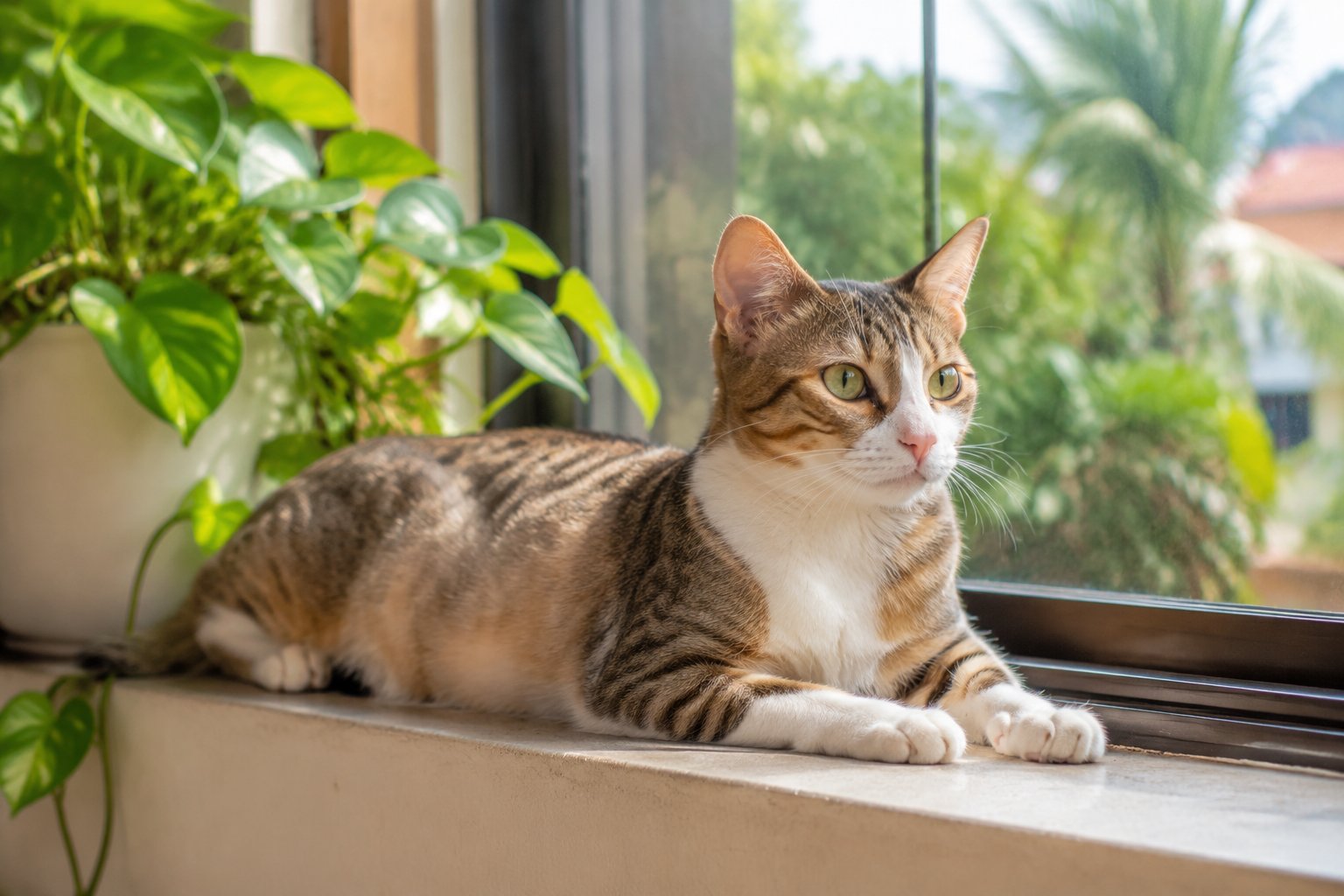
A tired cat sleeps better. Aim for at least two interactive play sessions daily, plus food puzzles, cat trees and window perches. Rotate toys to keep novelty. In a small apartment, vertical space is valuable: shelves, cat trees and window hammocks give cats territory without floor area.
Step 3: Set a predictable evening routine
A consistent sequence signals that the night is for sleeping. For example: play, then a small meal, then grooming, then lights down. Keep the timing similar each night. Cats are routine-driven and respond well to predictability.
Step 4: Adjust feeding
Split daily food into several meals, with the last portion close to your bedtime. If your cat wakes from hunger, a timed feeder or a food puzzle can bridge the gap. Ask your vet about appropriate portion sizes and diets, especially if your cat has health conditions.
Step 5: Manage the environment
Close windows or use secure screens at night to reduce triggers from other cats. Provide a warm, quiet sleeping spot. In Malaysian homes, air-conditioning or a fan can make a room more comfortable, but avoid cold draughts. Keep the litter box clean and accessible.
Step 6: Remove the reward for night meowing
If medical causes are ruled out, do not respond to attention-seeking meows. This means no calling back, no feeding, no letting out. If your cat is safe and has food, water and litter, ignore the noise. Consistency is key: intermittent responding makes the behaviour stronger.
Step 7: Consider a vet behaviour consultation
If the behaviour does not improve after several weeks, or if your cat shows anxiety or aggression, ask your vet about a referral to a veterinary behaviourist. Medication is sometimes appropriate alongside behaviour modification, but only under veterinary guidance.
Special situations in Malaysian homes
Apartments and shared walls
In a Kuala Lumpur apartment, night meowing can affect neighbours. Address it early to avoid complaints. A white-noise machine or a fan can mask some noise, but the real fix is meeting your cat's needs. If you rent, check your building's pet rules and keep communication open with neighbours.
Warm nights and open windows
Malaysia's warm nights often mean windows stay open, which lets in sounds and smells of other cats. This can trigger territorial yowling. Secure screens or closing windows can help. If your cat is not neutered, discuss neutering with your vet; it often reduces roaming and calling.
Multi-cat households
In a multi-cat home, night meowing can be a sign of social tension. Watch for resource guarding around food, litter and sleeping spots. Provide separate resources and vertical space. If tension is severe, seek veterinary behaviour advice.
What not to do
- Do not punish your cat. Punishment increases fear and anxiety and does not teach what you want.
- Do not free-feed all night if your cat is overweight; seek a vet-designed plan.
- Do not let your cat out at night to "burn energy"; this exposes it to traffic, fights and disease.
- Do not ignore sudden changes in behaviour; they can signal illness.
When to see a vet
See a vet promptly if your cat's night meowing is new, constant, or accompanied by any of the following: weight loss, increased thirst or urination, changes in appetite, vomiting, diarrhoea, straining to urinate, disorientation, hiding, aggression, or signs of pain. Senior cats should be checked at least annually, and more often if behaviour changes. If your cat is unwell, behaviour plans should wait until medical issues are treated.
Frequently asked questions
Why does my cat meow every night at 3am? Cats are naturally active at dawn and dusk. A 3am meow often means hunger, boredom or a learned habit that gets your attention. Try a late-night meal and interactive play before bed, and avoid responding unless you suspect pain.
Is night meowing a sign of illness? It can be. Sudden, persistent night crying, especially in older cats, may signal pain, high blood pressure, thyroid disease or cognitive dysfunction. Any new or worsening pattern warrants a vet check.
Should I ignore my cat when it meows at night? If your vet has ruled out medical causes, ignoring attention-seeking meows can help break the habit. This works only if you are consistent and provide enough daytime enrichment so your cat is tired and fed at night.
Can I give my cat a late-night meal to stop meowing? Yes, a small protein-rich meal just before your bedtime can reduce hunger-driven waking. Adjust daily portions so total calorie intake stays appropriate, and ask your vet for a suitable feeding plan.
Do Malaysian weather and open windows affect night meowing? Warm nights and open windows let cats hear and smell other cats, which can trigger territorial yowling. Closing windows or using screens, and neutering, can reduce this trigger.
When should I see a vet about night meowing? See a vet if the meowing is new, constant, accompanied by weight loss, increased thirst, disorientation, or if your cat seems painful. Senior cats and unwell cats should be checked promptly.
Vet disclaimer
This article is for general information only and does not replace veterinary advice. Every cat is different. If you are concerned about your cat's health or behaviour, consult a licensed veterinarian in Malaysia.
Local resources
- Department of Veterinary Services (DVS) Malaysia: https://www.dvs.gov.my/
- DVS Animal Passport information: https://animalpassport.dvs.gov.my/portal-main/about-animal-passport
- SPCA Selangor: https://www.spca.org.my/
- Malaysian Veterinary Council: https://mvc.gov.my/
Related reading
- Cat Behaviour Guide Malaysia 2026: Decode 30 Signals, Fix the Environment First
- Cat Meowing at Night Explained: Why It Happens and How to Help
- Cat Meowing at Night: Training Tips That Actually Work
- How to Stop Cat Clicker Training: A Calm, Step-by-Step Guide for Malaysian Owners
- How to Stop Cat Over-Grooming: A Practical Guide for Malaysian Cat Owners
- Over-Grooming in Cats in Malaysia: Causes, Signs and How to Help
- Aggression in Cats in Malaysia: Why It Happens and How to Handle It
- Cat Aggression Explained: Why Cats Bite, Swipe and Hiss — and What to Do
- Cat Aggression Training Tips: A Practical Guide for Malaysian Owners
- Cat Anxiety in Malaysia: A 2-Week Checklist and 7 Home Fixes That Actually Work

