
Quick answer
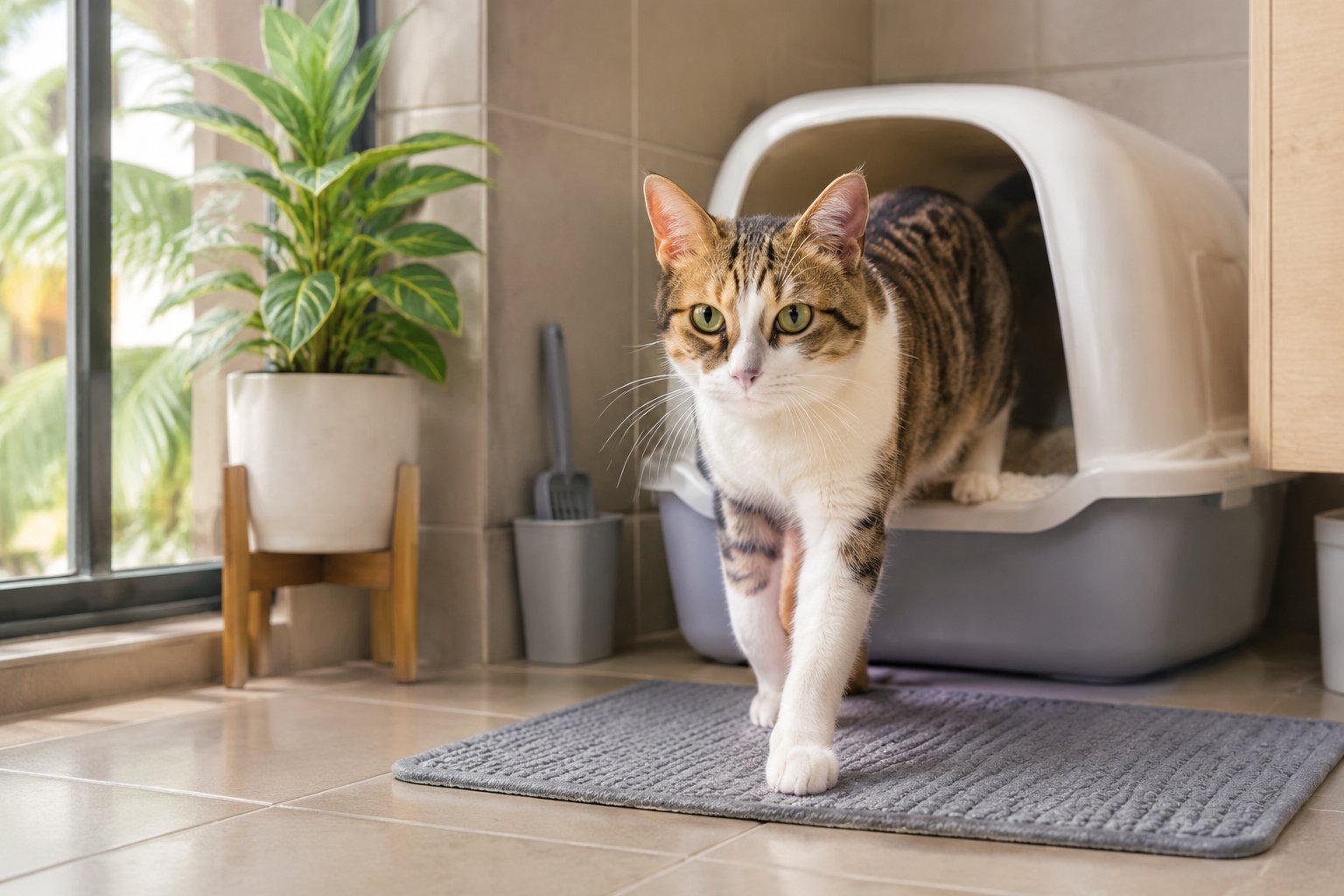
Covered litter boxes control odour and mess and give shy cats privacy, but they trap smells, need frequent cleaning, and some cats refuse them. Choose a large box with a charcoal filter, scoop daily, and offer an open tray too so your cat can choose.
What is a covered litter box?
A covered litter box, also called a hooded or enclosed litter box, has a lid and often a front flap that encloses the litter tray. The cat enters through an opening, does its business, and exits. The hood contains litter scatter and odour, and many models include a charcoal filter to absorb smells.
These boxes are popular in small homes because they hide the tray from view and reduce tracking. But they are not automatically better for every cat. Whether a covered box works depends on your cat's personality, your cleaning routine, and the size and ventilation of the box.
The pros of a covered litter box
1. Odour containment
A hood traps odour inside the box, so the room smells less immediately after your cat uses it. A charcoal filter helps neutralise smells as air passes through. This is useful in apartments where the litter box may be near living areas.
2. Less mess and tracking
High sides and a lid keep litter inside. Cats that dig enthusiastically can fling litter several feet; a covered box contains most of it. Less litter on the floor means less sweeping and less tracking onto beds and sofas.
3. Privacy for shy cats
Some cats prefer a quiet, enclosed space to toilet. A covered box can feel like a safe den, especially in busy households with children or other pets. If your cat is timid, a covered box may encourage use.
4. Discreet appearance
Covered boxes look neater and hide waste from view. In a small apartment, this can make the litter area less obtrusive for guests.
5. Better for some small spaces
A covered box can sit in a corner or under a shelf, using vertical space. Some models double as furniture or fit into a cabinet.
The cons of a covered litter box
1. Trapped odour and poor ventilation
A hood contains smell but also traps it. Without a filter or frequent cleaning, the inside can become pungent, and your cat may avoid it. Ammonia from urine can build up, irritating eyes and airways. Good ventilation and daily scooping are essential.
2. Some cats refuse covered boxes
Cats are vulnerable when toileting. An enclosed box with one exit can feel like a trap, especially in multi-cat homes where a bully may guard the entrance. Refusal can lead to accidents outside the box.
3. Harder to monitor health
An open tray lets you see urine clumps, stool consistency, and frequency at a glance. A covered box hides these signs, delaying detection of urinary problems or diarrhoea. You need to inspect the box daily.
4. More cleaning work
Covered boxes have more surfaces to clean: lid, walls, flap, and filter housing. Odour lingers in plastic, so you may need to replace the box more often. Filters must be changed regularly.
5. Size limitations
Many covered boxes are too small for large cats. A cat needs room to turn around and dig. If the box is cramped, your cat may eliminate outside or develop stress.
6. Flap issues
Some cats dislike pushing through a flap. Elderly cats, kittens, or cats with arthritis may struggle. Removing the flap can solve this.
Covered vs open litter box: comparison
| Feature | Covered litter box | Open litter box |
|---|---|---|
| Odour control | Contains smell but traps it inside; filter helps | Smell spreads but dissipates faster |
| Mess containment | High; less scatter and tracking | Low; litter can be kicked out |
| Privacy | High; suits shy cats | Low; cat is visible |
| Ventilation | Poor unless cleaned often | Good |
| Monitoring health | Difficult; need to inspect inside | Easy; visible at a glance |
| Cleaning effort | Higher; more surfaces and filters | Lower; simple tray |
| Cat preference | Some cats refuse | Most cats accept |
| Space needed | Can be compact but needs clearance | Needs floor space |
| Cost | Generally higher | Generally lower |
How to choose a covered litter box
Size matters most
Measure your cat from nose to tail base. The box should be at least 1.5 times that length, with room to turn around. Many covered boxes are marketed as large but have small interior dimensions. Check the interior, not the exterior.
Look for good ventilation
Some models have vents or a filter compartment. A charcoal filter helps, but it is not a substitute for scooping. Avoid boxes with narrow openings that restrict airflow.
Consider the entrance
A low entry is easier for kittens and senior cats. A removable flap gives flexibility. If your cat is hesitant, start without the flap.
Easy to clean
A box that splits into top and bottom is easier to wash. Smooth surfaces and rounded corners reduce hiding places for bacteria.
Stable base
A lightweight box can tip when a cat jumps in. Look for a sturdy base or non-slip feet.
Filter availability
If the box uses a proprietary filter, check that replacements are easy to find. You can also use universal charcoal pads cut to size.
Setting up a covered litter box in a Malaysian home
Apartment living
In a Kuala Lumpur apartment, space is tight and the litter box may be near the living area. A covered box with a charcoal filter can reduce odour, but you must scoop twice daily and change the filter monthly. Place the box away from food and water, and not in a closed cupboard where humidity builds.
Terrace house with multiple cats
In a Johor terrace house, you may have more space but also more cats. The rule of thumb is one box per cat plus one extra. If you use covered boxes, ensure each has a clear exit and is not placed in a dead-end corner where a cat can be cornered. Provide at least one open box as an alternative.
Humidity and rainy season
Malaysia's humid climate and rainy season can make covered boxes damp and smelly. Clumping litter can absorb moisture and become sticky. Keep the box in a well-ventilated area, avoid bathrooms with poor airflow, and consider a dehumidifier nearby if the room is damp. Clean more often during wet spells.
Step-by-step: transitioning to a covered box
- Start with the lid off. Let your cat use the open tray for a week.
- Add the lid but leave the flap off. Observe for a week.
- Add the flap if your cat is comfortable. If not, leave it off.
- Scoop daily and change litter weekly.
- If your cat avoids the box, revert to open or offer both.
Cleaning routine for covered boxes
- Daily: scoop solids and urine clumps. Stir litter to distribute moisture.
- Weekly: top up or replace litter. Wash the tray with mild soap and water; avoid harsh chemicals.
- Monthly: wash the entire box, including lid and flap. Replace charcoal filter.
- As needed: replace the box if scratches harbour odour.
When to see a vet
See a vet if your cat stops using the litter box, strains to urinate, urinates outside the box, has blood in urine, or shows pain. These can be signs of urinary blockage, infection, or other medical issues. Behavioural avoidance of a covered box is common, but medical causes must be ruled out first. Do not delay if your cat is male and straining, as urinary blockage is an emergency.
Frequently asked questions
Are covered litter boxes good for cats? They suit some cats by providing privacy and containing mess, but they are not universally better. Many cats prefer open trays because they feel less trapped. Offer both and let your cat decide.
How often should I clean a covered litter box? Scoop at least once daily, ideally twice. Replace clumping litter weekly or when soiled, and wash the box with mild soap and water monthly. Covered boxes need more frequent full changes because odour lingers.
Why does my cat refuse to use a covered litter box? Cats may avoid covered boxes if they feel trapped, smell stale odour, or dislike the enclosed space. Remove the lid for a trial, clean thoroughly, and ensure the box is large enough. If avoidance continues, see your vet.
Do covered litter boxes smell worse? They can concentrate odour inside, especially without a filter or daily scooping. The hood contains smells but also traps them when the cat enters. Good ventilation, filters and frequent cleaning reduce the problem.
Can a covered litter box cause health problems? No direct disease is caused by the box itself, but poor ventilation and hygiene can increase stress and respiratory irritation. Cats with arthritis or urinary issues may struggle with high sides or hoods. Consult your vet.
What size covered litter box should I buy? Choose one at least 1.5 times your cat's body length, with room to turn around. Many covered boxes are too small. Measure your cat from nose to tail base and compare with interior dimensions before buying.
Vet disclaimer
This article is for general information only and is not a substitute for veterinary advice. If you have concerns about your cat's litter box habits or health, consult a licensed veterinarian in Malaysia.
Related reading
- Cat Litter Guide Malaysia 2026: Types, Costs and How to Choose
- Crystal Cat Litter for Cats: Pros and Cons Every Malaysian Owner Should Know
- Dust-Free Cat Litter: Pros and Cons for Malaysian Cat Owners
- Best Crystal Cat Litter for Cats in Malaysia: A Practical Buying Guide
- Best Paper Cat Litter for Cats in Malaysia: A Practical Buying Guide

