
What does dust-free cat litter actually mean?
Dust-free cat litter is a marketing term for products that release very few airborne particles when poured, scooped or disturbed. No litter is truly zero-dust. Even the best low-dust products produce some fine powder as granules rub together, and cats kick up particles when they dig.
The practical question is not whether a litter is perfectly dust-free, but whether it produces noticeably less dust than the alternatives you have tried. For many households, that difference is enough to reduce coughing, sneezing and gritty surfaces near the litter box.
Dust comes from several sources: clay fines (tiny clay particles), silica powder from crystal litters, sawdust from wood pellets, and plant fibres from tofu or corn litters. Manufacturers reduce dust by sifting out fines, using larger granules, coating particles, or choosing materials that break down into heavier pieces rather than fine powder.
Why dust matters for cats and people
Airborne dust from litter can irritate the nose, throat and eyes of both cats and humans. Cats are close to the ground and spend time in the box, so they inhale particles directly. People who scoop, pour and clean the box also breathe in dust, especially in small, enclosed rooms.
For cats with feline asthma or chronic bronchitis, dust is one of several possible irritants. It is not the only trigger, and litter changes do not replace veterinary treatment. But reducing dust is a sensible part of managing a sensitive cat's environment, alongside avoiding smoke, strong fragrances and harsh cleaning chemicals.
For humans, dust-free litter can matter for asthma, hay fever and allergies. It also keeps shelves, floors and bathroom surfaces cleaner, which is a practical benefit in apartments where the litter box may sit near living areas.
The pros of dust-free cat litter
1. Less respiratory irritation
Lower dust means fewer particles for cats and people to inhale. This is the main reason owners switch, especially in households with asthma or allergies.
2. Cleaner surfaces and less grit
Dust settles on floors, windowsills, washing machines and nearby furniture. A low-dust litter reduces that film, which is helpful in smaller homes where the box is close to living space.
3. Often easier on the eyes and nose
Fine dust can make cats sneeze and people cough. Reducing it can make the litter area more pleasant, particularly in humid conditions where dust can cling to damp surfaces.
4. Better for some sensitive cats
Some cats seem to prefer low-dust textures, though individual preference varies. A cat that sneezes or avoids the box after a litter change may be reacting to dust or scent.
5. Easier cleaning routine
Less dust means less wiping of surrounding surfaces. That can make daily scooping and weekly cleaning faster, which matters for busy households.
The cons of dust-free cat litter
1. No litter is truly zero-dust
Labels can overpromise. Even low-dust litters release particles when poured from a height or when a cat digs vigorously. Expect improvement, not perfection.
2. Higher cost
Low-dust products often cost more because of extra processing, sifting or premium materials. Prices vary widely in Malaysia, so compare cost per kilogram and per month rather than per bag. Ask local retailers about current pricing.
3. Texture may not suit every cat
Some dust-free options use larger granules, pellets or crystals. Cats can be fussy about texture, and a cat that dislikes the feel may avoid the box. That can lead to accidents, which is a bigger problem than dust.
4. Clumping and odour control can vary
Dust-free does not automatically mean good clumping or odour control. Some low-dust litters clump firmly; others crumble or track more. Odour control depends on the material, scooping frequency and box hygiene.
5. Tracking can increase
Fine, low-dust litters can stick to paws and travel through the house. Heavier pellets track less but may be less comfortable for sensitive paws. A litter mat and high-sided box help either way.
6. Heavier bags and more waste
Some low-dust litters are denser, making bags heavier to carry and boxes heavier to empty. Consider storage and disposal in apartment living, where rubbish chutes and bin space may be limited.
Comparison table: common dust-free litter types
| Litter type | Dust level | Clumping | Tracking | Odour control | Notes for Malaysian homes |
|---|---|---|---|---|---|
| Low-dust clay clumping | Low to moderate | Strong | Moderate | Good | Widely available; heavier bags; good for busy scoopers |
| Silica crystal | Low | None (absorbs) | Low to moderate | Good | Lightweight; some cats dislike texture; avoid if cat eats litter |
| Tofu or soy-based | Low to moderate | Moderate to strong | Moderate | Moderate | Plant-based; can be flushable if labelled; humidity affects storage |
| Pine or wood pellet | Low | Weak to none | Low | Moderate | Good for non-clumping setups; sawdust can appear when disturbed |
| Paper pellet | Low | None | Low | Moderate | Soft; good for post-surgery or sensitive paws; limited clumping |
| Corn or wheat | Low to moderate | Moderate | Moderate | Moderate | Check for allergies; store dry in humid weather |
Dust-free litter and cat health: what to watch
Litter choice is not a treatment for illness. If a cat has asthma, chronic coughing, sneezing or nasal discharge, see a vet. Reducing dust may help manage the environment, but it does not replace diagnosis or medication.
Urinary and behavioural issues are also important. Cats can develop aversions to litter texture, especially after a painful urinary episode. A cat that associates the box with pain may avoid it even after the medical issue resolves. If your cat urinates outside the box, strains, cries in the box or licks the genital area, seek veterinary advice promptly. Male cats with urinary blockages can become critically ill within hours.
Kittens and cats with weakened immunity may be more sensitive to dust and hygiene. Keep the box clean, avoid strong scents, and ask your vet about suitable litter for very young or unwell cats.
How to choose a dust-free litter in Malaysia
Start with the cat, not the label. Observe whether your cat sneezes, coughs or avoids the box. Consider the household: asthma, allergies, small children, and whether the box sits in a bathroom, balcony or utility area.
Check the bag for clear descriptions such as low-dust, 99% dust-free or dust-reduced, but treat these as claims rather than guarantees. Look at granule size and material. Fine clay clumps well but can track; pellets track less but may not clump.
In Malaysia's humid climate, storage matters. Keep litter sealed and dry, because moisture can encourage mould and odour, especially with plant-based litters. Buy sizes you can use within a reasonable time.
Consider cost per month, not just per bag. A cheaper litter that needs frequent full changes may cost more overall. Ask local retailers and your vet for recommendations, since availability and pricing vary.
Setting up a low-dust litter box
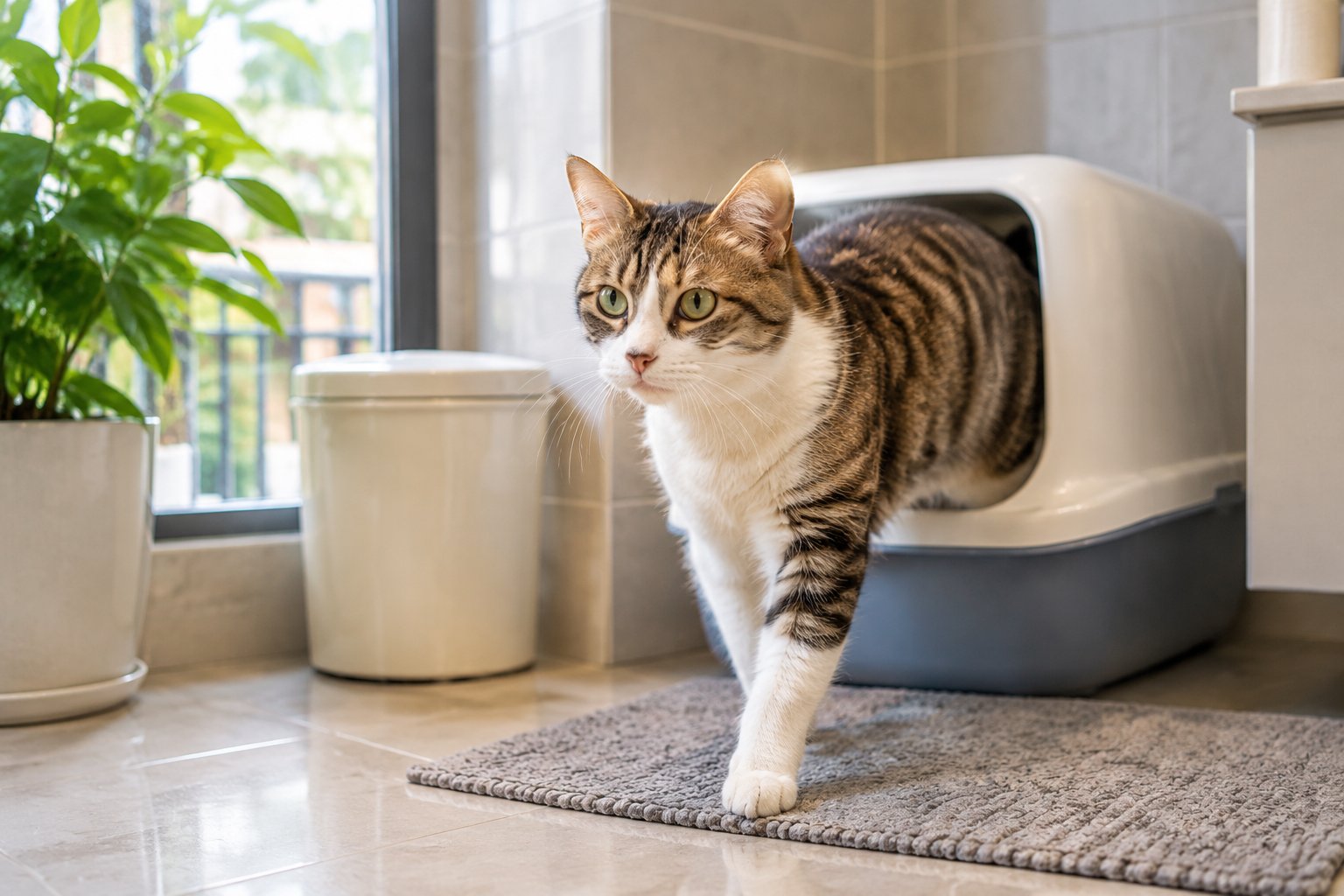
Use a box with high sides to contain kicks and dust. Place a textured litter mat at the entrance to catch particles from paws. Keep the litter depth moderate; too much litter can increase dust when cats dig.
Pour litter slowly from a low height to reduce airborne particles. Scoop gently rather than digging forcefully. Clean the box regularly, but avoid harsh fragrances and strong chemicals that can irritate cats.
Keep the litter area ventilated. In apartments, a bathroom with an exhaust fan or a balcony with shade can work, but avoid damp, mould-prone corners. Wash the box with mild soap and water, rinse well, and dry fully before refilling.
Transitioning your cat safely
Cats are creatures of habit. Sudden litter changes can cause stress and accidents. Mix the new litter with the old, starting with about one part new to three parts old, and increase gradually over one to two weeks.
Keep the box in the same place and maintain the same cleaning routine. If your cat avoids the box, slow down or revert to the old litter for a few days. Never punish a cat for accidents; instead, review the setup and consult a vet if the behaviour persists.
When to see a vet
See a vet if your cat coughs, wheezes, sneezes persistently, has nasal discharge, or shows breathing difficulty. These signs can indicate asthma, infection or other conditions, and litter dust is only one possible factor.
Seek urgent veterinary care if your cat strains to urinate, produces little or no urine, cries in the litter box, vomits, or seems lethargic. Urinary blockage is an emergency, especially in male cats. Also see a vet if your cat suddenly avoids the litter box, has diarrhoea or constipation, or develops skin irritation around the paws or bottom.
Frequently asked questions
Is dust-free cat litter really 100% dust-free? No. Most products labelled dust-free are low-dust, not zero-dust. Pouring and scooping always release some particles. You can reduce dust further by pouring slowly, using a mat, and keeping the litter depth moderate.
Is dust-free litter better for cats with asthma? It can help by reducing inhaled irritants, but litter is only one factor. Smoke, perfume, cleaning sprays and poor ventilation also matter. Ask your vet about your cat's specific triggers and treatment plan.
Which dust-free litter is best for kittens? Choose unscented, low-dust litter with a soft, fine texture and avoid clumping litter for very young kittens that may eat it. Introduce it gradually and supervise. Ask your vet if your kitten has any health issues.
Does dust-free litter track less around the house? Not necessarily. Fine, low-dust litters can track more easily on paws. Use a textured litter mat, a high-sided box, and scoop gently to reduce tracking. Heavier pellet litters track less but may feel rougher to cats.
Can dust-free litter cause constipation or urinary problems? Litter texture can influence preference, but it does not directly cause urinary disease. If a cat avoids the box, strains, or urinates outside it, see a vet promptly, because urinary blockages are emergencies, especially in male cats.
How do I switch my cat to dust-free litter? Mix the new litter with the old one, starting with about one part new to three parts old, and increase over one to two weeks. Keep the box in the same place and scoop daily. Slow transitions reduce accidents and stress.
Bottom line
Dust-free cat litter is a useful option for households dealing with dust, allergies or asthma, but it is not a magic fix. Expect lower dust rather than none, weigh the cost and texture against your cat's preferences, and transition slowly. If your cat shows breathing or urinary signs, see a vet rather than relying on a litter change alone.
This article is general information for Malaysian cat owners and does not replace veterinary advice. Always consult a licensed veterinarian about your cat's health.
Related reading
- Cat Litter Guide Malaysia 2026: Types, Costs and How to Choose
- Best Crystal Cat Litter for Cats in Malaysia: A Practical Buying Guide
- Best Paper Cat Litter for Cats in Malaysia: A Practical Buying Guide
- Best Pine Cat Litter for Cats in Malaysia: A Practical Buying Guide
- Best Scented Cat Litter for Cats in Malaysia: A Practical Buying Guide
- Best Tofu Cat Litter for Cats in Malaysia: A Practical Buying Guide

