Why dust-free cat litter matters in Malaysia
Cat litter dust is more than a nuisance. When you pour a fresh bag, fine particles float into the air and settle on floors, shelves, and your cat's fur. In Malaysia, many homes are closed up with air-conditioning for much of the day, so dust can linger indoors. That makes low-dust litter a practical choice for both human and feline health.
Dust can irritate your cat's eyes and airways. Cats with feline asthma or sensitive lungs may cough or wheeze more when litter dust is high. Humans in the household can also react, especially those with allergies. Choosing a litter that produces less dust is a simple way to improve the air quality around the litter box.
This guide explains what makes a litter dusty, compares the main low-dust options available in Malaysia, and gives you a checklist for choosing and switching litter without stress.
What makes cat litter dusty?
Dust comes from fine particles in the litter. Clay-based clumping litter, especially cheaper varieties, contains a lot of fine clay powder. When you pour it or your cat digs, that powder becomes airborne. Some plant-based litters also create dust if they are over-dried or crumble easily.
Key factors that affect dust levels:
- Particle size: Larger, heavier particles settle faster and create less airborne dust. Pellets and larger granules are usually better than fine sand-like litter.
- Moisture content: Very dry litter crumbles into dust. Litter that holds a little moisture (without being damp) tends to be less dusty.
- Quality control: Cheap litters may have more broken pieces and powder at the bottom of the bag. Shaking the bag before opening can help you see how much powder is present.
- How you pour: Pouring from a height creates a dust cloud. Pouring slowly and close to the box reduces it.
- Scooping habits: Aggressive scooping stirs up dust. Gentle scooping and waiting a moment before breathing near the box helps.
Comparison of low-dust litter types
The table below compares common low-dust litter types on dust level, clumping, odour control, and suitability for Malaysian homes.
| Litter type | Dust level | Clumping | Odour control | Flushable? | Best for |
|---|---|---|---|---|---|
| Tofu litter | Very low | Yes (usually) | Good | Some brands yes, check local rules | Most homes, easy scooping |
| Pine pellets | Low | No (sawdust when wet) | Good | No | Budget-conscious, low-tracking |
| Paper pellets | Very low | No | Moderate | No | Cats with respiratory sensitivity |
| Crystal (silica gel) | Low | No | Excellent | No | Odour control, low maintenance |
| Clay clumping | Moderate to high | Yes | Good | No | Traditional users, but dustier |
Tofu litter
Tofu litter is made from soy fibre or plant-based materials. It usually comes in small cylindrical pellets that clump when wet. Quality tofu litter produces very little dust, making it a popular choice in Malaysian apartments. It is also relatively lightweight and easy to scoop.
However, not all tofu litter is equal. Cheaper brands may crumble more and create dust. Look for firm pellets and avoid bags with a lot of powder at the bottom. Some tofu litters are marketed as flushable, but always check with your local sewerage authority or building management before flushing any litter. In many Malaysian apartments, flushing litter is not recommended because it can clog pipes.
Pine pellet litter
Pine pellets are made from compressed sawdust. They are low-dust and low-tracking because the pellets are large. When wet, they break down into sawdust, which you can scoop out. Pine litter has a natural woody scent that some people enjoy, but some cats may be sensitive to the smell of pine. Use kiln-dried pine to reduce aromatic oils.
Pine pellets are often more affordable than tofu litter, but they do not clump, so you need to change the whole box more frequently. They are a good option for budget-conscious households and for cats that do not mind a non-clumping texture.
Paper pellet litter
Paper litter is made from recycled paper formed into pellets. It is one of the lowest-dust options and is often recommended for cats with allergies or respiratory issues. It is soft on paws and absorbs moisture well. However, it does not clump, so odour control is moderate, and you need to change it regularly. It is also heavier than tofu litter.
Crystal litter
Crystal litter is made from silica gel beads. It is low-dust because the beads are large and heavy. It absorbs urine and dries out solid waste, which helps control odour. However, it is not flushable, and some cats dislike the texture of the beads under their paws. It is also more expensive per bag, though it may last longer.
Clay litter
Clay clumping litter is the most common type, but it is also the dustiest. If you must use clay, choose a low-dust formula and pour carefully. However, for a truly dust-free experience, plant-based or paper litters are better choices.
How to test a litter for dust
Before you commit to a large bag, test a small amount. Here is a simple method:
- Pour a cup of litter into a clean, dry container from a low height.
- Watch for a visible dust cloud. A little dust is normal, but a thick cloud suggests high dust.
- Rub a small amount between your fingers. If it crumbles into powder easily, it may create more dust over time.
- Shake the bag gently before opening. If a lot of powder settles at the bottom, the litter may be dusty.
- Observe your cat digging. If your cat sneezes or coughs after using the box, the litter may be too dusty.
Choosing the best dust-free litter for your home
Consider these factors when choosing a litter:
- Your cat's preferences: Cats can be picky about texture. Some prefer fine grains, others prefer pellets. Introduce new litter gradually.
- Your home environment: In a small apartment, low-dust and low-tracking are important. In a house with a dedicated utility area, you have more flexibility.
- Your budget: Tofu and crystal litters cost more per bag, but may last longer. Pine and paper are often more affordable.
- Odour control: Crystal litter excels at odour control. Tofu and pine are good. Paper is moderate.
- Health needs: If your cat has asthma or allergies, choose the lowest-dust option, such as paper or quality tofu.
- Disposal: Check local waste disposal rules. Do not flush litter unless the manufacturer and local authorities say it is safe.
Setting up a low-dust litter box
Even the best litter can create some dust. These steps help keep dust down:
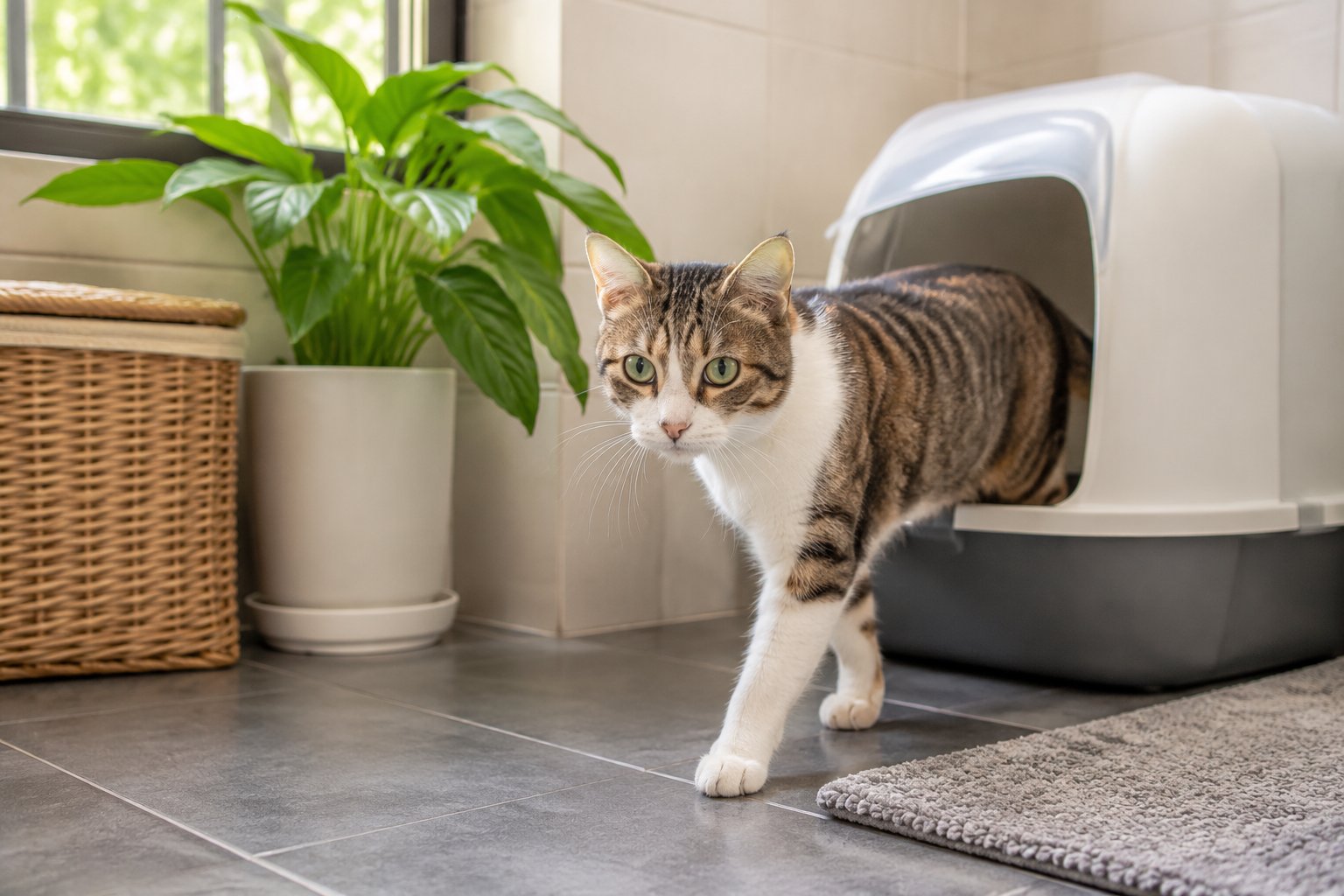
- Use a litter box with high sides or a hood to contain dust and scatter.
- Place a textured litter mat outside the box to trap tracked particles.
- Pour litter slowly from a low height.
- Scoop gently and daily. Avoid vigorous shaking of the scoop.
- Keep the box away from air-conditioning vents and fans that can blow dust around.
- Ventilate the room when you change the litter.
- Wipe surfaces around the box regularly with a damp cloth.
Switching to a dust-free litter
Cats are creatures of habit. A sudden change can cause stress or litter box avoidance. Follow this gradual switch:
- For the first three days, mix about 25% new litter with 75% old litter.
- For the next three days, use 50% new and 50% old.
- For the following three days, use 75% new and 25% old.
- Finally, use 100% new litter.
If your cat refuses to use the box, slow down and go back a step. Keep the box in the same location and maintain your scooping routine. Never punish your cat for accidents; instead, review the litter and box setup.
Common mistakes to avoid
- Buying in bulk without testing: A large bag of dusty litter is a waste. Test a small bag first.
- Mixing litters incorrectly: Mix thoroughly so your cat does not just pick out the old litter.
- Overfilling the box: Too much litter can cause more dust when your cat digs. Follow the recommended depth.
- Ignoring your cat's signals: If your cat sneezes, coughs, or avoids the box, reassess the litter.
- Flushing litter: Even flushable litter can clog pipes. Dispose of it in the bin unless you are sure.
When to see a vet
If your cat shows signs of respiratory or urinary problems, see a veterinarian. Signs to watch for include:
- Persistent coughing or wheezing
- Sneezing or nasal discharge
- Eye redness or discharge
- Difficulty urinating or urinating outside the box
- Straining in the litter box
- Blood in urine
These signs can indicate asthma, allergies, urinary tract disease, or other conditions. A vet can examine your cat and recommend appropriate treatment. Do not delay if your cat seems unwell.
Frequently asked questions
What is the best dust-free cat litter in Malaysia?
Tofu litter and pine pellet litter are the best low-dust choices for most Malaysian homes. They produce little airborne dust, control odour well, and are easy to scoop. Paper litter is best for cats with respiratory sensitivity.
Is tofu litter really dust-free?
No litter is 100% dust-free, but quality tofu litter produces very little dust when poured and scooped. Cheaper brands may crumble more. Look for firm, low-crumble pellets and pour slowly to minimise dust.
Can dust from cat litter harm my cat?
Heavy dust can irritate a cat's eyes and airways, especially in cats with asthma or sensitive lungs. Low-dust litter reduces this risk. If your cat coughs or wheezes, see a vet.
Which cat litter is best for a small Malaysian apartment?
In a small apartment, choose a low-dust, low-tracking litter such as tofu or pine pellets, and use a covered box with a mat. Scoop daily and ventilate the room to control odour and dust.
Is crystal cat litter dust-free?
Crystal litter is low-dust because the silica gel beads are larger and heavier than clay dust. However, it is not flushable and should be disposed of in the bin. Some cats dislike the texture.
How do I switch my cat to a dust-free litter?
Mix the new litter with the old one, starting with about 25% new litter. Increase the ratio over one to two weeks. Keep the box in the same place and scoop daily. If your cat refuses, slow down.
Where to buy and what to ask
Dust-free litters are available from pet shops, online marketplaces, and some veterinary clinics in Malaysia. Prices vary by brand and bag size, so ask your local retailer for a sample or a small bag before committing to a large purchase. When shopping, ask:
- Is this litter low-dust?
- What is the main material?
- Does it clump?
- Is it flushable? (Check local rules.)
- What is the return policy if my cat does not like it?
Final thoughts
Choosing the best dust-free cat litter for your cat in Malaysia comes down to balancing dust levels, odour control, cost, and your cat's preferences. Tofu and pine litters are excellent starting points for most homes, while paper litter is ideal for sensitive cats. Always introduce new litter gradually and monitor your cat's response. With a little experimentation, you can find a litter that keeps your home cleaner and your cat comfortable.
Disclaimer: This article is for general information only and is not a substitute for veterinary advice. If you have concerns about your cat's health, consult a licensed veterinarian in Malaysia.