
The short answer
Bringing home a pet is exciting, but the first month sets the tone for years. Prepare a safe space, the same food your pet is already eating, a carrier, bedding and a litter tray for cats. Book a vet check-up in the first few days, agree a vaccination and parasite plan, and set a realistic monthly budget before you fall in love with a cute face.
This guide is written for first-time owners in Malaysia, whether you are in a Kuala Lumpur apartment, a Johor terrace house or a Penang flat during the rainy season. It covers preparation, the first 24 hours, routines, feeding, grooming, parasite control, costs and the warning signs that mean you should call a vet.
Before you bring your pet home
Decide whether your home suits the animal
A pet is a 10 to 20 year commitment for many dogs and cats. Before adopting, be honest about your working hours, travel, budget and housing. If you rent, read the tenancy agreement and building house rules first. If you live in a high-rise, think about lifts, balcony safety and where the animal will toilet.
Ask yourself:
- Who feeds, walks and cleans up on weekdays?
- What happens during Hari Raya, Chinese New Year or a long holiday?
- Can you afford an unexpected vet bill this month?
- Is anyone at home allergic, or afraid of animals?
- Does your building or local council allow the pet you want?
Set up a safe space
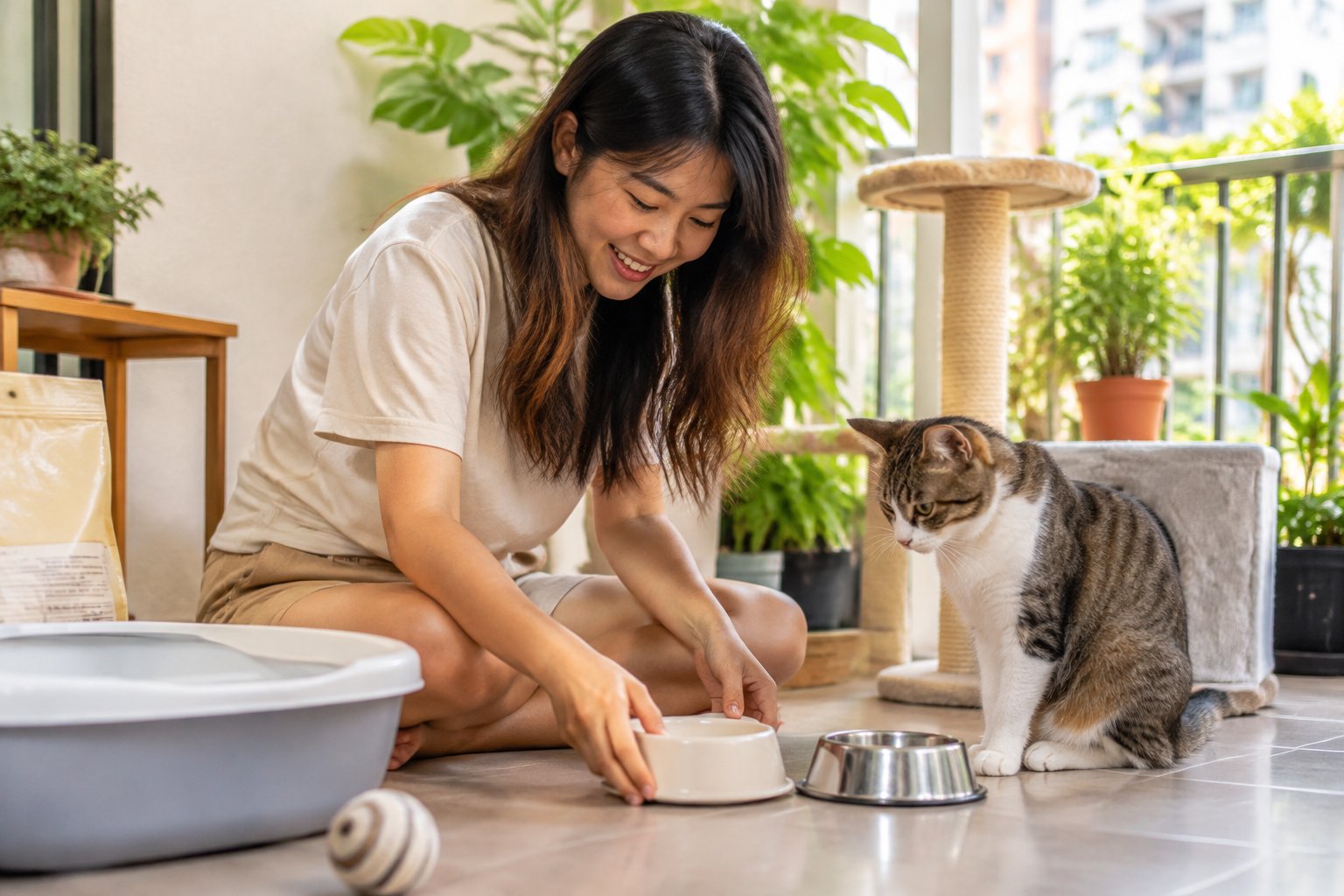
Choose one quiet room or corner. For cats, this is often a small room with a litter tray, food, water and a hiding box. For puppies, a crate or playpen works well. The goal is a space where the pet can retreat, not a cage for the whole day.
Shopping checklist
| Item | Why you need it | Notes |
|---|---|---|
| Food the pet already eats | Sudden diet changes cause stomach upset | Ask the shelter or breeder for the exact brand and amount |
| Food and water bowls | Daily basics | Ceramic or stainless steel is easy to clean |
| Carrier or crate | Safe transport and a den at home | Must be secure and well ventilated |
| Bedding | Comfort and warmth | Washable covers save time |
| Litter tray and litter | Essential for cats | One tray per cat plus one spare is a common rule |
| Collar and ID tag | Identification | Microchipping is also worth discussing with your vet |
| Grooming tools | Coat, nails, ears, teeth | Match the tool to the coat type |
| Pet-safe cleaner | Accidents happen | Avoid harsh bleach near animals |
| First-aid basics | Small cuts and grazes | Ask your vet what to keep at home |
Do not buy a huge bag of a new food, a fancy bed and ten toys on day one. Start simple, watch what your pet actually uses, and add items later.

The first 24 hours
Keep arrivals boring in the best way. Put the carrier down in the safe room, open the door and let the pet come out on its own. Speak softly. Avoid inviting friends over for a meet-and-greet.
For a puppy or kitten:
- Offer water and a small portion of the usual food.
- Show the litter tray or toilet area gently.
- Let the animal sniff and explore at its own pace.
- Keep children and other pets calm and supervised.
- Note the first meal, drink, pee and poop, because your vet may ask.
Expect hiding, whining or a skipped meal on day one. A kitten may hide under furniture for hours. That is normal. Prolonged refusal to eat, repeated vomiting, diarrhoea, collapse or laboured breathing is not normal, and you should call a vet.
Introducing other pets
Do not throw a new cat and an existing cat into the same room. Use scent swapping first: rub a cloth on one animal and let the other sniff it. Then allow brief, supervised views through a cracked door or baby gate. Feed them on opposite sides of the door so good things happen near each other. This slow approach reduces fights and stress.
For dogs, parallel walks at a distance work well. Keep both leashes loose and reward calm behaviour. If either dog stiffens, stares or lunges, increase the distance.
Feeding a new pet
Keep the food consistent at first
Sudden changes in diet are a common cause of loose stools in young animals. Feed the same food for at least the first week, then transition slowly over seven to ten days by mixing increasing amounts of the new food with the old.
How much and how often
Puppies and kittens usually eat three to four small meals a day when very young, moving to two meals as they grow. Adult dogs often do well on two meals, and adult cats can be fed measured meals rather than free-feeding, which helps prevent obesity.
Use the feeding guide on the pack as a starting point, then adjust based on body condition. You should be able to feel the ribs easily without seeing them sharply. Ask your vet to show you how to body-score your pet.
Water and heat
Malaysia is hot and humid, so fresh water must be available at all times. Wash bowls daily. If your pet is outdoors part of the day, provide shade and a shaded water bowl that cannot tip over. Never leave an animal in a parked car, even for a few minutes.
Treats and human food
Treats should be small and counted as part of the daily food intake. Avoid bones that splinter, chocolate, grapes and raisins, onions and garlic, alcohol, caffeine and very salty food. If you are unsure whether something is safe, ask your vet rather than guessing.
Vaccination, deworming and parasite control
Start a vet relationship early
Book a check-up in the first few days. The vet will confirm the pet's age and sex, listen to the heart and lungs, check the ears, eyes, skin and teeth, and look for fleas, ticks and ear mites. Bring any records from the shelter, breeder or previous owner.
Vaccination
Puppies and kittens need a course of core vaccines, usually starting at around six to eight weeks and repeating every few weeks until about 16 weeks, followed by boosters. Adult pets need regular boosters. Your vet will tailor the plan to your pet's age, health and lifestyle, and will discuss optional vaccines based on risk.
Worms, fleas and ticks
Young animals commonly carry intestinal worms, so deworming is usually part of the early plan. Fleas and ticks are a year-round concern in a warm climate, and mosquitoes can transmit heartworm to dogs. Prevention products come as spot-ons, tablets, collars and injectables. Never use a dog product on a cat, and never guess a dose. Ask your vet for the right product for your pet's weight and age.
A simple prevention calendar
| Task | Typical timing | Who decides |
|---|---|---|
| First vet check | Within a few days of arrival | You and your vet |
| Puppy or kitten vaccine course | From around 6 to 8 weeks, repeated | Vet |
| Deworming | As advised, often monthly when young | Vet |
| Flea and tick prevention | Monthly or as labelled | Vet |
| Heartworm prevention | As advised for dogs | Vet |
| Adult booster | Yearly or as advised | Vet |
| Sterilisation discussion | Usually from around six months, varies | Vet |
Grooming and daily care
Coat and skin
Short-coated pets need a quick brush a few times a week. Long-coated breeds need daily brushing and regular professional grooming. In humid weather, damp fur behind the ears and under the collar can trap moisture and cause skin irritation, so dry those areas well after a bath or swim.
Bathe only as often as your vet or groomer advises. Over-bathing strips natural oils and can make skin dry and itchy. Use a pet shampoo, not human shampoo.
Nails, ears and teeth
Trim nails every few weeks, taking off small amounts at a time. If you can hear nails clicking on the floor, they are probably too long. Check ears weekly for redness, discharge or a bad smell. Brush teeth with pet toothpaste several times a week; human toothpaste is not suitable.
Litter tray hygiene
Scoop the litter tray at least once a day and change the litter regularly. Wash the tray with mild soap and water. Cats are fastidious, and a dirty tray is a common reason for accidents outside the box. Place trays away from food and water.

Living in a Malaysian home
Apartments and high-rises
In a Kuala Lumpur apartment, balconies need mesh or netting before a cat arrives. Cats can slip through small gaps, and a fall from height is serious. Keep windows screened. For dogs, plan lift etiquette: carry small dogs or keep them close on a short leash, and avoid crowded lifts at peak times.
Check your building's rules and your local council's requirements before adopting. Rules on pets in strata buildings vary, and some places require registration or have restrictions. Get any approval in writing if you rent.
Terrace houses and landed homes
A Johor terrace house may have a small yard, but a gate is not a fence. Check for gaps under gates, loose panels and plants that could be toxic. Supervise outdoor time, especially for puppies that chew everything. Ensure your pet cannot slip out when the gate is opened for a car.
Rainy season and humidity
Penang's rainy season means wet paws, damp fur and muddy floors. Keep a towel by the door, dry paws after walks, and check paw pads for cracks or irritation. Store dry food in an airtight container to keep it crisp in humid air, and wash water bowls more often because biofilm builds up quickly in warm weather.
Heat safety
Walk dogs in the early morning or evening, not at midday. Test the pavement with the back of your hand for five seconds; if it is too hot for you, it is too hot for paws. Provide shade and cool water, and watch for heavy panting, drooling, wobbliness or collapse, which can signal heatstroke and need urgent vet care.
Budgeting for a new pet
Costs vary by species, size, breed, clinic and city, so treat any figure you see online as a rough guide only. Ask a Malaysian vet and a local retailer for quotes. Build your budget around categories rather than a single number.
| Cost category | What to plan for | Money-saving tip |
|---|---|---|
| Food | Monthly staple | Buy the largest bag your pet finishes before it goes stale |
| Parasite prevention | Monthly or as labelled | Do not skip doses; prevention is cheaper than treatment |
| Vaccination and check-ups | First year is heavier | Ask about packages at your clinic |
| Grooming | Monthly or quarterly | Learn basic brushing and nail trims at home |
| Litter or bedding | Ongoing for cats and small pets | Compare clumping and non-clumping options |
| Sterilisation | One-off | Ask your vet about timing and options |
| Emergency buffer | Unexpected illness or injury | Set aside a small amount monthly |
| Boarding or pet sitter | Holidays | Book early and visit the facility |
A useful rule is to keep a separate savings pot for vet care. Even healthy pets have accidents, and having money set aside means you can say yes to treatment quickly.
Training and routine
Start simple
Teach one thing at a time. For puppies, focus on name recognition, toilet training and gentle handling. For kittens, focus on litter tray use and being comfortable with touch. Short sessions of a few minutes, several times a day, work better than long ones.
Reward what you like
Reward-based training is effective and builds trust. Ignore or redirect unwanted behaviour rather than shouting. If your puppy chews furniture, provide appropriate chews and supervise. If your cat scratches the sofa, place a scratching post nearby and reward use.
Socialisation
Gentle, positive exposure to different people, sounds, surfaces and handling helps young animals become confident adults. Keep it calm and stop if the pet looks frightened. Do not take an unvaccinated puppy to busy public places where unknown dogs have been.
Routine chart
| Time | Task |
|---|---|
| Morning | Feed, fresh water, toilet break, quick health check |
| Midday | Shade and water check if outdoors; short play session |
| Evening | Feed, walk or play, grooming, litter scoop |
| Weekly | Weigh young pets, check ears and nails, wash bowls thoroughly |
| Monthly | Parasite prevention, review budget, restock food |
Common first-month mistakes
- Changing food too fast and causing diarrhoea.
- Letting a kitten roam the whole house before it knows the litter tray.
- Skipping the first vet visit because the pet looks healthy.
- Using dog flea products on a cat.
- Feeding table scraps and then wondering why the pet begs.
- Leaving a cat on an unmeshed balcony.
- Bathing too often and causing dry, itchy skin.
- Buying too many accessories and too little savings for vet care.
When to see a vet
Call a vet promptly if you notice any of the following:
- Refusing food for more than 24 hours, or a very young pet refusing food at all.
- Repeated vomiting or diarrhoea, especially with blood.
- Laboured breathing, coughing or a blue or pale gum colour.
- Collapse, seizures, wobbliness or confusion.
- Straining to pee, especially in male cats, which can be an emergency.
- A swollen or painful belly, or unproductive retching in a dog.
- Fleas, ticks, ear discharge, hair loss or intense scratching.
- Eye redness, discharge or squinting.
- A wound that will not stop bleeding or looks infected.
- Heat stress signs such as heavy panting, drooling or collapse.
- Any sudden change in behaviour or appetite that worries you.
When in doubt, phone the clinic. Describe the signs, the pet's age and weight, and how long it has been going on. A quick call can save a long wait or a worse outcome.
A 30-day plan
Days 1 to 3: settle in, offer the usual food, keep visitors away, note eating and toilet habits.
Days 3 to 7: vet check-up, start or continue vaccination and deworming, set up parasite prevention, buy a few basics.
Week 2: begin short training sessions, introduce other pets slowly, establish a daily routine.
Week 3: add gentle grooming, check nails and ears, review the budget, book any follow-up vaccines.
Week 4: review progress, ask your vet about sterilisation timing, and plan for holidays and boarding.
Final thoughts
A good start is calm, simple and consistent. Prepare the space, keep the food the same, get a vet involved early, and protect your pet from heat, traffic, balconies and parasites. The first month is about building trust and routine, not perfection. If something feels wrong, ask a vet rather than searching for a quick fix online.
This article is general information for pet owners in Malaysia and is not a substitute for veterinary advice. Always consult a licensed veterinarian about your pet's health, vaccination schedule, parasite prevention and diet.
Related reading
- Kitten Feeding Schedule Guide for Cats in Malaysia: How Much, How Often, and What to Feed
- Cat Vaccination Schedule for New Cat Owners in Malaysia: A Complete Guide
- Cat Vaccination Schedule Guide for Cats in Malaysia: What to Jab and When
- Kitten Feeding Schedule for New Cat Owners: A Practical Age-by-Age Guide
- Litter Training for New Cat Owners: A Complete Malaysian Guide
- Litter Training Guide for Cats in Malaysia: A Complete New-Owner Guide
- New Pet Owner Guide Malaysia: Choosing and Caring for Cats, Dogs, Small Pets, Fish, Reptiles and Birds