The short answer
A kitten's feeding schedule changes fast. In the first month, it is all about milk — either from the mother or a kitten milk replacer. Around 3–4 weeks, you introduce mushy solids, and by 8 weeks most kittens are fully weaned. From 2 to 6 months, feed 4–6 small meals a day. From 6 to 12 months, reduce to 2–3 meals. Always use food labelled for kittens, provide fresh water, and adjust portions based on body condition rather than a fixed number on the packet.
This guide walks you through each stage with practical schedules, portion guidance, and what to watch for. It is written for Malaysian homes — apartments, terraces, and everything in between — where heat, humidity, and multi-pet households can affect how you store and serve food.
Why a schedule matters for kittens
Kittens grow at an extraordinary rate. In their first months, they need far more calories and nutrients per kilogram of body weight than adult cats. Their stomachs are small, so they cannot eat enough in one sitting to fuel a whole day. That is why frequent small meals are the foundation of any kitten feeding plan.
A schedule also helps you:
- Monitor appetite — a kitten that suddenly stops eating is a red flag.
- Prevent overfeeding — chubby kittens are not necessarily healthy kittens.
- Build routine — predictable meals reduce stress and begging behaviour.
- Support digestion — small, regular meals are gentler on a developing gut.
In Malaysia's warm climate, food spoils faster. Wet food left out for hours can grow bacteria, so timed meals are safer than leaving food down all day.
Age-by-age feeding schedule
Newborn to 2 weeks
If the mother is present and nursing well, she handles the schedule. Your job is to make sure the kittens are warm, gaining weight, and latching. Weigh them daily on a kitchen scale — steady gain is the best sign all is well.
If you are hand-rearing, feed a commercial kitten milk replacer every 2–3 hours, including overnight. Follow the product label for volume, and warm the milk to body temperature. Never feed a cold kitten; warm it gently first.
Key points:
- Use only kitten milk replacer — not cow's milk, goat's milk, or human baby formula.
- Sterilise bottles and teats between feeds.
- Burp the kitten gently after feeding.
- Stimulate urination and defecation with a warm damp cloth after each feed.
2 to 4 weeks
Feeding frequency can stretch to every 3–4 hours. Eyes are opening, and kittens become more active. Continue weighing daily. Around 3 weeks, you can start offering a shallow dish of milk replacer so they begin learning to lap.
3 to 4 weeks: the weaning begins
This is the transition window. Offer a mush made of kitten milk replacer mixed with a little wet kitten food or softened kitten kibble. Serve it in a shallow dish at room temperature. Expect mess — kittens learn by walking through their food.
Offer this mush 3–4 times a day alongside milk feeds. Do not rush; some kittens take to solids faster than others.
4 to 6 weeks
By now, most kittens are eating mushy solids several times a day. Gradually reduce the milk replacer and increase the solid content. Feed 4–5 small meals daily. Fresh water should always be available in a shallow bowl.
6 to 8 weeks
Most kittens are fully weaned by 8 weeks. Feed 4–5 meals of kitten food daily. Wet food is ideal at this stage because it is easy to eat and provides moisture. If using dry food, choose a kitten-specific formula and consider softening it slightly.
2 to 6 months
This is peak growth. Feed 4–6 small meals a day, or use a combination of scheduled wet meals and a measured portion of dry food. Kittens at this age are energetic and burn calories quickly, but they can still overeat if food is left down constantly.
6 to 12 months
Growth slows. Reduce to 2–3 meals a day. Continue kitten food until around 10–12 months, then transition gradually to adult food over 7–10 days by mixing the two.
Quick comparison table
| Age | Meals per day | Main food | Milk replacer | Key notes |
|---|---|---|---|---|
| 0–2 weeks | 8–12 (every 2–3 hrs) | Milk replacer only | Yes, sole food | Warm kitten, stimulate elimination |
| 2–4 weeks | 6–8 (every 3–4 hrs) | Milk replacer | Yes, sole food | Start shallow dish lapping at 3 weeks |
| 3–4 weeks | 4–6 | Milk replacer + mushy kitten food | Yes, reducing | Introduce wet food mush |
| 4–6 weeks | 4–5 | Mushy kitten food | Optional, reducing | Fresh water available |
| 6–8 weeks | 4–5 | Kitten food (wet/dry) | No | Fully weaned by 8 weeks |
| 2–6 months | 4–6 | Kitten food | No | Peak growth, monitor body condition |
| 6–12 months | 2–3 | Kitten food, then adult | No | Transition to adult food at 10–12 months |

Choosing the right food
Kitten-specific formulas
Kittens need higher protein, fat, and specific nutrients like taurine, DHA, and calcium than adult cats. Choose food that clearly states it is complete and balanced for kittens or for growth. International brands such as Royal Canin, Hill's, Purina, and Whiskas offer kitten ranges, but availability and price vary by retailer in Malaysia. Always check the label for a nutritional adequacy statement.
Wet vs dry
Wet food is easier for young kittens to eat, provides moisture, and is often more palatable. Dry food is convenient and can help with dental health, but some kittens overeat when it is freely available. Many owners use a mix: scheduled wet meals plus a measured portion of dry food.
In Malaysia's humidity, dry food should be stored in an airtight container and used within the recommended time after opening. Wet food should not be left out for more than about 30 minutes in warm weather.
Treats and human food
Kittens do not need treats. If you use them for training, choose kitten-safe treats and keep them to less than 10% of daily calories. Avoid human food, especially onions, garlic, chocolate, grapes, and bones.
How much to feed
Start with the feeding guide on the food label, then adjust. A kitten's needs depend on age, weight, activity, and whether it is indoors or outdoors. Body condition is a better guide than a fixed number:
- You should be able to feel the ribs easily but not see them.
- There should be a slight waist when viewed from above.
- A rounded belly is normal in young kittens but should not be distended.
Weigh your kitten weekly and record it. If weight gain stalls or drops, consult your vet.
Water and hydration
Fresh water should be available at all times once kittens are eating solids. Change it daily and wash the bowl. In hot Malaysian weather, cats can become dehydrated, especially if they eat only dry food. Wet food helps, but water is still essential.
Some kittens prefer running water; a pet fountain can encourage drinking. Clean fountains regularly to prevent bacterial growth.
Common feeding mistakes
- Giving cow's milk — causes diarrhoea and does not meet nutritional needs.
- Free-feeding dry food from day one — makes it hard to monitor appetite and can lead to overeating.
- Switching foods too quickly — always transition over 7–10 days.
- Feeding adult cat food — lacks the nutrient profile kittens need.
- Leaving wet food out in the heat — spoils quickly and attracts ants.
- Overfeeding — chubby kittens can become overweight adults.
- Ignoring a kitten that stops eating — appetite loss is a serious sign in kittens.
Feeding in a multi-pet household
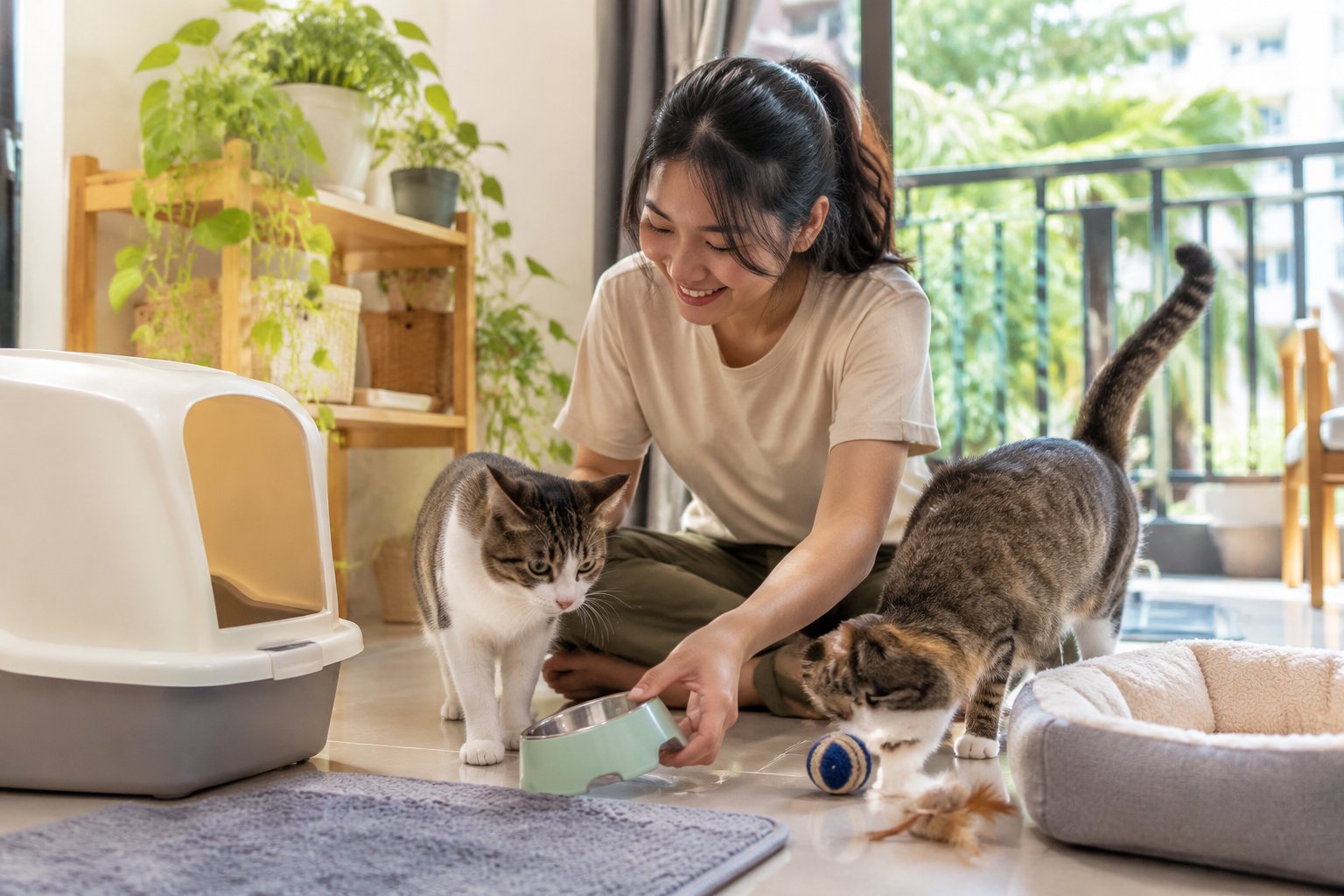
If you have adult cats, feed kittens separately. Adult cats may eat the kitten's food, and kittens may nibble adult food, which is not ideal. Use separate bowls and supervised meal times. In small apartments, a bathroom or a closed room works well for a few minutes at each meal.
Feeding routines for Malaysian homes
Kuala Lumpur apartment: Space is tight, so choose a quiet corner away from the litter box and foot traffic. Use a mat under the bowls to catch mess. In high-rise units, ants can be an issue — wipe up spills immediately and store food sealed.
Johor terrace house: If kittens have access to a garden or car porch, watch for them scavenging. Feed indoors at set times and remove bowls after meals. Check for stray cats that may compete for food.
Penang rainy season: Humidity rises, so dry food can clump and spoil faster. Keep it in an airtight container with a desiccant pack if needed, and check for mould. Wet food should be served fresh and removed quickly.
When to see a vet
Contact a veterinarian if your kitten:
- Refuses to eat for more than 12–24 hours.
- Has diarrhoea or vomiting that lasts more than a day.
- Is not gaining weight or is losing weight.
- Has a bloated, painful abdomen.
- Shows difficulty suckling or swallowing.
- Has pale gums, weakness, or lethargy.
- Is not urinating or defecating normally.
Kittens can deteriorate quickly. When in doubt, seek veterinary advice early.
Transitioning to adult food
Around 10–12 months, begin mixing adult food with kitten food over 7–10 days. Watch for digestive upset and adjust the pace if needed. Large-breed cats may stay on kitten food a little longer; ask your vet.
Final checklist
- Kitten milk replacer for orphans under 4 weeks
- Kitten-specific wet and/or dry food
- Shallow food and water bowls
- Kitchen scale for weekly weighing
- Airtight storage for dry food
- Feeding schedule written down
- Vet contact saved
Disclaimer
This article provides general information and is not a substitute for veterinary advice. Every kitten is different. Always consult a licensed veterinarian for guidance specific to your pet's health and nutrition.
Related reading
- New Owner Guide Malaysia: Your First 30 Days With a Pet
- New Pet Owner Guide Malaysia: Choosing and Caring for Cats, Dogs, Small Pets, Fish, Reptiles and Birds
- Australian Shepherd Care in Malaysia: Exercise, Double Coat and Health Basics for New Owners
- Beagle Care in Malaysia: Feeding, Exercise, Ear Care and Heat Safety for New Owners
- Beginner Cat Breeds to Avoid in Malaysia (and What to Choose Instead)
- Border Collie Malaysia: Exercise, Mental Stimulation and Care for New Owners
- Budgie Care in Malaysia: Cage Setup, Diet, Toxic Foods and Daily Routine for New Owners
- Buying a Cat in Malaysia: A New Owner's 6-Step Verification Guide
- How to Buy a Cat in Malaysia: A 6-Step Verification Checklist for First-Time Owners
- Canary Care in Malaysia: Housing, Feeding and Moulting for New Owners