
What senior cat arthritis really means
Senior cat arthritis is ongoing joint pain and stiffness caused by wear and tear on the cartilage and bone. It is not a normal part of ageing that you simply accept. It is a medical condition you can manage. The earlier you notice it, the more you can do to keep your cat comfortable and mobile.
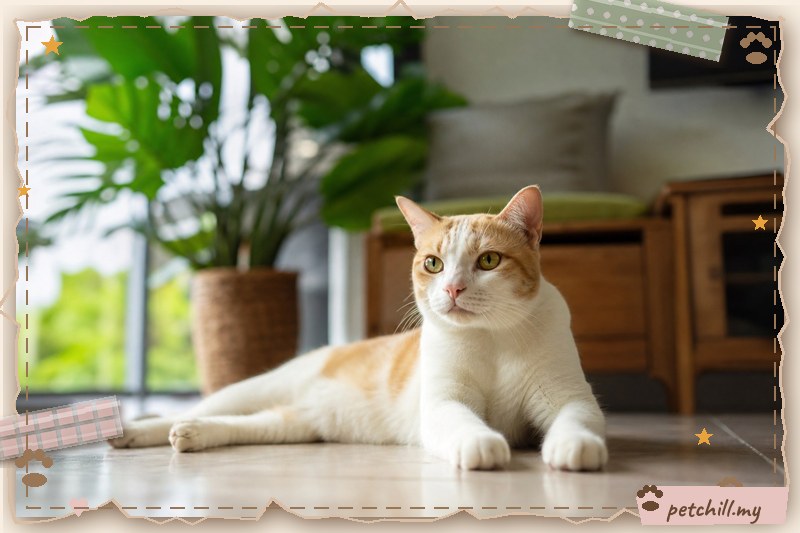
Cats are masters at hiding discomfort. A cat that stops jumping onto the sofa may not look sick, but that small change can be the first clue. Many owners assume their older cat is "just slowing down" when in fact the cat is protecting sore joints.
This guide explains what to watch for, how to adapt your home, and what your vet can offer. It is written for Malaysian cat owners living in apartments, terrace houses and landed homes, where heat, humidity and multi-cat households all affect how arthritis shows up.
Why older cats get arthritis
Joints are built to move. Cartilage cushions the ends of bones, and synovial fluid lubricates the joint. Over years of jumping, landing and everyday movement, cartilage can thin and the joint lining can become inflamed. The result is pain, stiffness and reduced range of motion.
Several factors raise the risk:
- Age. Joint changes accumulate over a lifetime. Cats over about 10 to 12 years are most affected.
- Weight. Extra body weight puts more load on hips, knees and the lower spine. Overweight cats often show pain earlier.
- Previous injury. An old fracture, ligament strain or fall can lead to arthritis in that joint years later.
- Genetics and conformation. Some cats, especially certain pedigree lines, are prone to hip or knee problems.
- Inactivity. Muscle weakness around a joint reduces support and can speed up stiffness.
Arthritis can affect many joints at once, including the elbows, hips, knees, ankles and spine. Spinal arthritis is common in older cats and can make grooming the back difficult.
Signs your senior cat may be in pain
Cats rarely limp dramatically. Instead, look for changes in routine and behaviour. The table below compares common signs with what owners often assume.
| What you may see | What owners often assume | What it can mean |
|---|---|---|
| Hesitates before jumping onto the bed or sofa | "He's just lazy now" | Hip, knee or spinal pain |
| Stiff for a minute after waking | "Old age" | Morning stiffness from arthritis |
| Matted fur near the tail or lower back | "He stopped grooming" | Pain when twisting to groom |
| Peeing or pooing outside the litter tray | "Behaviour problem" | Tray sides too high or painful squatting |
| Crying when picked up | "He's grumpy" | Joint or spinal pain on handling |
| Sleeping more, playing less | "Normal for an old cat" | Chronic pain reducing activity |
| Irritable when other cats approach | "Personality change" | Pain lowering tolerance |
| Eating less or losing weight | "Fussy eater" | Pain, dental disease or other illness |
Keep a simple diary for a week. Note when your cat jumps, how long it takes to settle after rest, and whether it uses the litter tray normally. This record is genuinely useful at the vet visit.
Set up your home for easier movement
Small changes make a big difference. Think about the routes your cat takes every day: to food, water, litter, sleeping spots and sunny patches.
Beds and resting places
- Choose soft, supportive beds with low sides so your cat can step in without a big lift.
- Place beds in warm, draught-free spots. Warmth eases stiffness, but avoid direct midday sun in a hot room.
- Add a bed on each floor if you live in a double-storey terrace house, so your cat does not have to tackle stairs when sore.
Ramps and steps
- Put a ramp or a set of firm pet steps beside the sofa, bed or favourite window perch.
- Check that ramps do not wobble. A shaky surface puts cats off using it.
- For cats that love high perches, move a perch lower rather than removing it entirely.
Litter trays
- Use trays with low sides, or cut a doorway into a high-sided box.
- Place trays on every floor and in quiet, easy-to-reach spots.
- Keep trays clean. A painful cat may avoid a dirty tray and go elsewhere.
- Avoid covered trays if your cat struggles to turn around inside.
Food and water
- Raise bowls slightly on a stable stand so your cat does not have to crouch.
- Keep water bowls in several places, especially in warm Malaysian weather.
- If your cat is stiff in the neck, a shallow wide bowl can be easier than a deep one.
Flooring and claws
- Slippery tiles are common in Malaysian homes. Add mats or runners along main walkways.
- Trim claws regularly. Arthritic cats may not wear them down, and long claws can catch and cause pain.
Weight, diet and gentle exercise
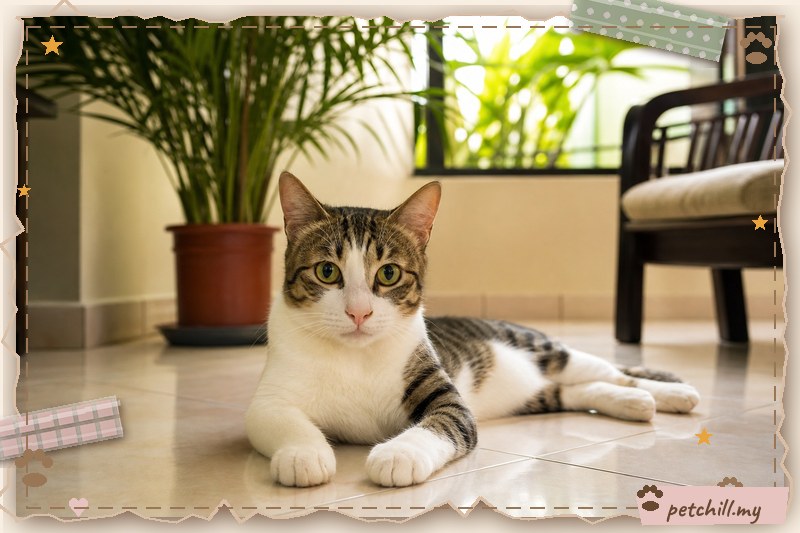
Weight control is the most powerful home tool for arthritis. Every extra kilogram adds load to sore joints. Ask your vet to assess your cat's body condition score and set a realistic target weight.
Practical steps:
- Measure food with a scoop or scale rather than guessing.
- Split daily food into several small meals to reduce hunger and begging.
- Use food puzzles or scatter feeding to encourage slow movement.
- Cut treats and human food, or swap to small pieces of the regular balanced diet.
- Weigh your cat monthly on a baby scale if possible.
Some senior and joint-support diets contain omega-3 fatty acids and controlled calories. Ask your vet whether a specific diet suits your cat, especially if it has kidney or thyroid disease, which are common in older cats.
Exercise should be gentle and frequent. Two or three short sessions of slow wand-toy play are better than one long burst. Encourage walking to the food bowl rather than carrying the bowl to the cat. Never force movement that clearly hurts.
What your vet can offer
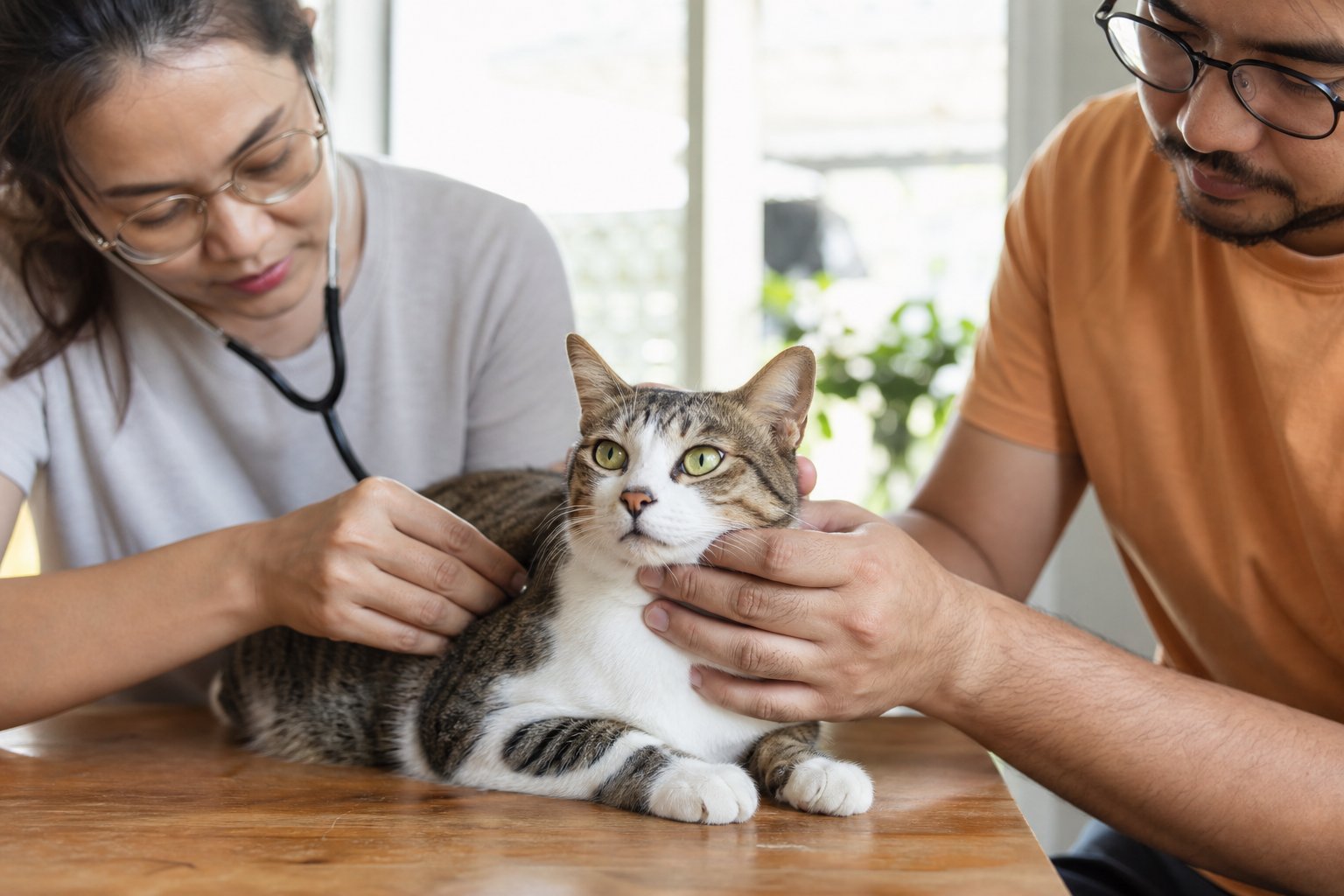
A vet visit for a suspected arthritic cat usually starts with a full physical exam, including watching your cat walk and checking joint movement. Your vet may recommend X-rays or other imaging to confirm joint changes and rule out other problems.
Treatment is usually combined, not a single fix:
- Pain relief. Vet-prescribed anti-inflammatory or pain medicines can improve comfort. Never use human painkillers; paracetamol and ibuprofen are toxic to cats.
- Joint support. Some vets recommend glucosamine, chondroitin or omega-3 supplements. Evidence varies, so ask your vet before buying.
- Weight management. A structured weight-loss plan if your cat is overweight.
- Physiotherapy and home exercises. Gentle range-of-motion exercises and controlled activity can help maintain muscle.
- Other options. Depending on the case, vets may discuss injectable treatments, laser therapy or referral for advanced care. Availability and cost vary, so ask your local vet what is offered.
Book a check-up at least every six months for a senior cat, or sooner if signs worsen. Older cats often have more than one condition, so a full picture matters.
Living with arthritis in a Malaysian home
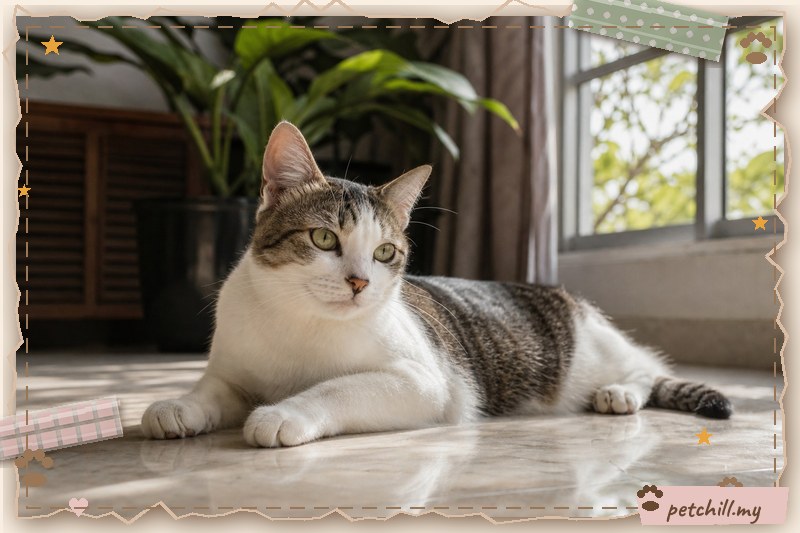
Climate and housing shape how arthritis affects cats here. In a Kuala Lumpur apartment, space is limited and floors are often tiled. A cat may stop jumping onto a high window ledge because the landing is slippery and painful. Placing a mat below the ledge and adding a low step can restore that favourite spot.
In a Johor terrace house, stairs are the main challenge. An arthritic cat may avoid going upstairs to eat or use the litter tray. Put food, water and a tray on each floor so your cat does not have to choose between comfort and basic needs.
During the rainy season, some cats become stiffer and less willing to move. Keep bedding dry, avoid draughts from open windows, and give gentle encouragement to walk around indoors. In hot weather, watch that your cat can reach water easily and is not trapped in a hot room.
Multi-cat homes need extra thought. A painful cat may be pushed away from food or the litter tray by younger cats. Feed cats in separate spots and provide more trays than cats.
A simple daily care checklist
Use this checklist as a quick routine:
- Check food and water intake; note any change.
- Scoop litter trays and check for accidents outside the tray.
- Look for new mats or sore spots on the coat.
- Offer two or three minutes of gentle play.
- Check that ramps, steps and mats are stable.
- Weigh weekly or monthly and record it.
- Give prescribed medicine exactly as directed.
- Note any new stiffness, crying or reluctance to move.
When to see a vet
Contact your vet promptly if you notice any of the following:
- Limping that lasts more than a day or two.
- Sudden weakness or dragging of the back legs. This can be an emergency.
- Crying when lifted or touched.
- Not eating, or visible weight loss.
- Repeated accidents outside the litter tray.
- New aggression toward people or other pets.
- Any sign of pain that is getting worse despite home changes.
Do not wait for your cat to "get used to it". Early pain management usually gives better results than waiting until mobility is severely reduced.
Frequently asked questions
How common is arthritis in senior cats?
It is very common. Most cats over about 12 years show some joint changes on X-rays, and many show pain signs at home. Because cats hide discomfort, owners often mistake stiffness for normal ageing. Regular vet checks help catch it earlier.
What are the first signs of arthritis in an older cat?
Watch for reluctance to jump onto favourite spots, stiffness after sleeping, slower grooming, matted fur near the back, accidents outside the litter tray, irritability when touched and less interest in play. These subtle changes matter more than dramatic limping.
Can I give my cat human painkillers like paracetamol?
No. Human painkillers such as paracetamol and ibuprofen are dangerous and can be fatal to cats. Never give any human medicine without veterinary advice. Only use pain relief prescribed by your vet for your cat's weight and health status.
Does my senior cat still need exercise?
Yes, but gentle and short. A few minutes of slow wand-toy play, food puzzles and short walks around the home keep muscles working and joints mobile. Avoid high jumps and rough play. Little and often is better than one long session.
Should I switch my senior cat to a special diet?
Discuss it with your vet first. Weight control is the single most helpful change for arthritic cats. Some senior or joint-support diets include omega-3 fatty acids and controlled calories. Your vet can advise on portions and whether a prescription diet suits your cat.
When should I take my arthritic cat to the vet?
Book a visit if you notice limping, reluctance to move, crying when lifted, not eating, weight loss, accidents outside the tray, or sudden weakness in the back legs. Sudden hind-leg weakness can be an emergency, so call your vet straight away.
Vet disclaimer
This article is general information only and is not a substitute for veterinary advice. Arthritis and other conditions in senior cats need proper diagnosis and treatment. Always consult a licensed veterinarian about your cat's health, medicines and diet.
Related reading
- Senior Cat Care Guide Malaysia: 7+ Health Checks, Kidneys, Joints & Daily Care
- Senior Cat Care in Malaysia: Age Signs, Check-ups and Daily Home Adjustments
- Senior Care Guide Malaysia: Caring for Your Older Pet
- Senior Cat Care in Malaysia: 10 Ageing Warning Signs and a Practical Daily Care Checklist
- Senior Cat Checkup: A Complete Care Guide for Malaysian Cat Owners
- Senior Cat Dental Care Guide: Keeping Older Cats' Teeth and Gums Healthy
- Senior Cat Grooming: A Complete Care Guide for Malaysian Owners
- Senior Cat Arthritis in Malaysia: A Practical Guide for Senior Cats
- Senior Cat Arthritis in Malaysia: Signs, Home Fixes and What Supplements Can Really Do
- Senior Cat Care Hub Malaysia: Kidney, Joints, Cognition, Diet and Check-Up Timetable for Cats Aged 7 and Above
- Senior Cat Care in Malaysia: Daily Routine and Home Checklist from Age 7
- Senior Cat Cognitive Dysfunction in Malaysia: Why Your Old Cat Yowls at Night, Wanders and Misses the Litter Box



