
The short answer
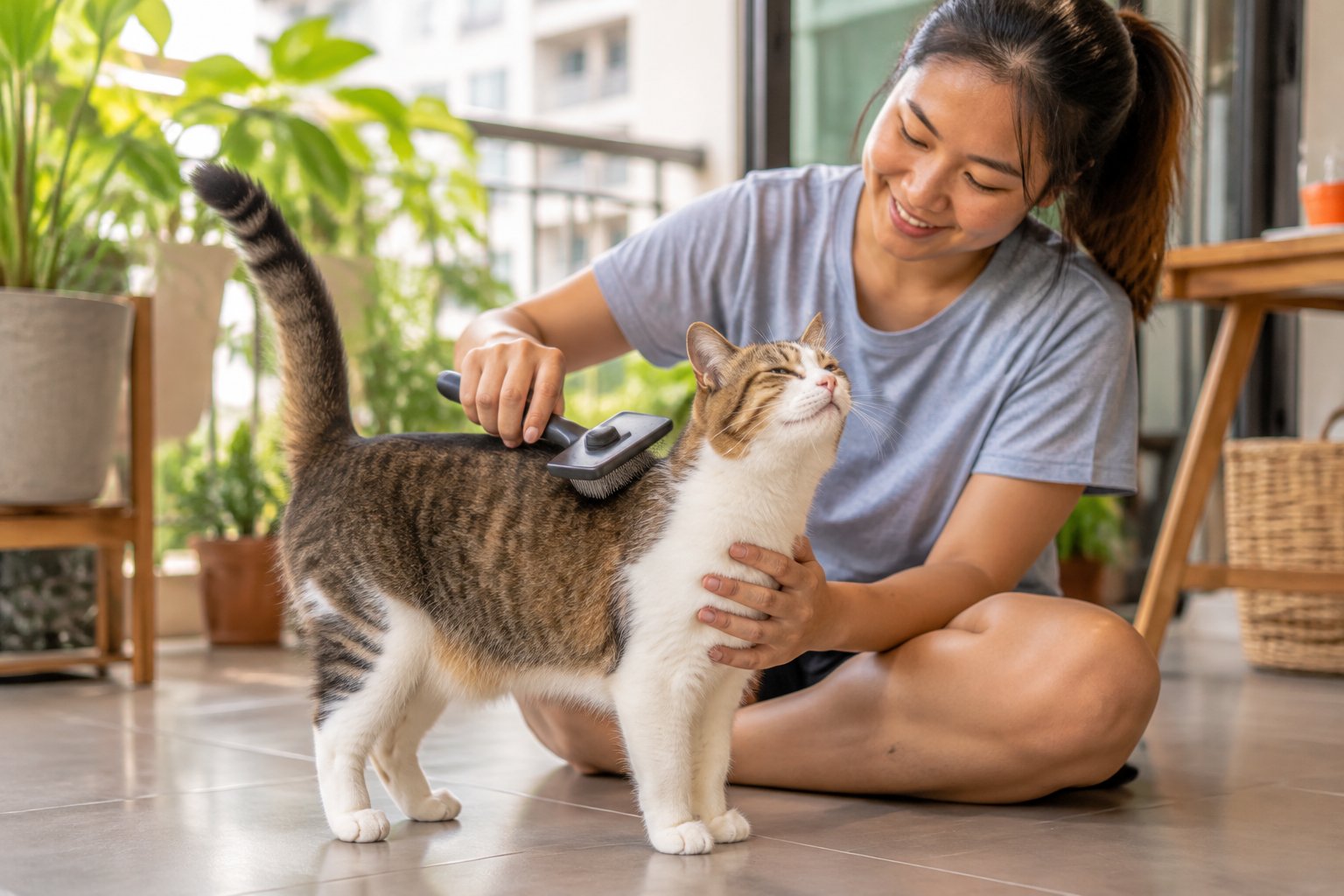
Senior cats often groom less thoroughly than they used to, so a little help goes a long way. Keep sessions short and frequent, use gentle tools, check the whole body for lumps, mats and sore spots, and treat any sudden change in coat or grooming habits as a reason to see a vet. You do not need a full grooming salon routine at home; you need consistency, patience and a cat that stays comfortable.
Why older cats need grooming help
Grooming is physical work. A cat has to twist around, reach its back, lift its legs and hold awkward positions long enough to lick and nibble the coat clean. Age makes that harder. Stiff joints, reduced flexibility, muscle loss, dental pain, failing eyesight and lower energy all chip away at self-grooming.
The result is usually gradual. The coat may look dull, feel greasy along the spine, or develop small tangles behind the ears and under the belly. Claws grow thicker and may curl. Some cats develop dandruff or a greasy patch on the lower back. None of this is naughty behaviour; it is a cat doing its best with less capacity.
In Malaysia, the climate adds another layer. Warm, humid air makes skin folds and armpits more prone to irritation, and a dense coat can stay damp after a cat lies on a cool tiled floor. Indoor cats in air-conditioned rooms may have drier coats, while cats that spend time on balconies or in car porches pick up dust and grit. Grooming is partly coat care and partly a weekly health check you can do at home.
Build a calm grooming routine
Think small and often. A five-minute session most days beats a 40-minute marathon once a month. Pick a time when your cat is relaxed, often after a meal or during a quiet evening. Put a non-slip mat on a stable surface, or sit on the floor with the cat on your lap if that is safer.
A simple routine looks like this:
- Hands-on check. Run your palms over the body from head to tail. Feel for lumps, scabs, tender spots, matted patches and greasy areas.
- Brush the easy areas first. Start with the cheeks, shoulders and back, then move to the flanks and belly only if your cat allows it.
- Face and eyes. Wipe eye corners with a damp cotton pad, one wipe per eye, using a fresh pad for each side.
- Ears. Look inside; do not push anything into the ear canal. A gentle wipe of the outer flap is enough unless your vet advises more.
- Nails. Trim a couple of nails if your cat is calm, or leave the rest for another day.
- Reward and stop. End with a treat or a favourite brush spot before your cat gets tired.
Keep the session positive. If your cat walks away, let it go. Forcing a senior cat through grooming builds fear and makes the next session harder.
Tools that suit older skin
| Tool | Best for | Cautions |
|---|---|---|
| Rubber curry brush | Short coats, loosening loose hair, massage | Little risk; good first tool for nervous cats |
| Soft slicker brush | Medium and long coats, small tangles | Press lightly; metal pins can scratch thin older skin |
| Wide-tooth comb | Checking for mats after brushing | Stop if it snags; never rip through a knot |
| Flea comb | Face, chin, checking for parasites | Use gently around eyes and ears |
| Cat nail clippers | Thick senior claws | Take only the tip; avoid the pink quick |
| Damp microfibre cloth | Quick coat wipe, eye corners | Use separate corners for each eye |
Avoid human hairbrushes with sharp pins, scissors for mat removal, and human shampoo. Cat skin has a different pH, and human products can dry or irritate it.
Coat care by coat type
Short-haired cats usually need a rubber curry or a soft bristle brush a few times a week, plus a quick check for greasy patches near the tail base. Long-haired cats need more attention: a wide-tooth comb through the belly, armpits, behind the ears and around the hind legs, where mats form first. If your cat has a thick undercoat, a gentle undercoat rake can help, but use it lightly on older, thinner skin.
Hairless or thin-coated breeds need skin care rather than brushing: a wipe with a damp cloth to remove oil, and protection from strong sun. Double-coated cats should never be shaved for convenience; the coat insulates against heat as well as cold.
If you find a small tangle, hold the coat between your fingers and work the knot loose from the tip inward with your fingers or a wide-tooth comb. Never pull a mat tight against the skin. A mat that feels hard, tight or attached to skin is a job for a professional groomer or vet, because cutting it yourself risks a serious skin wound.
Bathing: when, how and when not to
Most cats do not need frequent baths. For senior cats, bathe only when the coat is soiled, greasy, smelly or medically advised. Over-bathing strips natural oils and can make skin dry and itchy.
If a bath is needed:
- Brush out loose hair and small tangles first.
- Use lukewarm water, never hot.
- Place a non-slip mat in the tub or basin.
- Use a cat-safe shampoo and rinse thoroughly.
- Keep the head dry and wipe the face with a cloth.
- Towel dry gently, then keep the cat in a warm room until fully dry.
- Watch for shivering, panting, distress or attempts to escape; stop if any appear.
Skip the bath and ask your vet if your cat is unwell, weak, recently vaccinated, recovering from surgery, or very stressed by handling. For cats that hate water, a warm damp cloth wipe or a waterless cat shampoo may be enough between proper baths.
Nails, paws and movement
Senior claws often grow thicker and less worn because the cat moves less and may not scratch as vigorously. Long claws can catch on fabric, curl into the paw pad, or make walking uncomfortable. Check all four paws every two to four weeks.
Trim only the clear tip. On dark claws, take tiny slivers and check the cut surface. If you are unsure where the quick is, ask your vet or a groomer to show you once. Keep styptic powder or a clean cloth handy in case of a small bleed, and press gently if it happens.
Paw pads deserve a look too. Cracks, dryness, foreign objects, swelling or a bad smell are reasons to see a vet. In Malaysian homes, cats may walk on hot outdoor tiles or rough concrete; check pads after any outdoor access.
Skin, ears, eyes and mouth checks
A weekly check catches small problems early. Part the coat and look at the skin: redness, scabs, fleas, ticks, dandruff, greasy patches or new lumps all deserve attention. Older cats can develop skin growths, and early checks make them easier to monitor.
Ears should be pale and mostly clean. A little light wax is normal. Dark discharge, redness, head shaking or a bad smell suggests infection or mites, which needs a vet. Never use cotton buds deep in the ear canal.
Eyes should be clear. Watery eyes, discharge, squinting or cloudiness are common in older cats and should be checked. Wipe only the corners, using a fresh damp pad for each eye.
Mouth checks matter because dental disease is common in older cats and can reduce grooming. Lift the lip gently and look for red gums, brown tartar, broken teeth or a bad smell. Do not attempt to scale teeth at home. If your cat drools, drops food, chews on one side or resists having its mouth touched, book a vet visit.
Malaysia-specific practicalities
Malaysian homes vary widely, and grooming should fit the home. In a Kuala Lumpur apartment, a senior cat may spend most of its time on cool tiled floors or in air-conditioned rooms. That can mean less outdoor dirt but drier skin and more static; a humidifier is not usually needed, but a damp cloth wipe and gentle brushing help. Balcony time needs supervision, and cats should not be left on hot surfaces.
In a Johor terrace house, a cat may have access to a car porch, garden edges or shaded corridors. That means more dust, pollen and the chance of picking up ticks or fleas. Check the coat and skin after outdoor time, keep parasite prevention up to date as advised by your vet, and watch for mats forming where a harness or collar rubs.
Penang's rainy season brings damp air and wet fur if a cat gets caught outside. Dry the coat thoroughly with a towel, especially under the belly and between the legs, and check for skin irritation in damp folds. Never leave a damp senior cat in a cool air-conditioned room.
When to see a vet
Grooming problems can be the first visible sign of illness. Book a vet appointment if you notice:
- A sudden stop in grooming, or grooming only one area
- Matted fur that is tight against the skin, or skin wounds under mats
- Greasy, smelly or discoloured coat that does not improve with gentle cleaning
- New lumps, scabs, sores or areas of hair loss
- Overgrown claws curling into the paw pad, or limping
- Ear discharge, head shaking or a bad smell
- Eye discharge, squinting or cloudiness
- Bad breath, drooling, dropping food or chewing on one side
- Weight loss, poor appetite, vomiting or diarrhoea alongside coat changes
- Any cat that cries, flinches or resists being touched during grooming
These signs do not confirm a diagnosis, but they are reasons to have your cat examined. Early checks are easier on older cats than waiting until a mat is embedded or a claw has grown into the pad.
A simple weekly checklist
- Brush the coat in short sessions, checking for mats
- Feel for new lumps, scabs and tender spots
- Wipe eye corners with separate damp pads
- Check ears for discharge or redness
- Look at gums and teeth without forcing the mouth
- Check all four paws and trim nails if needed
- Weigh your cat if possible, or note changes in appetite
- Wash bedding and check for fleas or flea dirt
- Review parasite prevention with your vet
Working with a groomer or vet
Not every grooming job belongs at home. A professional groomer can help with severe matting, sanitary trims and nail care, but tell them your cat is senior and mention arthritis, heart disease, skin problems or stress. Ask for a quiet appointment and stay if your cat settles better with you nearby.
Your vet can advise on sedation for painful mat removal, skin infections, dental disease and arthritis pain that makes grooming difficult. Do not use human painkillers or sedatives on a cat; some are toxic.
Bottom line
Senior cat grooming is less about beauty and more about comfort and health. Short, gentle sessions, the right tools and a weekly body check will keep most older cats comfortable. When the coat, claws or skin change suddenly, let a vet look first. Your cat cannot tell you where it hurts, but its grooming habits often can.
This article is general information for Malaysian cat owners and is not a substitute for veterinary advice. If your cat is unwell, in pain or has a grooming problem you cannot manage safely, consult a licensed veterinarian.
Related reading
- Senior Care Guide Malaysia: Caring for Your Older Pet
- Senior Cat Care Guide Malaysia: 7+ Health Checks, Kidneys, Joints & Daily Care
- Senior Cat Dental Care Guide: Keeping Older Cats' Teeth and Gums Healthy
- Senior Cat Diet for Senior Cats: A Care Guide for Malaysian Owners
- Senior Cat Arthritis Care Guide: Helping Older Cats Move Better
- Senior Cat Arthritis in Malaysia: A Practical Guide for Senior Cats
- Senior Cat Checkup in Malaysia: A Practical Guide for Older Cats
- Senior Cat Grooming: A Complete Care Guide for Malaysian Owners
- Senior Cat Quality of Life in Malaysia: A Practical Guide to Comfort Care and Hard Decisions
- Cat Blood Calcium Disorders in Malaysia: High and Low Calcium, Fatigue Signs, Ca/Phosphorus/PTH Tests and Diet
- Caring for a Cat With Neurological Damage in Malaysia: Home Safety, Rehab and Long-Term Support



