

The short answer
There is no single best puppy food. The best choice is a product that states it is complete and balanced for growth under a recognised nutrient standard, suits your puppy's expected adult size, and that your puppy actually eats well and digests comfortably. Everything else — brand, price, packaging, marketing claims — is secondary to those four points.
Puppies are not small adult dogs. They need more energy, protein, calcium, phosphorus and specific vitamins per kilogram of body weight than adult dogs, and their needs shift month by month. Getting the foundation right in the first year supports bone development, immunity and lifelong eating habits.
Start with the label, not the front of the bag
The front of a bag sells a feeling. The back tells you whether the food is suitable. Learn to read four things.
1. The life-stage statement. Look for wording such as "complete and balanced for growth" or "for all life stages" with a reference to a nutrient standard. AAFCO (the American Association of Feed Control Officials) and FEDIAF (the European Pet Food Industry Federation) are the two standards you will most often see cited. A food labelled only for "maintenance" or "adult" is not formulated for a growing puppy.
2. The ingredient list order. Ingredients are listed by weight before cooking. A named animal protein — chicken, lamb, fish, beef, egg — near the top is a reasonable signal, though "chicken meal" is a concentrated source and not a bad word. Avoid judging a food purely by whether it contains grains; grains are not inherently bad for puppies, and grain-free is a marketing position rather than a nutritional requirement.
3. The guaranteed analysis. This gives minimum protein and fat and maximum fibre and moisture. Typical growth formulas sit in a moderate-to-high protein and fat range, but the exact numbers matter less than the complete-and-balanced statement, because a food can hit protein targets and still be short on calcium or trace minerals.
4. The feeding guide and calorie content. A guide in grams or cups by weight and age is more useful than a vague scoop instruction. If a metabolisable energy figure is printed, you can compare foods fairly.
| What to check | Good sign | Warning sign |
|---|---|---|
| Life stage | "Growth" or "all life stages" with AAFCO/FEDIAF reference | "Adult" or "maintenance" only |
| Protein source | Named animal protein or meal near the top | Unnamed "meat and animal derivatives" only |
| Nutrient adequacy | Complete and balanced statement | No standard mentioned anywhere |
| Feeding guide | By weight and age, in grams or cups | "Feed as much as your dog wants" |
| Batch and expiry | Clear date, intact packaging | Faded print, damaged bag, bulging can |
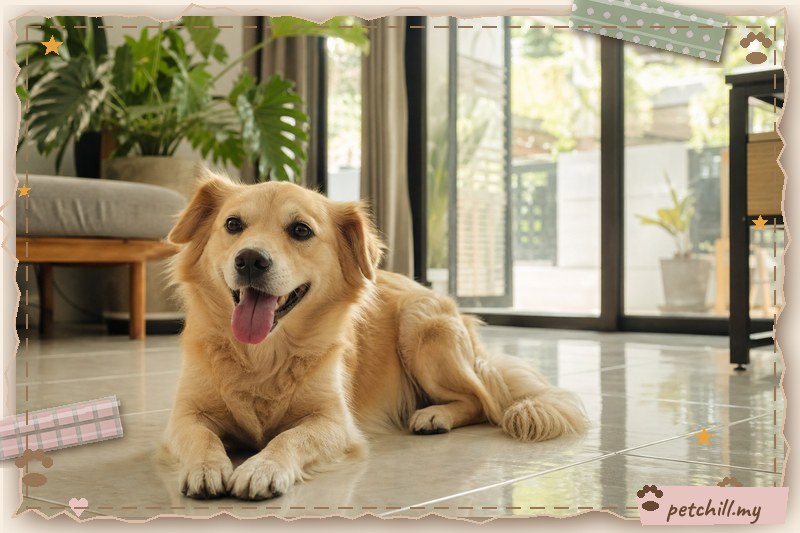
Match the food to your puppy's expected adult size
Size is the single most useful filter after life stage. A Chihuahua and a Rottweiler are both puppies, but their growth curves and nutrient tolerances differ enormously.
Small and toy breeds have fast metabolisms relative to body weight and small stomachs. They often do better on energy-dense food fed in more frequent small meals, because they cannot hold a large volume at once. Very small puppies can be prone to low blood sugar if they go too long without eating, so regular meals matter.
Medium breeds are the least complicated group. A good-quality growth formula fed in measured meals, with body condition monitored monthly, covers most needs.
Large and giant breeds need more care. Rapid growth in these puppies is associated with developmental orthopaedic problems, and the key levers are controlled energy intake, controlled calcium and appropriate fat. Choose a formula specifically labelled for large-breed growth where available, avoid free-feeding, and avoid home-made calcium supplementation unless your vet has diagnosed a need. Over-supplementing calcium in a large-breed puppy is a real risk, not a safe extra.
If you are unsure which category your puppy falls into, ask your vet for the expected adult weight range for the breed or mix. Mixed-breed puppies can be estimated from paw size and current growth, but a vet's estimate at the 12- and 16-week visits is more reliable.
Dry, wet or mixed: what actually matters
Owners often ask which format is best. The honest answer is that format is a preference and logistics question; nutritional adequacy is the health question.
| Format | Strengths | Watch-outs |
|---|---|---|
| Dry kibble | Economical per calorie, easy to store, helps chewing, wide range of growth formulas | Some puppies find it dull; needs fresh water available; can go stale in humidity |
| Wet food | Aromatic, palatable, adds water, useful for picky or recovering puppies | Higher cost per calorie, shorter shelf life after opening, messier |
| Mixed | Palatability plus economy, flexible | Easy to overfeed if both portions are not measured; total diet must still be balanced |
| Fresh-cooked or raw | Owner control over ingredients | Highest risk of nutrient imbalance and bacterial contamination; needs veterinary formulation |
If you want to feed a home-cooked or raw diet, have the recipe formulated by a veterinarian with nutrition training so that calcium, phosphorus, zinc and vitamins are correct. Puppies fed unbalanced home diets can develop serious skeletal problems that are difficult to reverse.

How much to feed, and how often
Puppies should be fed measured meals rather than free-fed, because free-feeding makes it hard to notice appetite changes and easy to overfeed large-breed puppies.
A practical starting schedule:
- Up to about 3 months: four small meals a day.
- 3 to 6 months: three meals a day.
- 6 to 12 months: two meals a day.
- From about 12 months, depending on breed size: two meals a day on adult food.
Start with the bag's guide for your puppy's current weight and age, then judge by body condition rather than by how much the puppy begs. You should be able to feel the ribs under a thin layer of fat without pressing hard, see a waist from above, and see a slight tuck from the side. Puppies are meant to be leaner than many owners expect.
Weigh your puppy every two to four weeks on the same scale and adjust portions as weight climbs. Keep a simple note of weight, food amount and stool quality; it makes vet conversations much more productive.
Transitioning food without upsetting the gut
Sudden food changes are a common cause of loose stools in puppies. Transition over seven to ten days:
- Days 1–2: 75% old food, 25% new food.
- Days 3–4: 50/50.
- Days 5–6: 25% old, 75% new.
- Days 7–10: all new food.
If stools become loose, slow the transition down rather than pushing through. If diarrhoea lasts more than a day or two, or comes with vomiting, lethargy or blood, contact your vet.
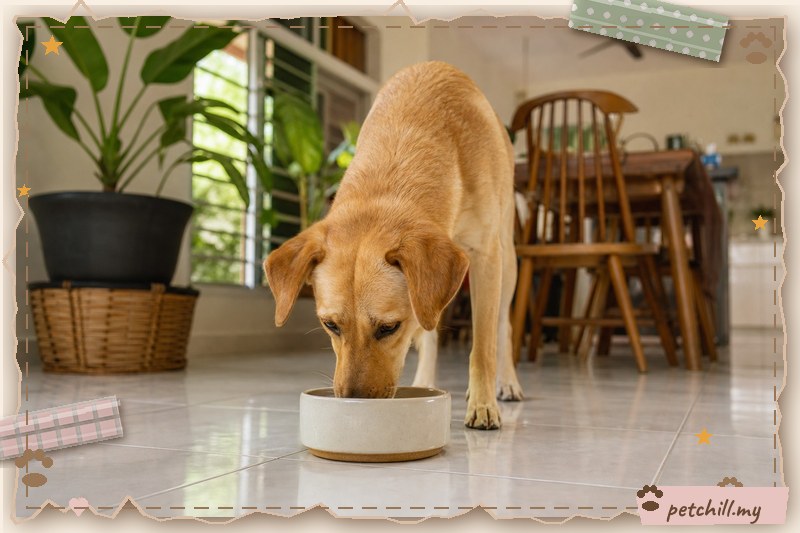
Feeding a puppy in a Malaysian home
Malaysia's climate and housing patterns create a few practical issues worth planning for.
Humidity and storage. Dry food absorbs moisture quickly. Keep kibble in its original bag inside a sealed container, store it in a cool cupboard away from sunlight, and avoid decanting a whole bag into a open bin. Fats in kibble can go rancid in heat, so buy sizes you will finish within the period stated on the pack after opening. In a Kuala Lumpur apartment where kitchen space is tight, a small airtight container plus the original bag is usually the most practical setup.
Wet food in warm weather. Once a can or pouch is opened, refrigerate the remainder and use it within the time stated on the packaging. Do not leave wet food sitting in a bowl through a hot afternoon.
Water. Puppies on dry food need constant access to clean water. Multiple water stations help in a Johor terrace house where the puppy has access to more than one floor or to a garden.
Rainy season and paws. Penang's rainy season means more indoor time and sometimes muddy paws. Wipe paws after walks and keep food bowls off damp floors; a raised mat or a bowl stand keeps kibble drier and reduces ant problems.
Heat and appetite. Some puppies eat less during very hot afternoons. Offering meals at cooler times of day, and not leaving food down for hours, often solves apparent fussiness.
Multi-dog homes. If you have an adult dog and a puppy, feed separately. Adult food is not formulated for growth, and puppies will happily eat adult portions that are too large for them.
Common mistakes to avoid
- Buying on packaging alone. A pretty bag with a wolf on it tells you nothing about nutrient adequacy.
- Free-feeding a large-breed puppy. Portion control is part of the food choice, not an optional extra.
- Adding calcium or vitamin powders "just in case". Unnecessary supplementation can unbalance a complete diet.
- Switching foods every time the puppy seems bored. Frequent changes make it hard to identify the cause of digestive upset. Rule out overfeeding and too many treats first.
- Too many treats. Treats should be a small share of daily calories; use part of the daily ration as training rewards.
- Ignoring body condition. The scale and the rib check matter more than the bag's suggested scoop.
- Assuming grain-free is better. There is no requirement for puppies to eat grain-free food, and grain-free is not a treatment for allergies without a veterinary diagnosis.

How to compare two products in the shop
Take two bags and run the same five questions on each:
- Does it state complete and balanced for growth, with a named standard?
- Is the first ingredient a named animal protein or meal?
- Does the feeding guide give amounts by weight and age?
- Is the formula matched to my puppy's expected adult size?
- Is the pack size something I can finish while fresh, given my storage space?
If both pass, choose on palatability, cost per day and availability. Local prices vary widely by brand, pack size and retailer, so compare cost per kilogram and cost per day rather than shelf price alone, and ask your Malaysian vet or retailer for current pricing and stock.
When to see a vet
Contact a veterinarian promptly if your puppy shows any of the following:
- Diarrhoea lasting more than 24 to 48 hours, or any diarrhoea with blood or black stools.
- Vomiting that repeats, or vomiting with lethargy or refusal to eat.
- Noticeable weight loss, or a puppy that stops gaining weight over several weeks.
- Persistent itching, hair loss, ear infections or digestive signs you suspect are food-related — food allergy diagnosis needs veterinary guidance, not a series of random diet swaps.
- Lameness, swollen joints, or bowing of the front legs, which can signal developmental problems in growing large-breed puppies.
- Any puppy that eats poorly for more than a day, especially toy breeds, which can become weak quickly.
Bring your food label or a photo of it to the appointment. Your vet can check the nutrient profile against your puppy's age, weight and growth rate, and adjust portions or recommend a therapeutic diet if needed.
A simple first-year plan
- Before bringing the puppy home: confirm what the breeder or shelter has been feeding and buy a small bag of the same food.
- Week 1: keep the diet unchanged, establish meal times and measure portions.
- Weeks 2–3: transition gradually to your chosen growth formula if you are changing.
- Monthly: weigh the puppy, check body condition, review portion size.
- At each vaccination visit: ask your vet to confirm the diet suits the puppy's growth and expected adult size.
- Near maturity: plan the switch to adult food with your vet, based on breed size rather than the calendar alone.
Good puppy nutrition is unglamorous: a complete and balanced growth formula, measured meals, a lean body condition, gradual transitions and regular vet input. Get those right and the brand decision becomes much less stressful.
This article is general information for Malaysian dog owners and is not a substitute for veterinary advice. Feeding amounts, diet changes and any health concerns should be discussed with a licensed veterinarian who has examined your puppy.
Related reading
- Dog Guide Malaysia: A Complete Owner's Handbook for New and Experienced Owners
- Best Dog Food Brands in Malaysia: How to Choose Well (2025 Guide)
- Dog Care Guide Malaysia: Feeding, Grooming, Health & Daily Routine
- Dog Food Allergies for Dog Owners in Malaysia: A Practical Guide
- Dog Food Malaysia: How to Pick the Right Bag for Your Dog (2026 Guide)
- Puppy Food for Dogs in Malaysia: A Complete Feeding Guide
- Puppy Food Tips for Dog Owners in Malaysia: A Complete Feeding Guide
- Best Dog Vaccination Schedule for Dogs in Malaysia: A Complete Guide
- Crate Training for Dogs in Malaysia: A Practical, Humane Guide
- Dog Ear Infection in Malaysia: Signs, Causes, Treatment & Prevention
- Dog Food for Dogs: A Complete Feeding Guide for Malaysian Owners
- Dog Food Tips for Dog Owners in Malaysia: A Practical Feeding Guide