
The short answer
Potty training a dog in Malaysia comes down to four habits: feed at fixed times, take your dog to the same toilet spot very often, reward success the moment it happens, and clean accidents with an enzyme cleaner so the smell does not invite repeats. Heat, humidity, heavy rain and apartment living add complications, but they do not change the basics. Most puppies need weeks of consistency; adult dogs settling into a new home often improve within two to four weeks.
The rest of this guide explains how to build a routine that survives Malaysian weather and housing, how to handle accidents without fear, and when a vet should check things.
Why potty training feels harder in Malaysia
Malaysian dog owners face a few specific pressures that owners in cooler, drier countries do not.
- Heat and humidity. Dogs drink more and may toilet more often. Midday walks can be uncomfortable, so toilet trips often happen early morning, evening and late night.
- Sudden heavy rain. A dog that is almost trained can regress during a week of storms if it has no sheltered toilet option.
- Apartment and high-rise living. Many owners in Kuala Lumpur and Penang have no direct garden access, so lifts, corridors and lobbies become part of the routine.
- Shared spaces. Condo management rules, neighbours and common areas mean owners need a clear plan for where the dog toilets and how accidents are cleaned.
- Busy work schedules. Long commutes can stretch the gap between toilet trips, especially for young puppies.
None of these make training impossible. They simply mean the routine must be designed for local conditions rather than copied from a temperate-country guide.
Start with a realistic schedule
A puppy's bladder is small. A rough guide many trainers use is that a puppy can hold urine for about one hour per month of age, plus one, during the day, and much less when excited or active. A two-month-old puppy may need a trip every one to two hours. A four-month-old may manage three to four hours. Adult dogs vary.
A practical daily framework looks like this:
| Time | Action |
|---|---|
| Early morning | Toilet trip immediately after waking |
| After every meal | Toilet trip within 5-15 minutes |
| After every nap | Toilet trip immediately |
| After play or training | Toilet trip within 5-10 minutes |
| Every 1-2 hours (puppies) | Short supervised toilet trip |
| Before bed | Final toilet trip, then settle |
| Overnight | Expect one or two trips for very young puppies |
Feeding on a fixed schedule is half the battle. Free-feeding makes toilet timing unpredictable. Two to four meals a day for puppies, depending on age and vet advice, and one or two for adults, create a predictable digestive rhythm.
Water should stay available, especially in Malaysian heat, but watch how much your dog drinks in the hour before bedtime if night accidents are frequent.
Choose one toilet method and stick to it
There are three common setups in Malaysia. Pick one primary method and avoid switching weekly.
Outdoor garden toileting. Best for landed houses in Johor, Selangor or Penang with a safe garden. Choose one patch and always take the dog there on a leash at first. Reward immediately after the dog finishes, not when you get back inside.
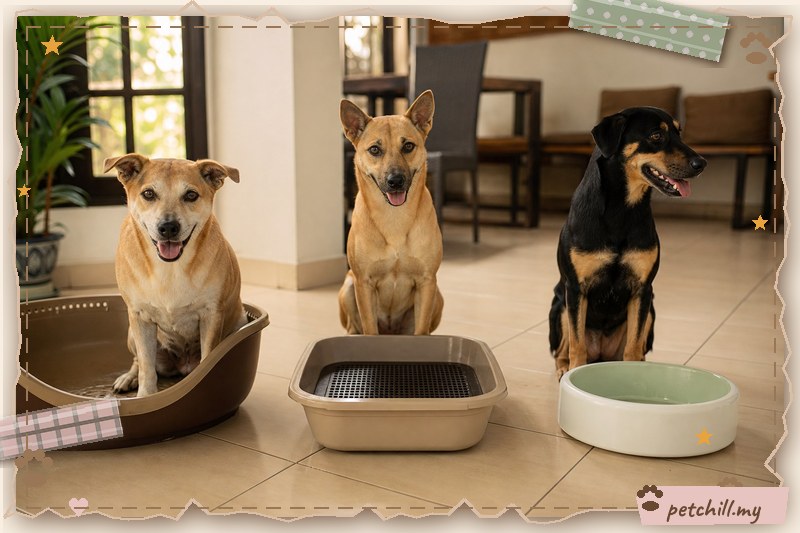
Pee pads or indoor trays. Practical for apartments, condos and rainy seasons. Place the pad or tray in a fixed, easy-to-reach spot, ideally near the door or on a balcony. Keep it away from food and sleeping areas.
Grass trays or artificial turf. A middle option for balconies and covered areas. They give dogs a more natural surface and can be rinsed. Keep them clean, because a soiled tray can put a dog off using it.
Whichever you choose, the location must stay the same. Dogs learn by pattern and smell. Moving the toilet spot confuses the lesson.
Apartment and high-rise routines
Living in a Kuala Lumpur apartment or a Penang condo adds steps: harness on, lift down, lobby walk, outdoor spot. That whole sequence takes time, so plan for it.
- Keep a leash and treat pouch by the door. Every trip should feel the same.
- Use the same exit route. The lift, lobby and door become cues that toileting is coming.
- Carry an enzyme cleaner and paper towels. Lobby or lift accidents happen; clean quickly and calmly.
- Set an indoor backup spot. A pee pad or grass tray on a balcony or in a bathroom saves the routine during storms or late nights.
- Check building rules. Some condos restrict where dogs can toilet or walk. Know the rules before training begins.
- Train a toilet cue. Say a quiet word such as "toilet" as the dog starts, then reward. Over time the word helps prompt action on busy mornings.
For owners who work long hours, a midday toilet break from a family member, neighbour or pet sitter makes a large difference for puppies under six months.
Handling the rainy season
Malaysian storms can last hours, and some dogs refuse to toilet in rain. Plan ahead rather than forcing a soaked walk.
- Set up a covered spot now. A sheltered balcony, a bathroom with a grass tray, or a pad near the door gives your dog a reliable option.
- Go out between showers. Watch the sky and take advantage of dry windows, even if it means a late-night trip.
- Use a raincoat and towel-dry after. Some dogs toilet faster when they are not miserable.
- Never punish a rain accident. Clean it, reset the routine, and reward the next correct toilet.
- Keep the schedule on rainy days. Skipping trips because of weather teaches the dog that indoors is acceptable.
If your dog reliably toilets outdoors in dry weather but not in rain, the problem is usually the surface and comfort, not stubbornness. Give the dog a covered alternative and reward heavily there.
Rewards, timing and tone
Dogs repeat what gets rewarded. The reward must arrive within a second or two of the dog finishing, ideally at the toilet spot.
- Use high-value treats for toilet success, especially early on.
- Praise quietly and calmly. Too much excitement can interrupt a nervous puppy.
- Reward every success for the first few weeks, then reward randomly.
- Keep training sessions short. Toilet trips are not playtime; let the dog focus.
- Avoid punishment. Scolding after an accident teaches hiding, not housetraining. Dogs cannot connect punishment to something that happened minutes ago.
If you catch a dog mid-accident, a gentle interruption and immediate move to the toilet spot is fine. Then reward if the dog finishes there. Clean any accident thoroughly afterwards.
Cleaning accidents properly
Smell drives repeat toileting. Ordinary floor cleaner may mask the smell to humans but leave enough scent for a dog.
- Blot first, then clean with an enzyme-based pet cleaner that breaks down urine proteins.
- Avoid ammonia-based cleaners, which can resemble urine smell to dogs.
- Wash bedding and soft furnishings where accidents happened.
- Check carpets and rugs; a hidden patch can keep attracting the dog back.
- Air and dry the area to prevent mould in humid Malaysian homes.
If a spot keeps attracting accidents, block access or change what is there, such as placing furniture or a baby gate over the area.
Common problems and what they usually mean
| Problem | Likely cause | Practical step |
|---|---|---|
| Peeing right after coming inside | Incomplete emptying or excitement | Stay outside longer; reward a second toilet |
| Peeing when greeted | Submissive or excitement urination | Calm greetings; ask for a sit; vet check if sudden |
| Marking on furniture | Hormonal or territorial marking | Supervise, clean with enzyme cleaner, discuss neutering with a vet |
| Accidents only at night | Late water, late meals, small bladder | Adjust evening water and food timing; add a late trip |
| Sudden loss of training | Possible medical issue | Vet visit before retraining |
| Toileting in crate | Crate too large or left too long | Resize crate; shorten confinement |
Sudden changes in toileting habits in a previously reliable dog deserve a vet visit, especially if there is straining, blood, increased thirst or frequent small urinations.
Crate and confinement basics
Crates can help, but only if used kindly. A crate should be a comfortable resting space, not a punishment box.
- Size it right. The dog should stand, turn and lie down comfortably, with no extra room to toilet in one corner and sleep in another.
- Build positive associations. Feed meals in the crate, use treats, and start with short periods.
- Do not leave puppies too long. Young puppies cannot hold urine for long hours.
- Take the dog out immediately after crate time. Go straight to the toilet spot.
In hot Malaysian weather, ensure the crate area is ventilated and never place it in direct sun or a stuffy room.
Working owners and busy households
Long workdays are common in Kuala Lumpur and Johor, and puppies need more frequent trips than a full workday allows.
- Arrange a midday break through family, a neighbour or a pet sitter.
- Use a safe indoor toilet area for emergencies, especially in apartments.
- Keep mornings and evenings structured. A predictable routine reduces accidents.
- Track accidents in a simple notebook or phone note. Patterns show up quickly, such as accidents always at 4pm.
- Involve everyone in the household. Different rules from different people slow training down.
When to see a vet
Contact a veterinarian if you notice any of the following:
- Straining to urinate, crying while urinating, or passing only small amounts frequently
- Blood in urine or unusual colour or smell
- Increased thirst and urination, especially in an older dog
- Sudden loss of housetraining in an adult dog that was previously reliable
- Diarrhoea, vomiting or changes in stool that disrupt the routine
- Accidents accompanied by lethargy, appetite loss or weight change
- A young puppy that seems unable to hold urine at all, or leaks while resting
Medical causes are common enough that a vet check is sensible before assuming a training problem, particularly in adult dogs. Your vet can also advise on diet, water intake and any age-related needs.
A four-week starter plan
Week 1: Fix meal times. Take your dog to the chosen toilet spot every one to two hours while awake. Reward every success. Clean accidents with enzyme cleaner. Keep a simple log.
Week 2: Extend the gap slightly for older puppies. Add a toilet cue word. Start short crate or confinement sessions if using them. Keep the same spot and route.
Week 3: Begin reducing rewards to every second or third success. Add a covered backup spot if you live in an apartment or have had rain disruptions.
Week 4: Review the log. Identify accident times and adjust meals, water or trips. Continue supervision. Most dogs show clear improvement by now; if not, check for medical issues and review the routine.
Final thoughts
Potty training is a routine problem, not a willpower contest. Feed on schedule, take your dog out often, reward the right spot instantly, and clean accidents properly. Build the plan around your actual home, whether that is a Kuala Lumpur apartment, a Johor terrace house or a Penang home in the rainy season. If progress stalls or symptoms appear, involve a vet early rather than pushing harder.
This article is general information only and is not a substitute for veterinary advice. If your dog shows signs of illness, pain or a sudden change in toileting habits, consult a licensed veterinarian in Malaysia.
Related reading
- Dog Guide Malaysia: A Complete Owner's Handbook for New and Experienced Owners
- Crate Training for Dog Owners in Malaysia: A Complete Guide
- Crate Training for Dogs in Malaysia: A Practical, Humane Guide
- Dog Care Guide Malaysia: Feeding, Grooming, Health & Daily Routine
- Dog Barking in Malaysia: 4 Reasons Dogs Bark and How to Stop It Without Shouting
- Dog Training Basics for Dogs: A Practical Malaysia Guide
- Dog Training Basics in Malaysia: When to Start, How Long to Practise, and the Five Steps of Positive Reinforcement
- Dog Training Basics: Practical Tips for Malaysian Dog Owners
- French Bulldog Malaysia: Temperament, Training and Care for Flat-Faced Companions
- Beagle Disadvantages in Malaysia: 8 Real Downsides and How to Manage Them
- Beagle Personality in Malaysia: Friendly, Food-Motivated and Stubborn (What Owners Must Know)