
The short answer
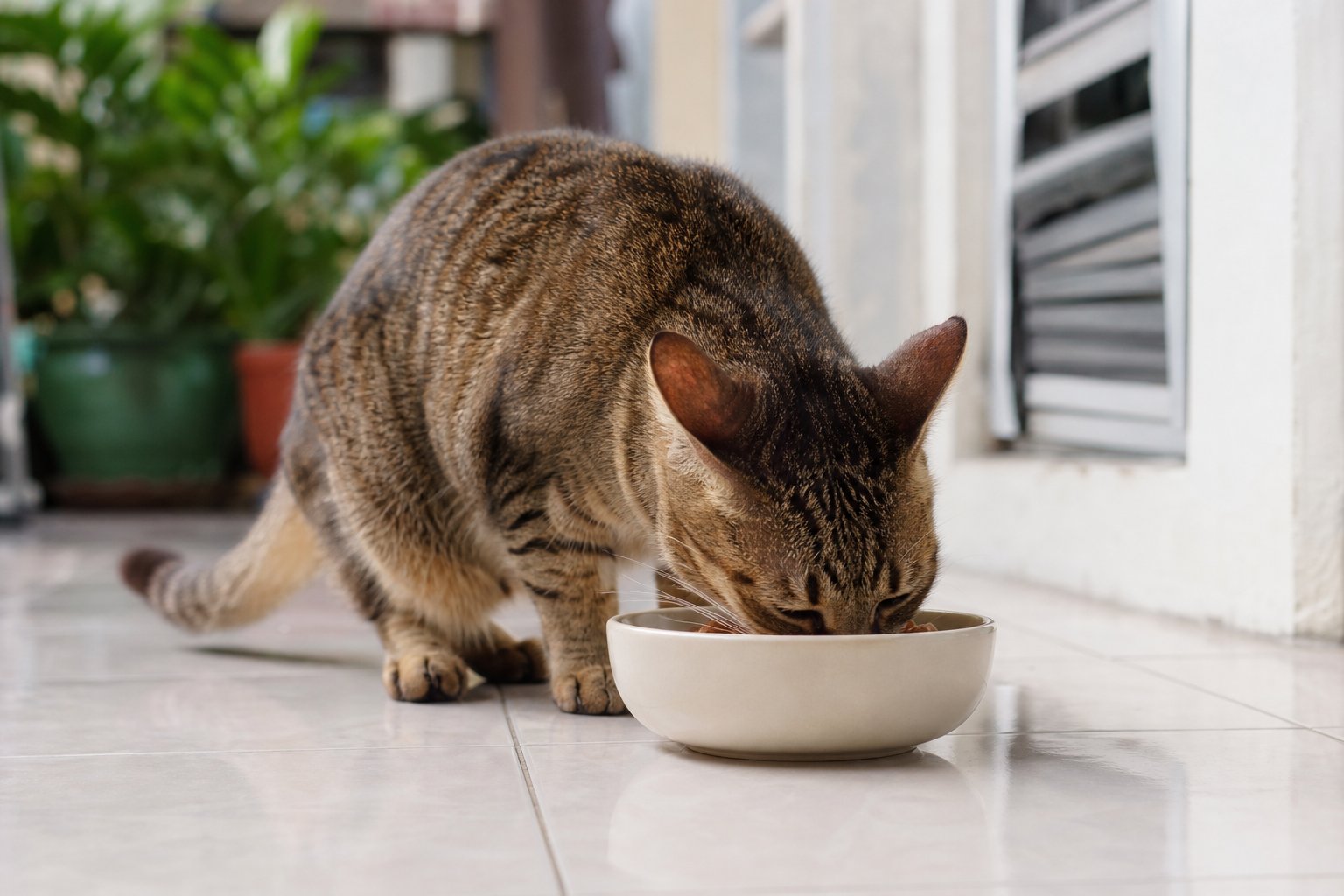
Kitten feeding amounts are not one fixed number. A kitten needs roughly two to three times the calories of an adult cat per kilogram of body weight, because it is building bone, muscle and brain tissue. That energy need is met by splitting food into several small meals a day, and by adjusting the portion every week or two as the kitten grows.
Most owners get into trouble not because they pick the wrong brand, but because they keep feeding the same amount for months. A portion that suits a 700 g kitten at eight weeks is far too small for a 2 kg kitten at four months. The label chart is a starting point; the kitten's body condition and weekly weight are the real guide.
Why kitten portions change so quickly
A kitten's growth rate in the first six months is extraordinary. Body weight can multiply several times over, and most of that gain happens before the kitten is five or six months old. Energy needs per kilogram are highest in the weaning period and gradually fall towards adult levels as growth slows.
Three practical consequences follow:
- Recheck the chart often. Weigh your kitten weekly on a kitchen scale and recalculate the portion from the label. A portion that was right last month may now be too small.
- Meals matter more than total daily food. Very young kittens have small stomachs and cannot handle one large meal. Four small meals digest better than two big ones.
- Kittens are not small adults. Adult light or weight-control formulas are unsuitable during growth because they restrict the nutrients and energy a growing body needs.
Feeding amounts by age: a working table
The table below gives typical meal frequency and a general energy range. It is a framework, not a prescription. Always read the kilocalorie (kcal) figure on your specific food, because wet and dry products differ enormously in energy density.
| Age | Typical weight range | Meals per day | Approx. daily energy need | Notes |
|---|---|---|---|---|
| 0-3 weeks | 100-350 g | On demand (queen or milk replacer) | Not applicable | Exclusive milk; weigh daily |
| 3-4 weeks (weaning starts) | 300-450 g | 4-5 tiny meals plus milk | Small, increasing | Gruel of milk replacer and kitten food |
| 4-8 weeks | 400-800 g | 4 meals | Roughly 200-250 kcal/kg body weight | Transition to moistened solids |
| 2-4 months | 0.8-1.8 kg | 4 meals | Roughly 200-250 kcal/kg | Fast growth; weigh weekly |
| 4-6 months | 1.8-2.8 kg | 3-4 meals | Roughly 150-200 kcal/kg | Growth slowing; watch waistline |
| 6-12 months | 2.5-4.5 kg | 2-3 meals | Roughly 100-150 kcal/kg | Move towards adult portions |
Treat the energy figures as broad ranges drawn from general veterinary nutrition guidance. Your food's label is more precise than any generic table, and your vet can refine it if the kitten is unusually small, large, ill or a specific breed.
Reading the food label properly
Most confusion comes from comparing a wet pouch with a dry kibble as if they were the same. They are not.
- Find the kcal content. Look for "metabolisable energy" in kcal per 100 g or kcal per kg on the packaging or the manufacturer's website.
- Weigh the food, don't scoop it. A heaped cup of kibble can vary by 20-30 percent depending on kibble size and how tightly it settles. A cheap kitchen scale removes the guesswork.
- Convert the label's daily amount to your kitten's weight. If the chart is written in grams per kilogram of body weight, multiply by the kitten's current weight, not its expected adult weight.
- Split into meals. Divide the daily total by the number of meals you plan to serve.
- Review every two weeks. Recalculate after each weigh-in.
If a label gives only a wide range, start at the lower end, watch body condition for a week, and increase if the kitten is thin or ravenous.
Wet food, dry food, or both?
Both formats can support healthy growth. The choice often comes down to the household, the kitten's preferences and how the cat drinks.
| Factor | Wet food | Dry food |
|---|---|---|
| Water content | High, helpful for hydration | Low, so fresh water is essential |
| Energy density | Lower per gram, so portions look bigger | Higher per gram, so small weights matter |
| Cost per calorie | Usually higher | Usually lower |
| Convenience | Opened food spoils quickly in warm climates | Stays fresh in a sealed container |
| Dental effect | Minimal | Some mechanical scraping, but not a substitute for brushing |
| Suitability for free-feeding | Poor | Common, but risks overeating |
A mixed feeding plan is popular: measured dry food for some meals and wet food for others, with the total daily energy kept within the target. If you mix, calculate the kcal from both parts and add them together. Do not simply follow two separate label charts, or you will double the portion.
In Malaysia's warm, humid climate, wet food left out spoils fast. Offer it at mealtimes and remove what is not eaten within about 20-30 minutes. Dry food stored in a sealed container away from heat and sunlight keeps its quality longer than kibble left in an open bag.
Weaning: from milk to solid food
Weaning usually begins around three to four weeks and finishes around seven to eight weeks. The sequence matters more than exact grams.
- Weeks 0-3: the kitten should stay with the queen and nurse on demand. If the queen is absent, ill or rejecting the kitten, use a dedicated kitten milk replacer mixed to the instructions. Never dilute it to stretch the tin.
- Week 3-4: offer a shallow dish of milk replacer, then gradually stir in a little kitten food to make a soft gruel. Warm it slightly to body temperature to encourage interest.
- Week 4-6: increase the solid proportion and reduce the liquid. Offer several tiny meals daily.
- Week 6-8: most kittens manage moistened kitten food well. Introduce dry kibble, lightly moistened at first, alongside wet food.
- After 8 weeks: the kitten should be eating kitten food as its main diet, with fresh water available at all times.
Go slowly. Sudden diet changes cause loose stools, and diarrhoea in a small kitten is more dangerous than in an adult cat because body water reserves are tiny.
Body condition beats the measuring cup
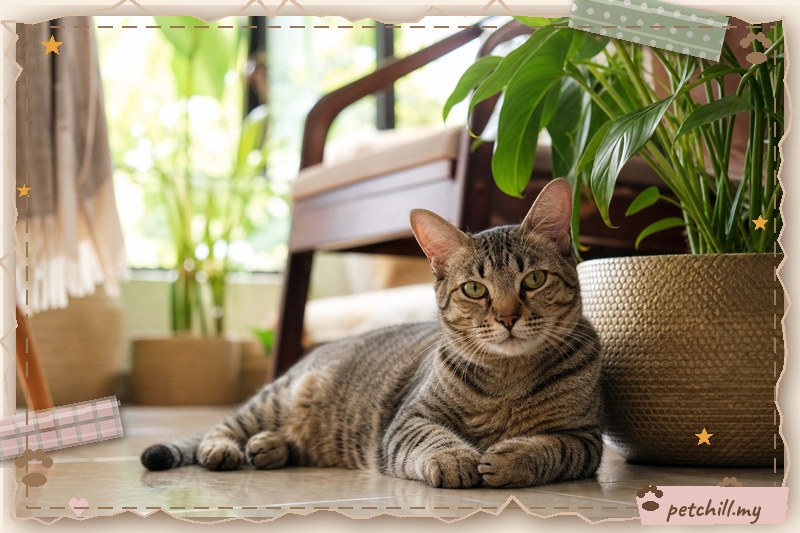
Numbers on a chart cannot see your kitten. Your hands can. Use a body condition check every week or two:
- Ribs: easy to feel under a thin layer of fat, like the back of your hand. If they feel sharp like knuckles, the kitten is too thin. If you cannot feel them at all, it is likely too heavy.
- Waist: a slight tuck behind the ribs when viewed from above.
- Belly: rounded but not drum-tight or distended.
- Energy: playful, curious and steady between naps.
- Growth curve: weight should trend upward. A flat or falling weight over a week is a reason to act.
A kitten that is always hungry, steals food and stays thin may be underfed, or may have worms or another health issue. A kitten that is lethargic and gains weight rapidly may be overfed or unwell. Both patterns deserve a vet conversation.
Practical feeding routines for Malaysian homes
Kuala Lumpur apartment. Space is tight and kitchens are often warm, so portion control and storage matter. Keep kibble in a sealed container in the coolest cupboard, not beside the stove. Measure each meal on a small kitchen scale, serve wet food at set times, and remove leftovers quickly. In a high-rise, a kitten that skips meals is easy to miss, so note intake on a phone or fridge chart.
Johor terrace house. With more rooms and often more than one cat, food bowls can become a free-for-all. Feed kittens in a separate room or a large carrier with the door closed so the adult cats cannot finish the kitten's portion. Pick up bowls between meals. If the household has outdoor access, keep the kitten indoors during feeding so you can see exactly what it eats.
Penang rainy season. Damp, humid spells make open bags of dry food clump and turn stale. Decant into airtight containers, keep the original batch date, and discard food that smells musty. Wet food left out in humid weather attracts flies and spoils faster, so stick to mealtime serving.
Common feeding mistakes
- Following the adult chart. Kitten food and adult food have different energy and nutrient profiles. Use the kitten chart.
- Free-feeding without limits in a multi-cat home. One kitten may eat most of the bowl while another goes hungry.
- Switching foods abruptly. Transition over about seven days, mixing increasing proportions of the new food.
- Giving cow's milk. It is not a kitten food and commonly causes digestive upset.
- Ignoring water. Dry-food-fed kittens need clean water in several places, refreshed daily.
- Treats replacing meals. Treats should be a small fraction of daily energy, not a substitute for balanced food.
- Skipping weigh-ins. Without a scale, small changes go unnoticed until the kitten is visibly thin or heavy.
When to see a vet
Contact a veterinarian promptly if a kitten shows any of the following:
- Refusing food for more than 12-24 hours, or skipping several consecutive meals
- Weight loss or no gain over a week
- Persistent diarrhoea, vomiting, or a bloated, painful belly
- Weakness, wobbliness, cold ears or gums, or unusual quietness
- Difficulty suckling, or a queen who cannot or will not nurse
- A kitten that was orphaned or hand-raised, which needs early professional guidance on milk replacer amounts
- Sudden ravenous hunger with weight loss, which can signal parasites or other illness
- Any suspected poisoning or access to human medicines, onions, garlic, chocolate, grapes or lilies
Kittens deteriorate faster than adult cats. When in doubt, call your vet rather than waiting to see whether the kitten improves overnight.
A simple weekly checklist
- Weigh the kitten on the same scale, same time of day.
- Record the weight and compare with last week.
- Recalculate the daily portion from the food label.
- Run a hands-on body condition check.
- Check water bowls are clean and full.
- Check food storage for moisture, pests or stale smells.
- Note any change in appetite, stool or energy.
- Book vaccinations and neutering discussions with your vet, and raise any feeding questions then.
Bottom line
Feed a kitten by weight and body condition, not by habit. Start with the label chart, split the daily total into three or four meals for young kittens, weigh weekly, and adjust. Keep the diet kitten-specific, transition foods slowly, and treat any drop in appetite or weight as a reason to speak to a veterinarian. Local product ranges and prices vary, so ask your Malaysian vet or pet retailer which kitten foods are available and suitable for your cat.
This article is general information only and is not a substitute for veterinary advice. Feeding amounts should be confirmed with a licensed veterinarian who has examined your kitten.
Related reading
- Kitten Care Guide Malaysia: 0–12 Month Feeding, Vaccination, Deworming & Growth Timeline
- Kitten Food Transition for Kittens: A Complete Malaysian Guide
- Kitten Food Transition in Kittens Malaysia: A Safe Step-by-Step Guide
- Kitten Development for Cat Owners: A Complete Malaysian Guide
- Kitten Diarrhea in Malaysia: Causes, Home Care and When to See a Vet
- Kitten First Year Checklist in Malaysia: Supplies, Vet Schedule and Monthly Milestones
- Kitten Flea Treatment in Kittens Malaysia: Safe Options by Age



