
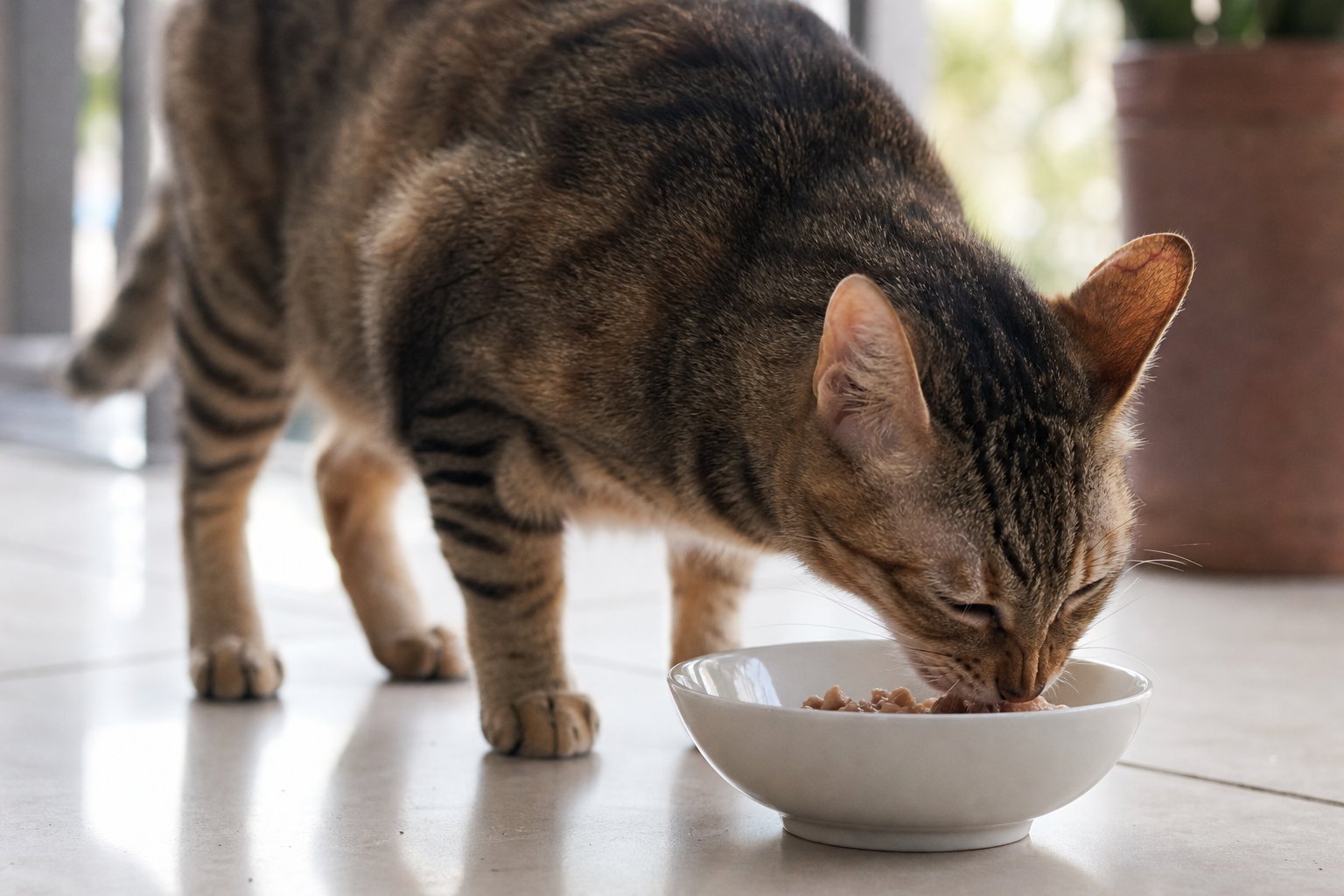
How much should you feed a kitten? Start with weight, not scoops
Kitten feeding amounts are not one-size-fits-all. A growing kitten needs roughly two to three times the calories of an adult cat of the same weight, and that need changes week by week. The most reliable starting point is body weight plus the calorie information on your food label. From there, you adjust based on body condition, growth and appetite.
This guide explains how to calculate daily portions, how often to feed, how wet and dry food compare, and what to do when a kitten is fussy or growing too fast. It is written for Malaysian homes — apartments, terrace houses and everything in between — where heat, humidity and multi-cat households all affect feeding routines.
The basic maths: calories first, then grams
Kitten food labels usually state a feeding guide in grams per day, but those guides are broad. A more precise method is to estimate daily calories and divide by the food's calorie density.
A common veterinary starting point for growing kittens is around 200–250 kcal per kilogram of body weight per day. A 1 kg kitten may need roughly 200–250 kcal daily; a 2 kg kitten may need 400–500 kcal. These are starting estimates, not prescriptions. Individual needs vary with age, activity, breed and whether the kitten is indoors or outdoors.
To convert calories to food:
- Find the kcal per 100 g (dry food) or kcal per can/pouch (wet food) on the packaging or manufacturer's website.
- Divide the daily calorie target by the food's kcal per gram.
- Split that total across the day's meals.
Example: if a wet food contains 80 kcal per 85 g pouch, and your 1.5 kg kitten needs about 300–375 kcal daily, that is roughly 4–5 pouches per day. If you mix wet and dry, calculate each part separately and add them together.
| Kitten weight | Estimated daily kcal (starting point) | Meals per day (under 6 months) | Notes |
|---|---|---|---|
| 0.5–1 kg | 100–250 kcal | 4 | Very small kittens need frequent small meals |
| 1–2 kg | 200–500 kcal | 3–4 | Adjust weekly as weight climbs |
| 2–3 kg | 400–750 kcal | 3 | Growth spurts may increase appetite |
| 3–4 kg | 600–1,000 kcal | 2–3 | Approaching adult size; monitor body condition |
Treat the table as a starting point. Weigh your kitten weekly on a kitchen scale and record the amount eaten. If weight gain stalls or accelerates too quickly, adjust portions by about 10% and reassess.
How often to feed: meal frequency by age
Meal frequency matters as much as total amount. Small kittens have small stomachs and high energy needs, so they eat little and often.
- Under 3 months: 4 meals daily. If the kitten is very small or underweight, your vet may suggest 5–6 smaller meals.
- 3–6 months: 3 meals daily is practical for most owners.
- 6–12 months: 2–3 meals daily. Continue measuring portions rather than free-feeding.
- After 12 months: 2 meals daily is typical for adult cats.
Consistent meal times help digestion and make it easier to spot appetite changes. In a multi-cat home, feed kittens separately so you know exactly how much they eat. A kitten that is pushed away from the bowl by an older cat may not get enough.
Wet food, dry food or both?
Both wet and dry complete kitten foods can meet nutritional needs. The choice often comes down to convenience, cost, hydration and the kitten's preference.
Wet food is high in moisture, which supports hydration — useful in warm, humid climates. It is easy to portion and often palatable. Once opened, it should be refrigerated and used within the time stated on the label, usually 24–48 hours.
Dry food is convenient and can be left out briefly, but it is calorie-dense. It is easy to overfeed if you fill the bowl without measuring. Dry food also provides less water, so fresh drinking water must always be available.
Mixed feeding is common: a measured portion of wet food at set meals plus a measured amount of dry food. The key is to count calories from both. A common mistake is to treat dry food as "free" on top of full wet meals, which quickly leads to excess weight gain.
| Feature | Wet food | Dry food |
|---|---|---|
| Moisture | High (often 75–85%) | Low (around 10%) |
| Calorie density | Lower per gram | Higher per gram |
| Portion control | Easy per pouch/can | Requires weighing |
| Storage after opening | Refrigerate, use quickly | Keep sealed and dry |
| Convenience | Less convenient | More convenient |
| Hydration support | Strong | Requires separate water |
Whichever you choose, the food should be labelled as complete and balanced for kittens or for growth. Avoid giving adult maintenance food as the main diet before 10–12 months unless your vet advises otherwise.
Reading labels and avoiding overfeeding
Feeding guides on packaging are a starting point, but they often overestimate for indoor, less active kittens. Use the guide, then adjust to body condition.
A simple body condition check: you should feel the ribs easily under a thin layer of fat, see a slight waist from above, and feel a firm, tucked belly. A kitten that looks round with no waist may be overfed; a kitten with visible ribs and spine may need more food or a vet check.
Practical label tips:
- Look for "complete" or "balanced" and a statement that the food meets growth requirements.
- Check kcal per 100 g or per can — not just the recommended grams.
- Note whether the guide is for adult cats or kittens; kitten guides are usually higher.
- If treats are given, subtract their calories from the daily total. Treats should stay under about 10% of daily calories.
Transitioning foods and introducing new textures
Kittens have sensitive digestion. Whether you are moving from the breeder's food, switching brands, or introducing wet food for the first time, transition gradually over 7–10 days:
- Days 1–3: 75% old food, 25% new food.
- Days 4–6: 50/50.
- Days 7–9: 25% old, 75% new.
- Day 10: 100% new food.
If diarrhoea or vomiting occurs, slow down and consult your vet. Do not mix multiple new foods at once. For very young kittens moving from milk replacer to solid food, offer small amounts of softened kitten food and increase gradually.
Feeding in Malaysian homes: heat, humidity and multi-cat households
Malaysia's warm, humid climate affects how food should be stored and served. Wet food left out spoils quickly; offer it at room temperature and remove leftovers after 20–30 minutes. Dry food should be kept in an airtight container away from direct sunlight and moisture.
In apartments, space can be limited, so designate a quiet feeding corner away from litter trays and foot traffic. In terrace houses, kittens may have access to more rooms or outdoor areas; keep food indoors and supervise to prevent scavenging. In multi-cat homes, separate feeding stations reduce competition and let you monitor each kitten's intake.
Fresh water should be available at all times, especially if the diet is mostly dry. Some kittens prefer running water; a simple bowl cleaned daily is usually enough.
Common feeding problems and how to handle them
Fussy eating: Kittens can be cautious with new textures. Offer small amounts, warm wet food slightly to release aroma, and avoid switching foods too often. If a kitten refuses food for more than 24 hours, see a vet.
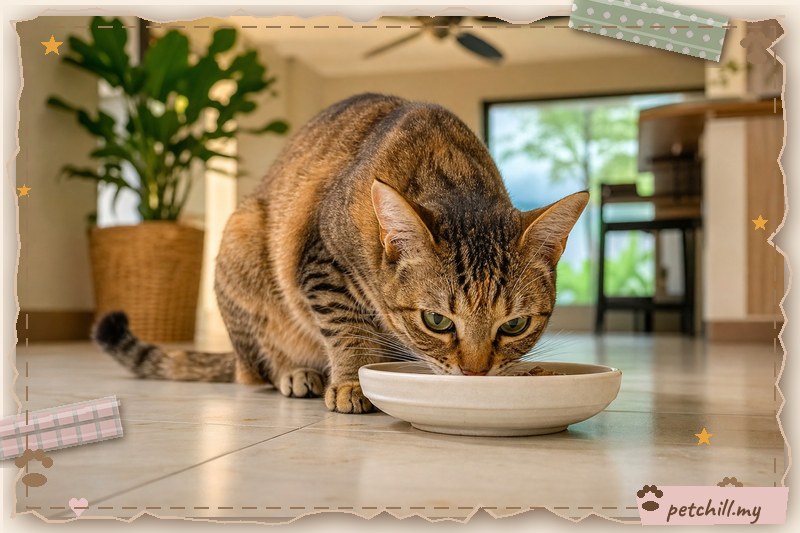
Eating too fast: Use a shallow, wide bowl or a puzzle feeder to slow eating. Very fast eating can cause vomiting.
Overweight kitten: Do not put a growing kitten on a strict diet without veterinary guidance. Instead, measure portions accurately, reduce treats, and increase play activity. Recheck body condition weekly.
Underweight kitten: Increase meal frequency and calorie density with vet advice. Rule out parasites and illness before simply increasing food.
When to see a vet
Contact a veterinarian if your kitten:
- Refuses food for more than 24 hours, or shows repeated vomiting or diarrhoea.
- Is losing weight or failing to gain weight despite eating.
- Has a bloated abdomen, pale gums, lethargy or difficulty breathing.
- Is straining to pass stool or has not passed stool for more than 48 hours.
- Shows signs of pain when eating or has bad breath with drooling.
- Is a very young orphan kitten needing a milk replacer feeding plan.
Feeding amounts are a guide, not a diagnosis. A vet can assess body condition, check for parasites, and tailor a feeding plan for your kitten's health status.
Quick checklist for Malaysian kitten owners
- Weigh your kitten weekly and record the weight.
- Calculate daily calories from the food label, not just scoops.
- Feed 3–4 meals daily under 6 months, then 2–3 meals.
- Measure every portion; avoid free-feeding dry food.
- Keep wet food refrigerated after opening and discard leftovers promptly.
- Provide fresh water daily, especially with dry food.
- Transition foods over 7–10 days.
- Check body condition weekly and adjust portions by about 10% if needed.
- See a vet for appetite loss, vomiting, diarrhoea or poor growth.
This article provides general information only and is not a substitute for veterinary advice. Always consult a licensed veterinarian for your kitten's specific feeding and health needs.
Related reading
- Kitten Care Guide Malaysia: 0–12 Month Feeding, Vaccination, Deworming & Growth Timeline
- Kitten Development for Cat Owners: A Complete Malaysian Guide
- Kitten Vomiting: A Complete Guide for Malaysian Cat Owners
- Kitten Weaning for Cat Owners: A Complete Guide (Malaysia)
- Kitten Weaning for Cats in Malaysia: A Complete Step-by-Step Guide
- Kitten Diarrhea: A Practical Guide for Malaysian Cat Owners
- Kitten Feeding Schedule Malaysia: Meals per Day and Grams by Weight
- Kitten First Vet Visit: A Complete Guide for Malaysian Owners
- Kitten Food Transition for Kittens: A Complete Malaysian Guide



