
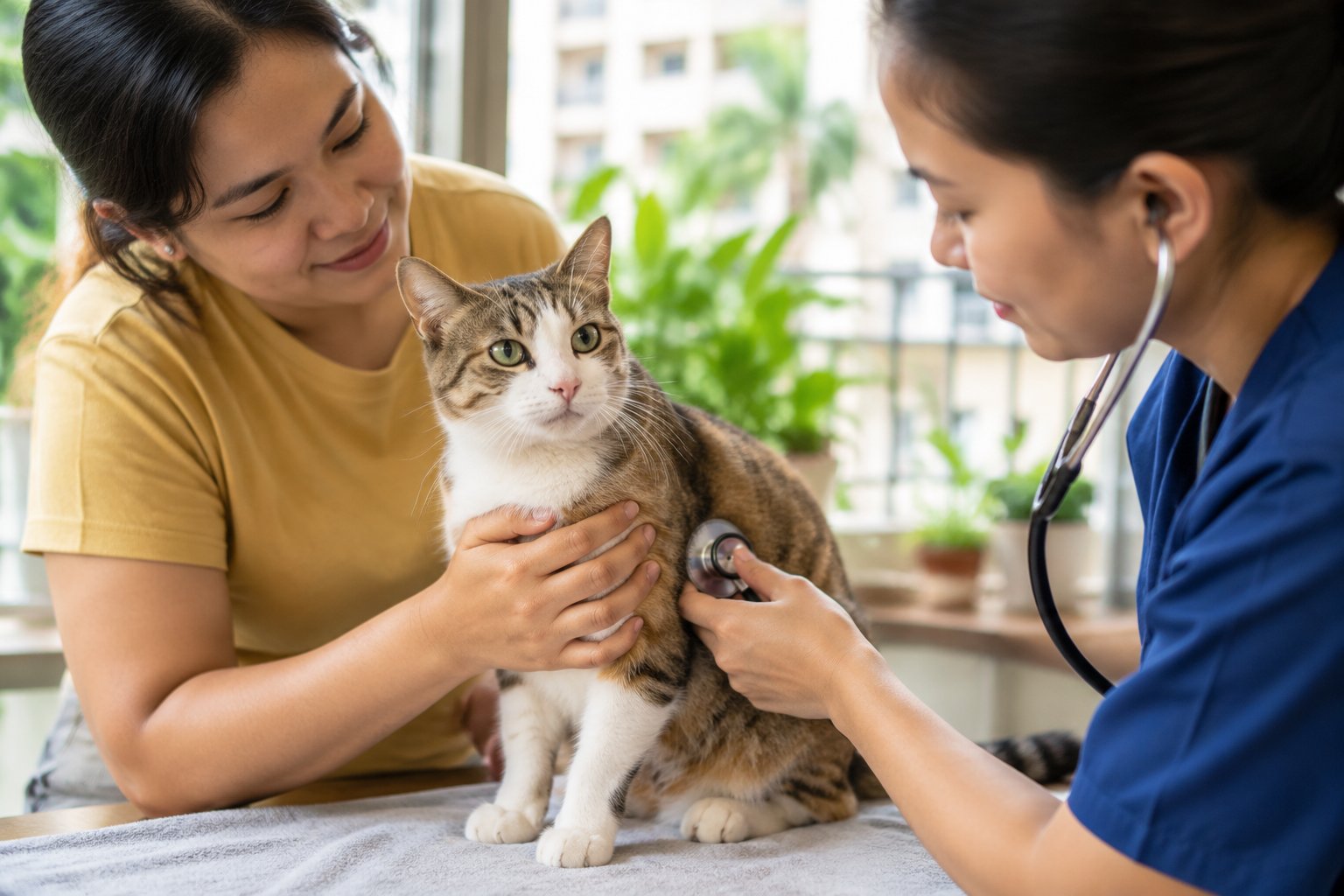
The short answer
A nursing cat, often called a queen, is doing one of the hardest jobs in feline biology: producing milk for a growing litter. Her energy, protein, fat, calcium and water needs rise sharply, and they stay high for several weeks. The practical approach is simple: feed a complete kitten or growth diet, or a diet explicitly labelled for pregnancy and lactation, offer it free-choice, keep fresh water available at all times, and monitor her body condition and the kittens' weight daily. If she stops eating, loses weight, seems painful or the kittens are not thriving, contact a veterinarian.
This guide explains the why and the how, with practical checklists for Malaysian homes, apartments and multi-cat households.
Why nursing nutrition is different
Milk production is metabolically expensive. During peak lactation a queen's energy requirement can be several times her maintenance need, and the exact multiplier depends on litter size, her body size, her body condition and how much the kittens demand. Rather than trying to calculate a precise number at home, most vets recommend feeding to appetite with a nutrient-dense growth diet and checking the queen's weight and body condition regularly.
Three things matter most:
- Energy density. A nursing cat may physically struggle to eat enough adult maintenance food to meet her needs. Kitten food is more calorie-dense and richer in protein and fat.
- Protein and amino acids. Milk is protein-rich. Adequate high-quality protein supports milk production and helps the queen maintain muscle.
- Water. Milk is mostly water. A nursing queen can become dehydrated quickly if she is not drinking or eating wet food.
A common mistake is to feed the same portion as before pregnancy. That usually leads to weight loss, poor milk supply and a queen who looks drained. Another mistake is overfeeding a single large meal; many queens prefer several smaller meals through the day.
What to feed: choosing the right diet
Best default: a complete growth or kitten diet
A complete kitten food, wet or dry, is formulated for growth and is usually suitable for lactation. Look for a label stating it is complete for growth or for all life stages. These diets are higher in protein, fat, calcium and phosphorus than adult maintenance foods.
Veterinary pregnancy and lactation diets
Some manufacturers make diets specifically for gestation and lactation. These are a good choice if your vet recommends one, especially for a queen with a large litter or a history of poor weight gain. Ask your Malaysian vet or a reputable pet retailer what is available locally; product ranges vary by market.
Wet versus dry
| Feature | Wet food | Dry food |
|---|---|---|
| Water content | High, helps hydration | Low, so fresh water is essential |
| Energy density | Usually lower per gram | Usually higher per gram |
| Palatability | Often high; useful for fussy queens | Convenient to leave out |
| Feeding style | Offer several small meals | Can be left out for free-choice nibbling |
| Dental effect | Minimal | Some chewing, but not a substitute for dental care |
Many owners combine both: dry food available all day, plus two to four wet meals. This supports hydration and gives the queen variety, which matters when appetite fluctuates.
What to avoid
- Adult maintenance food as the sole diet during peak lactation.
- Homemade diets without veterinary formulation; they are easy to get wrong on calcium and other nutrients.
- Cow's milk as a meal replacement.
- Sudden diet changes; transition over several days if possible.
- Raw or undercooked meat in a household with kittens, because of bacterial and parasite risks.
How much and how often
Feed to appetite, not to a fixed scoop
During lactation, many queens self-regulate reasonably well when given unlimited access to a nutrient-dense diet. Start by offering more than you think she needs and watch her body condition. If she is losing weight, increase energy density and meal frequency. If she is gaining excessively after weaning, reduce gradually.
Meal frequency
- Weeks 0 to 4: leave dry food out at all times and offer wet food at least three to four times daily.
- Weeks 4 to 6: kittens begin to nibble solid food, so the queen's milk demand may start to fall; keep food available and monitor.
- Weaning onwards: gradually reduce to her normal adult feeding plan once the kittens are eating well.
A simple daily routine
- Morning: refresh water bowls, offer a wet meal, top up dry food.
- Midday: check the nest, weigh kittens, offer a small wet meal if she is interested.
- Evening: wet meal, clean bowls, top up dry food.
- Before bed: quick check of the queen's appetite, hydration and nipple condition.
Water and hydration
Dehydration is a real risk in nursing queens, particularly in warm, humid conditions. Signs include tacky gums, skin that stays tented when gently pinched, lethargy and reduced urine. Encourage drinking by:
- Placing several water bowls around the home, away from food and litter.
- Using wide, shallow bowls; some cats dislike narrow vessels that touch their whiskers.
- Offering wet food, which contributes water.
- Changing water at least twice daily.
- Keeping the nest area cool and well ventilated.
If your cat seems dehydrated or is not drinking, speak to a vet rather than trying to force fluids.
Body condition and weight checks
Weigh the queen weekly on a baby scale or a kitchen scale with a stable box. Record the number. A small drop after birth is normal because of the kittens and placenta, but continued loss is a warning sign. Also run your hands along her ribs and spine: you should feel ribs easily but not see them sharply. Body condition scoring charts are widely available; ask your vet to show you how to use one.
Weigh each kitten daily at the same time. Steady gain is the best sign that milk supply and kitten health are on track. If a kitten is losing weight or not gaining, contact a vet promptly.
Special situations
Large litters
A queen with many kittens may need more food and more frequent meals. Watch her condition closely and ask your vet whether a richer lactation diet or supplementation is appropriate.
Fussy eaters
Offer small amounts of slightly warmed wet food, try different textures, and avoid leaving food out so long that it spoils. In hot weather, discard uneaten wet food after a short period.
Multi-cat households
Other cats may eat the queen's food. Feed her in a separate room or use a microchip feeder if available, and make sure the kittens cannot access adult food before they are ready.
First-time mothers
Young or first-time queens may be anxious and eat less. Keep the environment quiet, limit visitors, and give her easy access to food and water near the nest.
Common mistakes to avoid
- Assuming she will "eat when hungry" while offering only adult food.
- Forgetting water because the bowl is out of sight.
- Feeding one large meal instead of several small ones.
- Changing diets abruptly during lactation.
- Ignoring weight loss because the coat looks normal.
- Giving supplements without veterinary advice; excess calcium or vitamins can be harmful.
When to see a vet
Contact a veterinarian promptly if you notice any of the following:
- The queen stops eating for more than a day, or eats far less than usual.
- She is losing weight despite free access to food.
- She seems painful, has a fever, or her nipples are red, swollen, hot or lumpy.
- She is lethargic, breathing fast, or seems weak.
- Kittens are crying constantly, feel cold, look dehydrated, or are not gaining weight.
- There is a foul-smelling discharge or any sign of infection.
- She is drinking excessively or urinating more than usual.
These signs can indicate problems such as mastitis, metritis, poor milk supply or other illness. Early veterinary assessment is safer than waiting.
Practical checklist for Malaysian homes
- Complete kitten or lactation diet available at all times.
- Fresh water in at least three places, changed twice daily.
- Wet food offered three to four times daily.
- Quiet, cool nest away from noise and other pets.
- Weekly queen weight recorded.
- Daily kitten weights recorded.
- Nipples checked daily for redness or lumps.
- Vet contact saved and transport plan ready.
- Food and water bowls cleaned daily.
- Uneaten wet food removed promptly in hot weather.
A note on local products and prices
Food ranges, pack sizes and prices vary between Malaysian retailers and clinics, and they change over time. Ask your vet or a trusted pet shop which complete growth or lactation diets they stock, and compare labels rather than relying on marketing claims. There is no single "best" brand; the right choice is a complete diet your cat will eat and that suits her condition.
Final thoughts
Nursing nutrition is not complicated, but it is easy to get wrong by doing too little. Feed generously with a nutrient-dense growth diet, keep water flowing, watch the queen's weight and the kittens' growth, and act early if something seems off. A well-fed queen recovers faster, produces better milk and gives her kittens a stronger start.
This article is general information for cat owners and is not a substitute for veterinary advice. Always consult a licensed veterinarian about your cat's health and diet.
Related reading
- Kitten Care Guide Malaysia: 0–12 Month Feeding, Vaccination, Deworming & Growth Timeline
- Kitten Development for Cats in Malaysia: A Stage-by-Stage Guide
- Kitten Deworming for Kittens: A Complete Malaysian Guide
- Kitten Deworming in Malaysia: A Complete Guide for New Cat Owners
- Kitten Flea Treatment: A Complete Guide for Malaysian Owners
- Kitten Fleas in Malaysia: Safe Treatment for Tiny Cats
- Kitten Teething for Kittens: A Complete Guide for Malaysian Owners
- Kitten Vaccination for Cat Owners: A Complete Malaysian Guide
- Cat Birth for Cat Owners: A Complete Guide to Labour, Delivery and Newborn Kittens
- Kitten Development for Cat Owners: A Complete Malaysian Guide
- Kitten Diarrhea: A Practical Guide for Malaysian Cat Owners



