
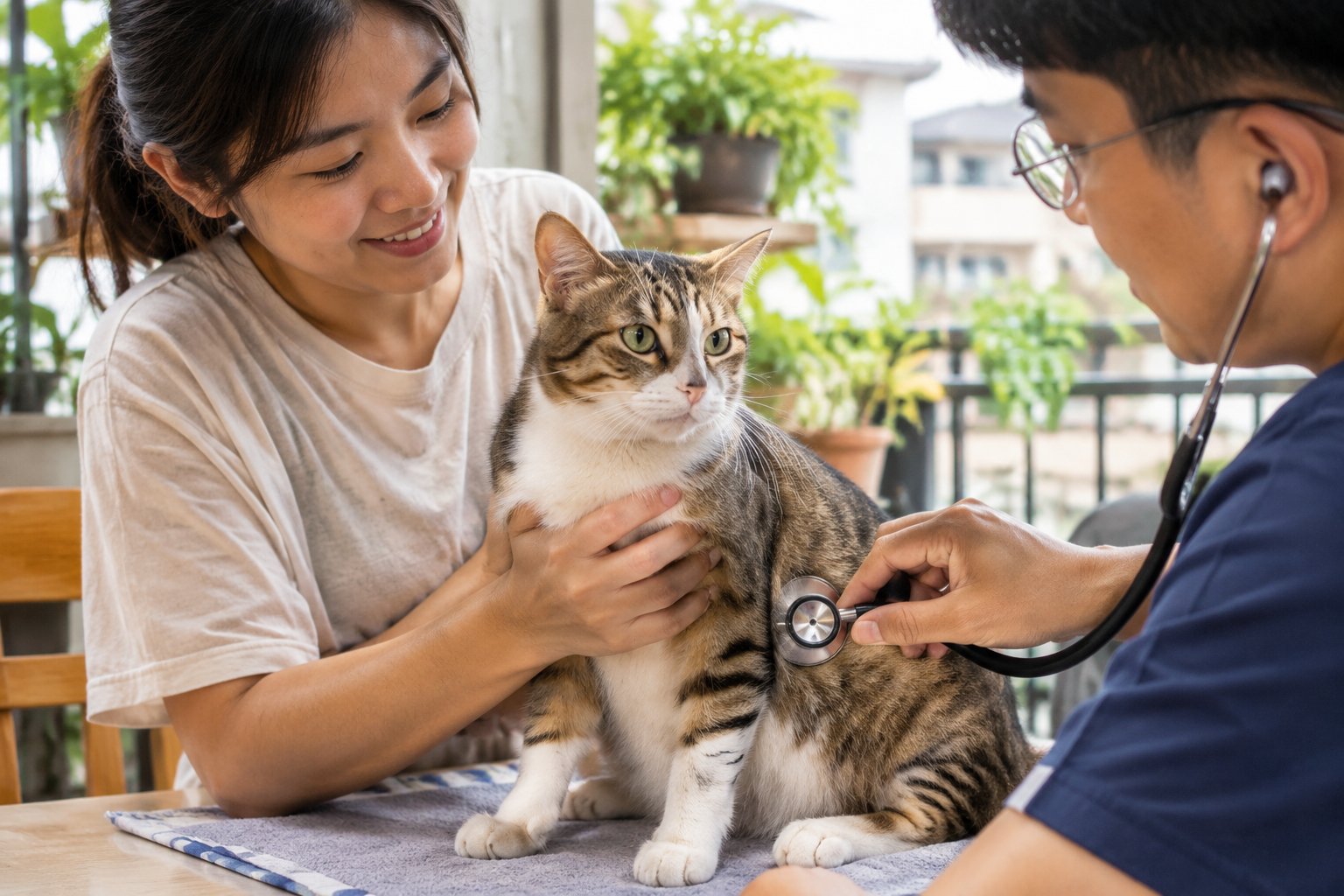
What is kitten development and why it matters
Kitten development is the series of physical, behavioural, and social changes a cat goes through from birth to about one year of age. Understanding these stages helps owners provide the right food, warmth, handling, play, and veterinary care at the right time. In Malaysia, where many kittens are born in apartments, terraces, or rescued from the street, knowing what is normal at each stage can make the difference between a thriving cat and a fragile one.
This guide walks through each stage, from newborn to adolescent, with practical checklists for Malaysian owners. It covers feeding, weaning, socialisation, vaccination timing, growth monitoring, and common red flags. It does not replace veterinary advice, but it gives you a clear framework so you can ask better questions at your clinic.
Stage 1: Newborn kittens (0 to 2 weeks)
Newborn kittens are entirely dependent on their mother. Their eyes and ears are closed, they cannot regulate their own body temperature, and they cannot urinate or defecate without stimulation. If you are hand-rearing an orphan, you become the mother figure.
What to expect:
- Eyes closed, ears folded flat.
- Weight around 90 to 110 grams at birth.
- Nursing every 2 to 3 hours.
- Sleeping most of the day.
- Crying when cold, hungry, or separated.
Owner checklist:
- Keep the nest warm, draft-free, and away from loud noise.
- If hand-rearing, use a kitten milk replacer, never cow's milk.
- Stimulate the kitten to urinate and defecate with a warm damp cotton pad after each feed.
- Weigh daily at the same time and record the number.
- Contact a vet immediately if a kitten is cold, limp, or not feeding.
In a Kuala Lumpur apartment, a quiet corner away from air-conditioning vents is often the best nest spot. In a Johor terrace house, watch for ants and mosquitoes around the nesting box, especially during the rainy season.
Stage 2: Eyes and ears open (2 to 4 weeks)
Between two and four weeks, kittens open their eyes and their ears begin to unfold. They start to crawl, then wobble, then take their first steps. Baby teeth begin to erupt near the end of this stage.
What to expect:
- Eyes open around 7 to 14 days; all kittens start with blue eyes.
- Ears open and start to point upward.
- First wobbly steps around 3 weeks.
- Beginning to play with littermates.
- Weight gain of roughly 50 to 100 grams per week.
Owner checklist:
- Do not force eyes open; if there is pus, swelling, or a kitten cannot open an eye, see a vet.
- Keep the environment clean and warm.
- Start gentle handling for a few minutes several times a day.
- Introduce safe, soft toys and different floor textures.
- Continue daily weighing.
This is also the stage where you may notice a kitten is the runt of the litter. Runts need extra monitoring, but many catch up with consistent feeding and warmth.
Stage 3: Weaning and play (4 to 8 weeks)
Weaning is one of the biggest transitions in kitten development. Around four weeks, kittens begin to show interest in solid food. By eight weeks, most are fully weaned and eating kitten food several times a day.
What to expect:
- Baby teeth fully erupted.
- Walking, running, and pouncing.
- Playing with siblings and objects.
- Learning bite inhibition from littermates and mother.
- Sleeping less and exploring more.
Feeding schedule during weaning:
| Age | Food type | Frequency |
|---|---|---|
| 4 weeks | Moistened kitten food or gruel | 4 to 5 small meals |
| 5 to 6 weeks | Soft kitten food, gradually less water | 4 meals |
| 7 to 8 weeks | Kitten food, moistened or dry | 3 to 4 meals |
| 8 to 12 weeks | Kitten food | 3 to 4 meals |
Use a growth diet formulated for kittens. If you are unsure which brand is suitable, ask a Malaysian vet or pet retailer for a kitten-specific option. Local prices vary, so compare labels and ask for guidance rather than assuming a premium brand is always necessary.
Owner checklist:
- Introduce new food slowly over several days.
- Provide fresh water in a shallow bowl.
- Offer a litter tray with low sides.
- Start gentle grooming with a soft brush.
- Begin short, positive car trips or carrier sessions.

Stage 4: Socialisation window (2 to 7 weeks, continuing to 14 weeks)
The socialisation window is a sensitive period when kittens learn what is safe and normal. Positive exposure to people, sounds, surfaces, and gentle handling during this time shapes adult temperament. While the window starts early, continued positive experiences up to about 14 weeks are valuable.
What to expose your kitten to:
- Different people, including children and visitors, with calm handling.
- Household sounds at low volume: vacuum, blender, doorbell, rain.
- Different surfaces: tile, carpet, wood, grass (supervised).
- Carriers, car rides, and vet clinics in a positive way.
- Gentle brushing, nail handling, and looking inside the mouth.
What to avoid:
- Rough play with hands, which teaches biting.
- Overwhelming the kitten with too many new things at once.
- Punishment, which increases fear.
- Separation from littermates before 8 weeks unless medically necessary.
In a Penang apartment during the rainy season, use short indoor sessions with recorded sounds and different textures to build confidence without going outside.
Stage 5: Juvenile growth (3 to 6 months)
By three months, kittens look like small cats. They are highly active, curious, and increasingly independent. This is when vaccination schedules are completed and when owners often notice teething and behavioural changes.
What to expect:
- Adult teeth replacing baby teeth around 3 to 6 months.
- Increased climbing, jumping, and exploration.
- Sexual maturity can begin as early as 4 to 6 months in some cats.
- Growth slows but continues steadily.
Owner checklist:
- Complete core vaccinations according to your vet's schedule.
- Discuss spaying or neutering timing with your vet.
- Provide scratching posts and vertical space.
- Feed a kitten growth diet three times a day, then twice daily as advised.
- Schedule a vet check if you notice retained baby teeth or gum redness.

Stage 6: Adolescence to adulthood (6 to 12 months)
Adolescence in cats is often compared to the teenage years. Energy levels may spike, sleep patterns change, and some cats test boundaries. Physically, growth continues, and many cats reach near-adult size by 10 to 12 months.
What to expect:
- Near-adult body size, though some breeds continue growing.
- Strong play drive and hunting instincts.
- Possible marking behaviour if not desexed.
- Coat changes and muscle development.
Owner checklist:
- Transition to adult food around 12 months unless your vet advises otherwise.
- Maintain daily play and enrichment.
- Keep up parasite prevention as advised.
- Book a final kitten-to-adult health check.
- Review microchipping and registration if not already done.
Growth and weight monitoring
Tracking weight is one of the simplest ways to check that a kitten is developing well. Use a kitchen scale and weigh at the same time each day or week. Record the number in a notebook or phone app.
| Age | Typical weight range | Notes |
|---|---|---|
| Birth | 90 to 110 g | Varies with litter size |
| 1 week | 150 to 200 g | Gain of 50 to 100 g per week |
| 2 weeks | 200 to 300 g | Eyes opening |
| 4 weeks | 350 to 500 g | Starting to wean |
| 8 weeks | 700 to 900 g | Fully weaned |
| 12 weeks | 1.0 to 1.5 kg | Vaccination period |
| 6 months | 2.0 to 3.0 kg | Varies by breed |
| 12 months | 3.0 to 5.0 kg | Adult size for many cats |
These ranges are general guides, not rules. Breed, sex, and litter size affect growth. A vet can plot your kitten's weight on a growth chart and flag concerns early.
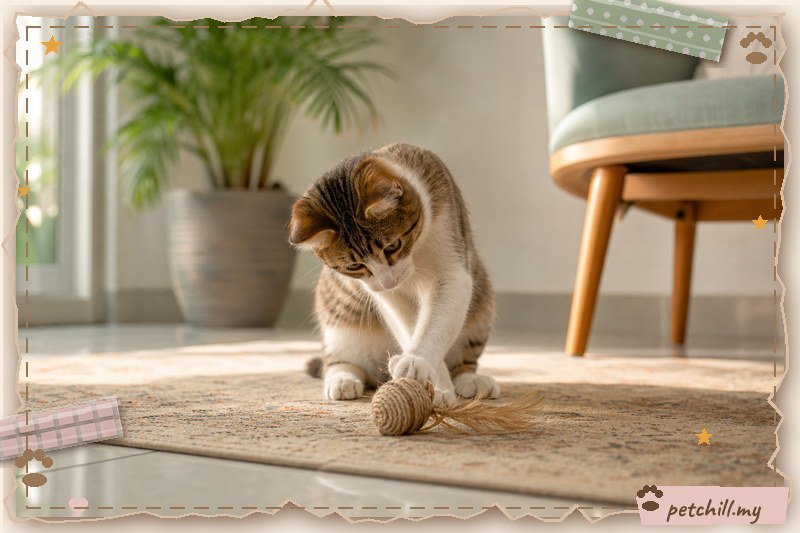
Health care timeline for Malaysian kittens
Kittens need a structured health plan. The exact schedule depends on your vet, but a typical timeline looks like this:
- 6 to 8 weeks: First vet visit, general health check, first core vaccination, deworming.
- 10 to 12 weeks: Second core vaccination, continue deworming, discuss parasite prevention.
- 14 to 16 weeks: Third core vaccination, rabies vaccination if required for travel or local regulations, microchipping discussion.
- 4 to 6 months: Spay or neuter discussion, dental check, weight review.
- 12 months: Adult health check, transition to adult food, booster review.
Malaysian owners should ask their vet about local disease risks, including feline panleukopenia and parasites. Do not copy schedules from other countries; your vet will tailor the plan to your kitten's lifestyle and local conditions.
Common kitten development concerns
Runts and slow growers. Some kittens are smaller at birth and need extra feeding support. Monitor weight daily and consult a vet if weight is static or falling.
Fading kitten syndrome. Newborns can deteriorate quickly. Signs include coldness, weakness, refusal to feed, and crying. This is an emergency; contact a vet immediately.
Biting and rough play. Kittens learn bite inhibition from littermates. If a kitten is hand-reared or separated early, owners must teach gentle play using toys, not hands.
Litter box problems. Provide a low-sided tray, keep it clean, and place it away from food. In multi-cat homes, use one tray per cat plus one extra.
Teething. Around 3 to 6 months, kittens may chew more. Offer safe chew toys and check for retained baby teeth at vet visits.
When to see a vet
Contact a Malaysian veterinarian promptly if you notice any of the following:
- A newborn kitten that is cold, limp, or not feeding.
- Weight loss or no weight gain over several days.
- Diarrhoea, vomiting, or blood in stool.
- Eye discharge, swelling, or inability to open an eye.
- Difficulty breathing, coughing, or sneezing with nasal discharge.
- Pale gums, lethargy, or hiding.
- Straining to urinate or defecate.
- Sudden behavioural change or loss of appetite.
- Any injury, fall, or suspected poisoning.
When in doubt, call your vet. Early intervention is especially important for kittens because they can decline faster than adult cats.
Practical checklist for Malaysian kitten owners
- Set up a warm, safe nest area away from drafts and noise.
- Weigh your kitten regularly and record the numbers.
- Feed a kitten-specific growth diet and fresh water.
- Book the first vet visit within the first week of bringing your kitten home.
- Follow the vaccination and deworming schedule your vet recommends.
- Socialise gently with people, sounds, surfaces, and handling.
- Provide scratching posts, toys, and safe vertical space.
- Spay or neuter according to your vet's advice.
- Microchip and register your kitten if you plan to travel or as advised locally.
- Keep a simple health log of weight, appetite, stool, and behaviour.
Conclusion
Kitten development follows a predictable arc, but every kitten is an individual. The best approach is to combine good nutrition, warmth, gentle socialisation, regular weight checks, and timely veterinary care. Malaysian owners can support healthy development by using local vet guidance, adapting to the climate, and keeping a simple record of daily observations. If something seems off, ask a vet early rather than waiting.
This article is for general information only and does not replace professional veterinary advice. Always consult a licensed veterinarian in Malaysia for diagnosis and treatment of your kitten.



