
The short answer
Pregnant cat care in Malaysia comes down to four things: better food, a calm and cool nesting space, regular vet checks, and knowing when something is wrong. Start kitten food early, keep her indoors, avoid unapproved medicines and parasite products, and have a plan for the birth and for the kittens afterwards.
How long cat pregnancy lasts and what happens at each stage
A queen (an entire female cat) is pregnant for roughly 63 to 65 days, with a normal range of about 61 to 72 days. Because mating is often unobserved, the exact date is frequently unknown. Your vet can narrow it down with an ultrasound from around three weeks and an X-ray later in pregnancy to count skeletons, which helps you prepare for the number of kittens.
| Stage | Approximate timing | What you may notice | What to do |
|---|---|---|---|
| Early pregnancy | Weeks 1–3 | Often nothing obvious; possible mild appetite change or quiet behaviour | Book a vet visit; stop any non-approved medication; keep her indoors |
| Mid pregnancy | Weeks 3–5 | Nipples may enlarge and pink up; belly starts to round; appetite increases | Switch to kitten food; deworm only under vet guidance; prepare the nesting area |
| Late pregnancy | Weeks 6–8 | Clear belly, visible movement, restlessness, grooming more, seeking quiet spots | Increase meal frequency; limit rough handling; keep the nest ready and quiet |
| Around birth | Days 61–72 | Nesting, hiding, appetite drop, licking the vulva, possible temperature drop | Watch quietly from a distance; keep the house calm; have vet contact ready |
Every cat is different. Some show almost no visible signs until the last two weeks, while others look obviously pregnant by week five. A stray you have taken in may be further along than you think, so set up a nesting box as soon as you suspect pregnancy.

Feeding a pregnant cat: what to change and when
Nutrition is the single most useful thing you control. From early pregnancy, gradually move her onto a complete kitten food, or a food labelled for pregnant and nursing cats. These diets are richer in protein, calories, calcium and other nutrients than adult maintenance food.
Practical feeding steps:
- Transition slowly. Mix increasing amounts of kitten food into her usual food over about seven days to avoid stomach upset.
- Feed more often. By late pregnancy her stomach is compressed by the kittens, so several small meals suit her better than two large ones.
- Let her eat to appetite. Many queens need noticeably more food in the final weeks and while nursing.
- Keep water available at all times. Pregnancy and nursing raise water needs, and Malaysian heat adds to that.
- Do not add calcium or other supplements on your own. Over-supplementing calcium can cause problems; ask your vet first.
- Avoid raw meat and unpasteurised dairy. These carry infection risk. Cooked, commercial or vet-approved diets are safer.
If she refuses food for more than a day, or looks thin despite eating, speak to your vet. Poor appetite in late pregnancy can be a sign of illness or impending labour.
Setting up a safe nesting area in a Malaysian home
Malaysian homes are often warm and humid, and many households are busy with family, visitors and other pets. A pregnant cat needs a quiet, dry, shaded place she can retreat to.
What a good nesting box looks like:
- Low-sided and roomy. A sturdy cardboard box or plastic crate with a low front lets her step in easily and gives the kittens room to spread out.
- Washable bedding. Old towels or blankets that can be washed hot are practical. Avoid loose fibres that kittens can tangle in.
- Away from heat and noise. Choose a corner away from direct afternoon sun, the kitchen, the washing machine and loud doorways.
- Near but not next to her litter box. She should not have to travel far, but kittens should not be born beside the tray.
- Several options. Cats often reject the box you chose. Offer two or three spots in different rooms and let her pick.
In a Kuala Lumpur apartment, space is limited, so a quiet corner of a bedroom or a covered balcony area that stays dry and shaded can work well. In a Johor terrace house, a spare room or a covered utility area away from the front gate and traffic noise is usually calmer than a car porch. Wherever you set it up, introduce the box in the last two to three weeks so she has time to accept it.

Vet care during pregnancy
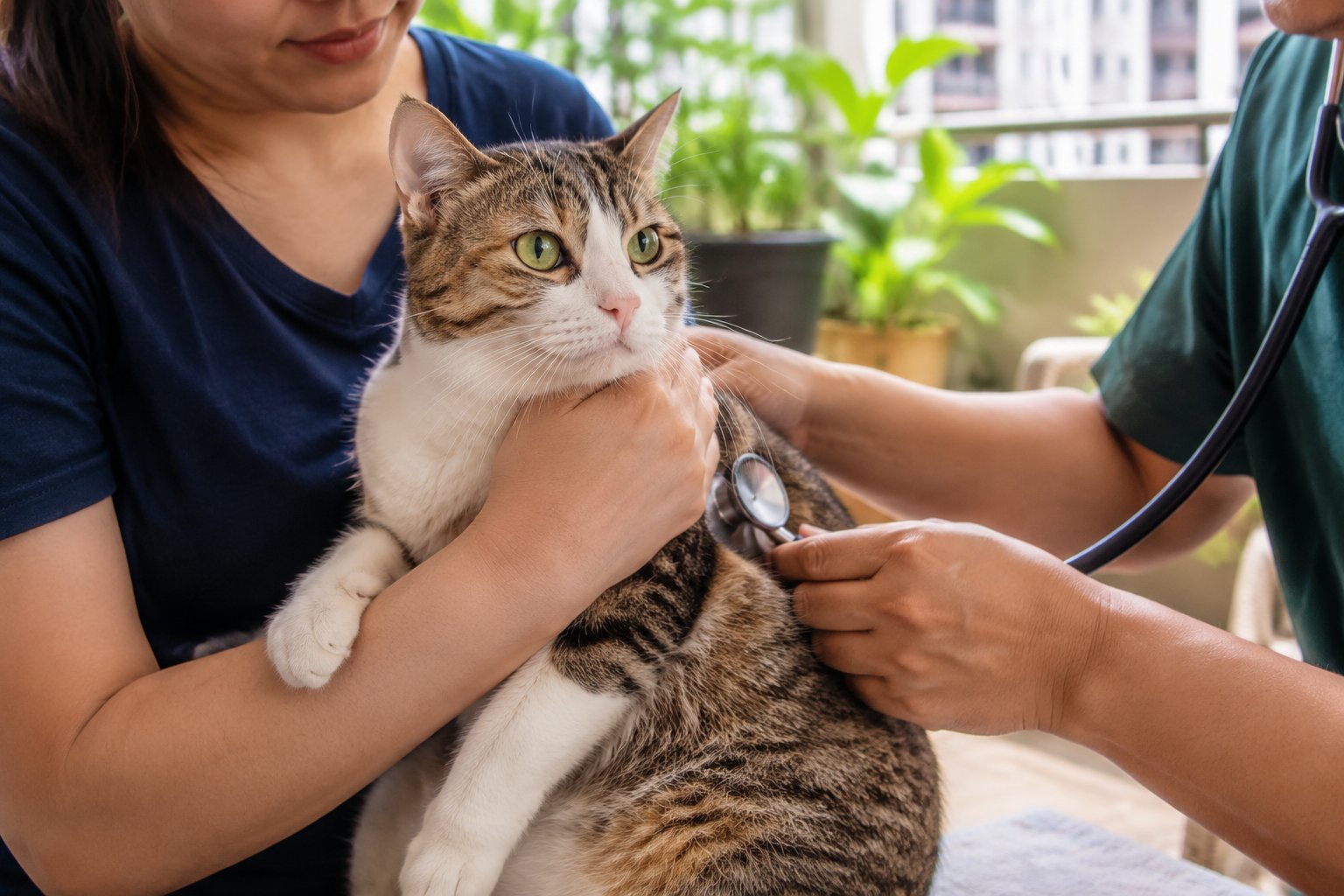
A vet visit early in pregnancy is worthwhile even if your cat seems healthy. The vet can confirm pregnancy, estimate timing, check her general health and discuss parasite control and vaccination timing.
Topics to raise with your vet:
- Parasite control. Fleas and roundworms can affect queens and kittens. Only use products your vet confirms are safe in pregnancy, and never use dog products on cats.
- Vaccination. Vaccines are usually avoided during pregnancy unless clearly needed; discuss timing of boosters before or after pregnancy instead.
- Existing conditions. If she has a chronic illness or is on medication, review the plan before the kittens arrive.
- Body condition. Very thin or overweight queens need tailored feeding advice.
- Birth plan. Ask what to do if labour stalls and which clinic to call, especially at night or on public holidays.
You do not need repeated scans in a normal, uncomplicated pregnancy, but a check in the final weeks can confirm the kittens' position and give you a clearer due date. Costs vary between clinics and states, so ask your vet directly for a quote rather than relying on figures you read online.
Keeping her safe, calm and indoors
From the moment you suspect pregnancy, keep her indoors. Free-roaming carries risks that matter more when she is pregnant: traffic, fights with other cats, infections, parasites and stress. In Malaysian neighbourhoods with many free-roaming cats, the risk of fighting and disease exposure is real.
Ways to reduce stress at home:
- Keep other pets calm and give her escape routes and high resting spots.
- Avoid loud renovations, parties and travel in the final weeks.
- Handle her gently and briefly; stop if she seems uncomfortable.
- Keep her litter box clean and in the same place.
- Provide scratching posts and quiet hiding places.
- Do not bathe her late in pregnancy unless your vet advises it.
If you have an entire male cat in the house, separate him before the birth. Queens can become pregnant again soon after giving birth, and males may bother mothers and kittens.

Preparing for birth: signs and supplies
Most queens give birth without help. Your job is to be prepared and to watch quietly.
Signs labour is near:
- Restlessness, pacing and repeated nesting attempts
- Hiding or wanting to be alone
- Loss of appetite in the last day or so
- Frequent licking of the vulva
- A drop in body temperature, if you have been monitoring it
- Clear or slightly blood-tinged discharge
Supplies to have ready:
- Clean towels and a spare bedding set
- A hot water bottle wrapped in a towel for warmth if the room is cool, used safely away from direct contact
- Kitchen scale for weighing kittens daily
- Kitten milk replacer and a small syringe or bottle, in case hand-feeding is needed
- Vet clinic phone number and after-hours contact
- A notebook to record birth times and kitten weights
During labour, keep the room dim and quiet and resist the urge to interfere. Most mothers clean, stimulate and nurse each kitten themselves. If a kitten is born still in its sac and the mother does not open it within a short time, you may need to gently clear the membrane and rub the kitten dry with a towel while calling your vet.
When to see a vet
Contact a vet promptly, and urgently if needed, if you notice any of the following:
- Straining for more than about 20 to 30 minutes without producing a kitten
- A kitten visibly stuck in the birth canal
- More than two hours between kittens while contractions continue
- Heavy bleeding or foul-smelling discharge
- Fever, weakness, collapse or pale gums
- Not eating for more than 24 hours or persistent vomiting
- Green or dark discharge before any kitten is born
- A mother ignoring, rejecting or not nursing kittens
- Kittens that feel cold, cry constantly or fail to gain weight
If in doubt, call. A quick phone call to your vet is far better than waiting, especially at night.
After the birth: the first weeks with kittens
Once the kittens arrive, the mother needs continued kitten food and free access to water. Keep the nest warm, dry and quiet, and limit visitors for the first couple of weeks.
A simple daily routine:
- Weigh each kitten at roughly the same time daily; steady gain is the best sign of progress.
- Check that all kittens are nursing and that the mother's nipples look normal.
- Keep bedding clean and dry, changing it gently when the mother is away.
- Watch the mother's appetite, energy and discharge.
- Keep the room warm but not hot, and avoid draughts from air conditioning.
Kittens usually start exploring solid food around three to four weeks. Offer a shallow dish of kitten food mixed with kitten milk replacer, and provide a low-sided litter tray. Plan for vet checks, deworming and vaccinations according to your vet's schedule, and think early about rehoming so you are not making rushed decisions later.
Common mistakes to avoid
- Using flea or worm products without checking they are safe in pregnancy
- Feeding adult food only and expecting her to manage on it
- Letting her outdoors to "get exercise"
- Handling her belly roughly or letting children carry her
- Skipping vet advice because the pregnancy looks normal
- Assuming she will use the nest you built without introducing it early
- Delaying a call to the vet during a difficult labour
A quick checklist
- Vet check booked and pregnancy discussed
- Kitten food introduced gradually
- Fresh water always available
- Nesting box set up in a quiet, shaded spot
- Litter box close by and kept clean
- Parasite control confirmed safe by vet
- Male cat separated if present
- Birth supplies gathered
- Vet contact and after-hours number saved
- Plan for weighing and rehoming kittens
This article is general information only and is not a substitute for veterinary advice. Always consult a licensed veterinarian about your cat's pregnancy, medication and parasite control.
Related reading
- Kitten Care Guide Malaysia: 0–12 Month Feeding, Vaccination, Deworming & Growth Timeline
- Cat Birth for Cat Owners: A Complete Guide to Labour, Delivery and Newborn Kittens
- Kitten Development for Cat Owners: A Complete Malaysian Guide
- Kitten Diarrhea: A Practical Guide for Malaysian Cat Owners
- Kitten Sleep Needs: A Complete Guide for Malaysian Owners
- Kitten Vaccine Schedule for Kittens: A Complete Guide for Malaysian Owners
- Kitten Vomiting: A Complete Guide for Malaysian Cat Owners
- Pregnant Cat Care for Cat Owners: A Complete Malaysian Guide
- Cat Birth in Malaysia: A Practical Guide to Feline Labour and Delivery
- Kitten Development for Cats in Malaysia: A Stage-by-Stage Guide
- Kitten Deworming for Kittens: A Complete Malaysian Guide



