
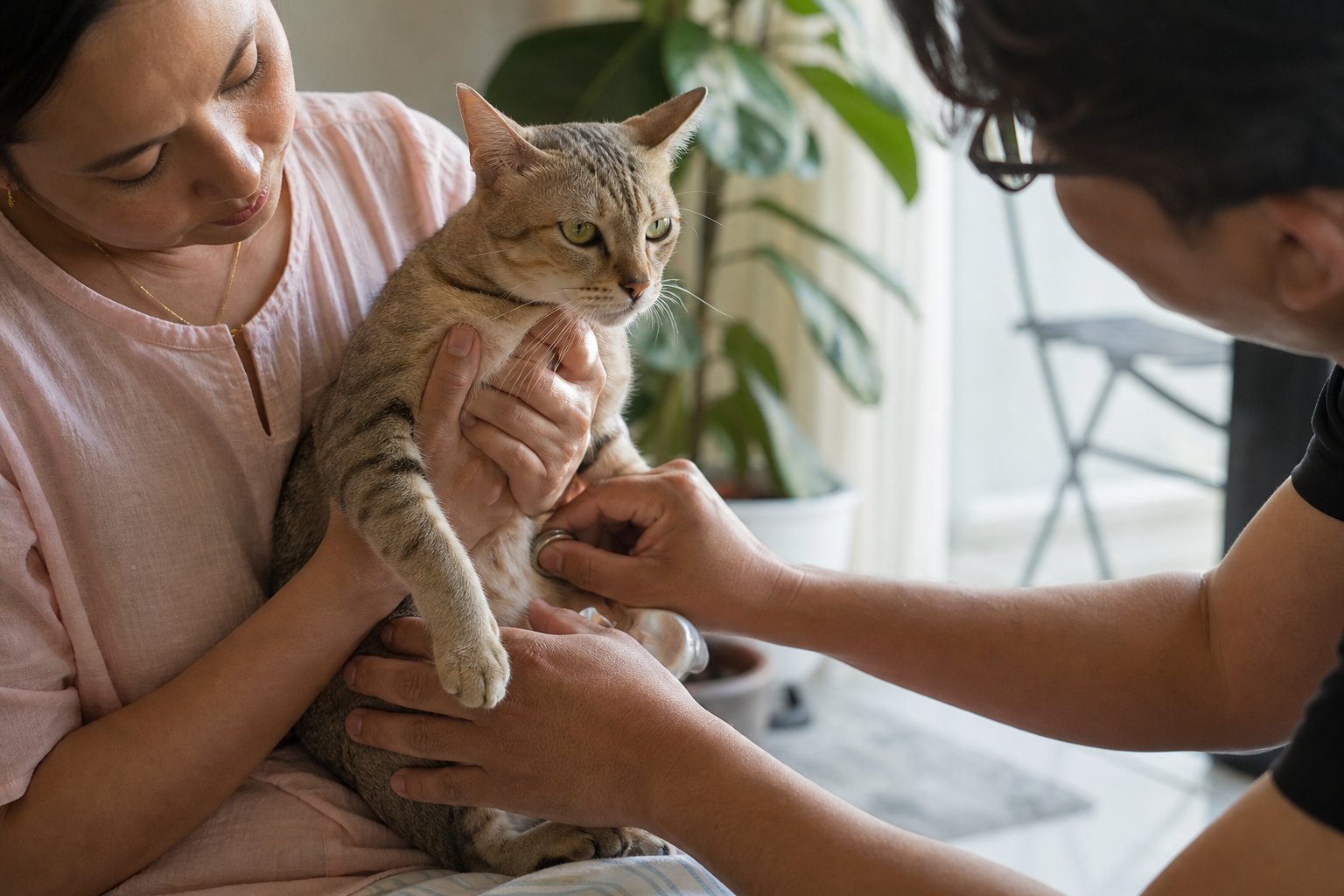
The short answer
Kittens need a series of vaccines, not a single shot. The standard core schedule starts at 6–8 weeks, repeats every 3–4 weeks until the kitten is at least 16 weeks old, and finishes with a booster at 1 year. Core vaccines cover feline panleukopenia (feline parvovirus), feline herpesvirus and feline calicivirus — often given together as the FVRCP or "tricat" vaccine. Rabies and feline leukaemia virus (FeLV) vaccines are added based on risk, lifestyle and local requirements.
The exact plan depends on your kitten's age, health, previous vaccinations and where you live. Use this guide as a framework, then confirm the details with your veterinarian.
Why kittens need a series, not one shot
Newborn kittens get temporary protection from antibodies in their mother's colostrum. Those maternal antibodies are helpful, but they also interfere with vaccines: while antibody levels are high, a vaccine may not "take." As maternal antibodies fade at different rates in different kittens, no single timing works for all. That is why vets give repeated doses across a window — usually from 6–8 weeks to 16 weeks — to catch each kitten at the point when its immune system can respond.
The 16-week finish matters. By that age, maternal antibodies have almost always waned enough for the final dose to provide reliable protection. Stopping at 12 weeks leaves some kittens under-protected.
The core kitten vaccine schedule at a glance
| Age | What usually happens | Why it matters |
|---|---|---|
| 6–8 weeks | First core vaccine (FVRCP) | Starts building immunity as maternal antibodies fade |
| 10–12 weeks | Second core vaccine | Boosts response; some vets add FeLV here if risk is high |
| 14–16 weeks | Third core vaccine | Completes the primary series at or after 16 weeks |
| 6–12 months | Rabies vaccine if required or recommended | Timing depends on local rules and lifestyle |
| 1 year | First annual booster | Confirms long-term protection |
| Yearly or as advised | Adult boosters | Maintains immunity; frequency depends on vaccine and risk |
Some clinics use a 3-dose core series; others use 4 doses if the kitten started very young or the product label specifies it. Follow the vaccine label and your vet's advice rather than a rigid internet chart.
What each core vaccine protects against
Feline panleukopenia (FPV). A highly contagious and often severe viral disease that attacks rapidly dividing cells, including the gut and bone marrow. It can cause vomiting, diarrhoea, lethargy and dehydration, and it can be fatal, especially in young kittens. It spreads easily through contaminated environments, so indoor cats are not automatically safe.
Feline herpesvirus (FHV-1). A common cause of upper respiratory disease. It can cause sneezing, eye discharge and fever, and infected cats can become carriers that reactivate during stress.
Feline calicivirus (FCV). Another upper respiratory virus that can cause oral ulcers, sneezing and lameness. Some strains are more severe than others.
These three are considered core because they are widespread, serious and preventable. The combination vaccine is often called FVRCP (feline viral rhinotracheitis, calicivirus, panleukopenia) or "tricat."
Non-core vaccines: FeLV and rabies
Feline leukaemia virus (FeLV). A retrovirus that can cause immune suppression, anaemia and some cancers. The vaccine is usually recommended for kittens at higher risk — for example, those who go outdoors, live with FeLV-positive cats, or come from a multi-cat environment. It is not automatically given to every kitten. Your vet will weigh lifestyle risk against the benefit.
Rabies. Rabies is a serious public health disease. Vaccination is strongly recommended and may be required for travel, boarding, shows or certain licensing situations. Because requirements vary, ask your vet what applies to your situation rather than relying on a general chart.
Timing details that owners often ask about
What if my kitten is older than 16 weeks when I adopt? A kitten with an unknown vaccine history should usually start the core series and receive at least two doses 3–4 weeks apart, with the final dose at or after 16 weeks. Your vet may adjust based on age and health.
What if my kitten was already vaccinated once? Bring any record — even a photo of a card — to the vet. They can decide whether to continue the series or restart it.
Can vaccines be given on the same day? Core vaccines are often combined. Rabies and FeLV may be given at the same visit or staggered, depending on the products and your vet's preference. Spacing can help identify which vaccine caused a reaction if one occurs.
Does my kitten need deworming too? Yes. Vaccination and parasite control are separate but complementary. Kittens commonly need deworming, and some vets time it around vaccine visits for convenience.
Preparing for the vet visit
A little preparation makes vaccine visits smoother and safer:
- Bring records. Any previous vaccine card, deworming history and adoption paperwork.
- Use a secure carrier. A hard-sided carrier with a towel is safer than carrying a kitten in your arms.
- Note your kitten's habits. Appetite, litter box changes, sneezing or scratching — these help the vet assess health before vaccinating.
- Ask about the plan. Confirm which vaccines are being given today, which are next, and when the next visit is due.
- Keep the visit calm. Avoid a big outing afterwards; let the kitten rest at home.
A healthy kitten is vaccinated only when well. If your kitten has a fever, diarrhoea, vomiting or is lethargic, the vet may postpone vaccination until it recovers.
What to expect after vaccination
Most kittens tolerate vaccines well. Common, mild reactions include:
- Sleepiness or a quieter mood for 24–48 hours
- Slightly reduced appetite
- A small, firm or tender spot at the injection site
- Mild sneezing or a low-grade temperature in some cases
These usually settle without treatment. Keep fresh water available, offer normal food, and avoid rough play or bathing for a day or two.
Less common but worth watching: vomiting, diarrhoea, facial swelling, hives, difficulty breathing, persistent crying or collapse. These can indicate a reaction and need prompt veterinary attention. If you are worried, call your vet — do not wait to see if it passes.
Indoor cats, apartments and Malaysian living
Many Malaysian kittens live in apartments, condominiums or terrace houses. Indoor living reduces some risks but does not eliminate them. Viruses like panleukopenia can survive in the environment and be carried in on shoes, clothing or hands. Visiting cats, new kittens and boarding situations also create exposure.
In a Kuala Lumpur apartment, for example, a kitten may never step outside but still meet other cats in the corridor, in a carrier at the vet, or through a new housemate's cat. In a Johor terrace house, a kitten may have access to a small yard or car porch where neighbourhood cats roam. In both settings, completing the core series and discussing FeLV risk with your vet is sensible.
Malaysia's warm, humid climate does not change the vaccine schedule, but it does affect parasite risk. Fleas and mosquitoes are present year-round in many areas, so parasite prevention should be discussed alongside vaccination. The Penang rainy season can bring more standing water and outdoor exposure, which is another reason to keep young kittens indoors until their series is complete.
Cost, records and planning
Vaccine prices vary by clinic, location and vaccine brand. Rather than relying on a figure you saw online, ask your local vet for a written estimate covering the full kitten series, deworming and the first annual booster. Spreading visits every 3–4 weeks gives you a chance to budget and to ask questions.
Keep a simple vaccination record:
| Record item | Why keep it |
|---|---|
| Date of each vaccine | Shows whether the series is on schedule |
| Vaccine name and batch | Useful if a reaction occurs or for travel |
| Clinic and vet name | Makes follow-up easier |
| Next due date | Prevents missed boosters |
| Deworming dates | Completes the preventive picture |
If you move home or change vets, a clear record prevents unnecessary repeat doses or gaps.
Common myths and mistakes
"One shot is enough." No — the series and the 1-year booster are what build reliable protection.
"Indoor cats don't need vaccines." Indoor cats still face exposure through people, objects and other animals, and vaccines are often required for boarding or vet care.
"My kitten can meet other cats after the first shot." Protection is not complete until the series finishes. Keep introductions limited until your vet confirms.
"A reaction means never vaccinate again." Mild reactions are not a reason to stop. If a reaction occurs, your vet can adjust the plan, pre-treat or choose different products.
"Vaccines cause the illness they prevent." Modern core vaccines do not cause the diseases they protect against. Mild transient signs are not the same as infection.
A practical kitten vaccination checklist
- Book a first vet visit within a few days of adoption
- Bring any vaccine or deworming records
- Confirm the core vaccine start date (usually 6–8 weeks)
- Schedule the next dose 3–4 weeks later
- Plan the final core dose at or after 16 weeks
- Discuss FeLV risk and rabies requirements
- Keep the kitten indoors until the series is complete
- Record each vaccine date and next due date
- Book the 1-year booster
- Ask about parasite prevention and microchipping
When to see a vet
Contact a veterinarian promptly if your kitten:
- Has vomiting, diarrhoea, poor appetite or lethargy before a scheduled vaccine
- Shows facial swelling, hives, difficulty breathing or collapse after a vaccine
- Has a persistent lump, pain or fever at the injection site
- Misses a scheduled dose or has an unknown vaccine history
- Is due for a booster and you are unsure what is required
For general scheduling questions, a phone call to your clinic is often enough. For any sign of illness or reaction, seek veterinary care rather than waiting.
Bottom line
The kitten vaccine schedule is a series, not a single appointment: start at 6–8 weeks, repeat every 3–4 weeks, finish at or after 16 weeks, and booster at 1 year. Add FeLV and rabies based on risk and local requirements. Keep records, keep your kitten indoors until protected, and confirm every step with your vet.
This article is general information, not veterinary advice. Vaccine products, timing and local requirements vary. Always consult a licensed veterinarian for your kitten's individual vaccination plan.
Related reading
- Kitten Care Guide Malaysia: 0–12 Month Feeding, Vaccination, Deworming & Growth Timeline
- Kitten Development for Cat Owners: A Complete Malaysian Guide
- Kitten Diarrhea: A Practical Guide for Malaysian Cat Owners
- Kitten Sleep Needs: A Complete Guide for Malaysian Owners
- Kitten Vaccination in Malaysia: A Complete Schedule and Owner's Guide
- Kitten Vomiting: A Complete Guide for Malaysian Cat Owners
- Pregnant Cat Care for Cat Owners: A Complete Malaysian Guide
- Pregnant Cat Care in Malaysia: A Complete Guide for Owners
- Kitten Development for Cats in Malaysia: A Stage-by-Stage Guide
- Kitten Deworming for Kittens: A Complete Malaysian Guide



