
The short answer
Kittens sleep a lot — commonly 16 to 20 hours a day — and that is healthy. Sleep is when growth, immune development and learning consolidate. Your job is not to keep the kitten awake but to make sure its sleep is safe, warm and predictable, and that the waking hours include food, play and toileting.
This guide covers how kitten sleep changes with age, what normal and abnormal sleep looks like, how to set up a sleep area in a Malaysian home, and when to call a vet.
Why kittens sleep so much
A kitten's body is doing enormous work. In the first months it is growing rapidly, building muscle and bone, developing its brain and immune system, and learning social and hunting skills. Rest supports all of this.
Sleep also helps regulate mood and stress. A kitten that is overtired often becomes bitey, frantic or clingy — much like a tired toddler. Short, frequent naps are how kittens avoid becoming overstimulated.
Kittens also spend a larger share of sleep in active (REM-like) sleep than adult cats, which is thought to support brain development. You may see twitching paws, whisker movement or tiny mews during sleep; this is normal.
How kitten sleep changes with age
Sleep needs shift as the kitten grows. The table below is a general guide, not a strict rule — individual kittens vary.
| Age | Typical sleep pattern | What owners may notice |
|---|---|---|
| 0–2 weeks | Sleeps almost constantly between feeds | Wakes mainly to nurse; needs warmth and close supervision |
| 2–4 weeks | Still sleeps most of the day, short awake spells | Eyes opening, wobbly movement, frequent feeds |
| 4–8 weeks | Roughly 18–20 hours, in short bursts | Play begins; needs a safe, contained area |
| 8–12 weeks | Around 16–18 hours, longer naps | More confident play; may resist naps when overstimulated |
| 3–6 months | Gradually closer to adult patterns | Active bursts, then deep naps; routine helps |
| 6 months+ | Approaching adult 12–16 hours | More settled, but still sleeps more than adult cats |
Very young kittens cannot regulate their body temperature well, so warmth matters as much as sleep itself. Older kittens are better at finding comfortable spots but may choose unsafe ones — on top of a fridge, behind a washing machine, or under a car — so containment is important.
What normal kitten sleep looks like
Healthy kitten sleep usually has these features:
- Short cycles. Naps of 20 minutes to a couple of hours, interspersed with play, food and litter visits.
- Deep sleep with twitching. Paws, ears and whiskers may move; the kitten may make small sounds.
- Easy rousing. A healthy kitten wakes reasonably quickly when touched or called, even if grumpy at first.
- Predictable active periods. After sleeping, most kittens want food, play or the litter tray.
- Settling in familiar spots. Kittens often return to the same bed, cushion or corner.
A kitten that sleeps a lot but is bright, hungry and playful when awake is usually fine. The concern is a kitten that is quiet even when awake, or that cannot be roused.
Setting up a safe sleep space in a Malaysian home
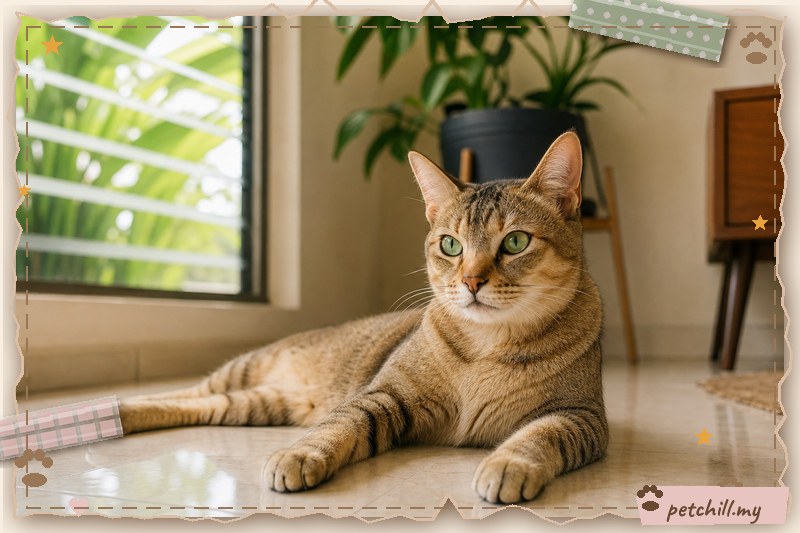
Malaysia's warm, humid climate and common housing styles shape how you set up a kitten's sleep area. Air-conditioning, ceiling fans, open windows and tiled floors all affect where a kitten will be comfortable and safe.
Choose the right spot
- Warm but not hot. A quiet corner away from direct sun and air-conditioner draughts works well. Kittens can chill easily, especially in air-conditioned rooms.
- Draft-free. Avoid spots directly under a ceiling fan or beside a window that lets in rain.
- Low traffic. Away from the main doorway, kitchen walkway and noisy appliances.
- Contained. A kitten pen, a small room or a carrier with the door open gives the kitten a safe base and keeps it out of trouble at night.
Bedding and warmth
Provide a soft, washable bed or folded blanket. In air-conditioned rooms, a kitten may appreciate a covered bed or a snuggle-safe cushion. Avoid loose blankets that a very young kitten could burrow under and struggle to escape. Heat pads, if used, should be low, covered and never the kitten's only surface — and should be checked with your vet for young kittens.
The sleep area checklist
- Soft, washable bedding
- A litter tray within easy reach for young kittens
- Fresh water nearby
- No dangling cords, small swallowable objects or plastic bags
- No access to balconies, open windows or stairwells
- A gentle night light if the kitten seems unsettled in the dark
Housing-specific tips
- Kuala Lumpur apartment: Keep the kitten in an enclosed room or pen at night. Balcony doors and windows must be secured with sturdy mesh; high-rise falls are a serious risk. Air-conditioning can dry the air and chill a small kitten, so keep the bed away from the vent.
- Johor terrace house: With more rooms and open areas, close off the kitchen, store room and garage. Kittens can slip behind appliances or under cars. A dedicated kitten room with a baby gate is practical.
- Penang rainy season: Damp, humid weather can make floors cold and bedding musty. Wash bedding often, dry it fully, and keep the sleep area away from leaking windows or doors.
Building a sleep routine
Kittens thrive on routine. A simple daily rhythm helps them settle and reduces night-time chaos.
- Play before bed. A short, active play session with a wand toy or soft ball tires the kitten out.
- Feed a small meal. A satisfied kitten is more likely to sleep.
- Toilet break. Place the kitten in the litter tray after eating.
- Wind down. Dim lights, quiet voices and a soft bed signal sleep time.
- Keep night-time boring. If the kitten cries at night, respond calmly and briefly; avoid turning night into playtime.
Young kittens may need a night feed or two, especially under eight weeks. Ask your vet for guidance based on the kitten's age and weight.
Sleep and play: the balance
A kitten that sleeps well plays well. Aim for several short play sessions each day rather than one long one. Play mimics hunting and helps kittens develop coordination and confidence.
Watch for signs of over-tiredness:
- Frantic, non-stop biting or scratching
- Refusing to settle even when clearly tired
- Crying or pacing
- Sudden grumpiness during handling
When you see these, end play gently and offer a quiet bed. Forcing a kitten to keep playing usually backfires.
Sleep problems and what they can mean
Most kitten sleep is normal, but some patterns deserve attention.
| Sign | Possible meaning | What to do |
|---|---|---|
| Hard to wake, very limp | Illness, low blood sugar, chilling | See a vet urgently |
| Sleeping more and eating less | Infection, pain, stress | Book a vet visit |
| Crying constantly at night | Hunger, cold, loneliness, discomfort | Check warmth, food, litter; consult vet if persistent |
| Sleeping only in odd places | Seeking warmth or hiding from stress | Review the sleep area and household stress |
| Restless, twitching constantly | Normal in moderation; check if accompanied by other signs | Monitor; ask vet if worried |
| Sudden change in sleep pattern | Stress, illness, environment change | Observe for a day; see vet if other signs appear |
Kittens are small and can decline quickly. When in doubt, a vet visit is safer than waiting.
When to see a vet
Contact a veterinarian promptly if your kitten:
- Cannot be roused or seems unusually limp
- Refuses food or water for more than a short period
- Feels cold to the touch
- Has diarrhoea, vomiting or a swollen abdomen
- Breathes rapidly, noisily or with effort
- Cries persistently and cannot be comforted
- Shows sudden weakness, wobbliness or seizures
- Has not passed urine or stool normally
- Is much quieter than usual for more than a day
Very young kittens (under four weeks) should be checked by a vet if there is any concern at all, as they have limited reserves.
Practical examples for Malaysian owners
Example 1: A Kuala Lumpur apartment kitten. A new owner brings home an eight-week-old kitten. The apartment is air-conditioned at night. The kitten is given a covered bed in a quiet corner away from the vent, a pen with a litter tray and water, and a short play session before bed. The owner keeps the bedroom door open to hear the kitten. Within a week, the kitten settles into a pattern of naps and active bursts.
Example 2: A Johor terrace house kitten. A family kitten has access to the living room and kitchen. The owner closes off the store room and garage, secures the balcony, and sets up a kitten pen in a shaded corner. During rainy afternoons, the kitten sleeps more; the owner keeps bedding dry and washes it regularly. Play sessions happen before meals to build a routine.
Final thoughts
Kitten sleep is not laziness — it is essential development. Provide warmth, safety, routine and plenty of short play, and most kittens will sleep exactly as they should. Watch for changes in sleep combined with other signs, and involve a vet early when something seems off.
This article is general information for Malaysian pet owners and is not a substitute for veterinary advice. Always consult a licensed veterinarian about your kitten's health, feeding and sleep patterns.
Related reading
- Kitten Care Guide Malaysia: 0–12 Month Feeding, Vaccination, Deworming & Growth Timeline
- Kitten Development for Cat Owners: A Complete Malaysian Guide
- Kitten Diarrhea: A Practical Guide for Malaysian Cat Owners
- Kitten Play Biting in Kittens Malaysia: Why It Happens and How to Stop It
- Kitten Socialization in Malaysia: A Practical Guide for Raising a Confident Cat
- Kitten Vaccine Schedule for Kittens: A Complete Guide for Malaysian Owners
- Kitten Vomiting: A Complete Guide for Malaysian Cat Owners
- Pregnant Cat Care for Cat Owners: A Complete Malaysian Guide
- Pregnant Cat Care in Malaysia: A Complete Guide for Owners
- Cat Birth for Cat Owners: A Complete Guide to Labour, Delivery and Newborn Kittens



