
Quick answer
Kitten play biting is normal predatory play, not aggression. Kittens bite hands and ankles because they are learning bite inhibition and need outlets for hunting energy. Stop hand-play, redirect to wand and kick toys, say "ouch" and pause, reward gentle behaviour, and see a vet if biting starts suddenly with signs of pain or illness.
Why kittens bite hands and ankles
Kittens explore the world with their mouths. In a litter, they bite and wrestle with siblings, and the squeal of a littermate teaches them how hard is too hard. This is called bite inhibition: the learned ability to control the pressure of a bite. When a kitten is separated from its mother and littermates too early, or when humans use hands as toys, that lesson is delayed or lost.
Play biting is driven by the hunting sequence: stalk, chase, pounce, grab, bite. A moving hand or ankle looks exactly like prey to a young kitten. The behaviour peaks in the evening and early morning, when cats are naturally most active. It is not dominance, and it is not a sign that your kitten is "bad".
There are several common triggers:
- Hands used as toys. Wiggling fingers under a blanket teaches a kitten that hands are prey.
- Boredom and pent-up energy. A kitten with no outlet for chasing and pouncing will invent one, often your ankles.
- Over-arousal. Long, intense play can tip a kitten from fun into frantic biting. Short sessions with a wind-down are better.
- Teething. Baby teeth are lost around three to four months and adult teeth arrive by about six months. Mouthing often increases during this window.
- Fear or pain. A kitten that bites suddenly, hard, or only when touched in a certain place may be hurting or frightened.
The difference between play biting and aggression
Most kitten biting is play. True aggression in kittens is uncommon and usually fear-based. The table below helps you tell them apart, but it is a guide only; a vet or qualified behaviourist should assess any worrying change.
| Feature | Play biting | Fear or aggression |
|---|---|---|
| Body language | Relaxed, ears forward, tail up or swishing in play | Crouched, ears flat, tail tucked or puffed, pupils wide |
| Bite pressure | Often light, sometimes harder when over-aroused | Usually hard and fast, with hissing or swatting |
| Context | During play, evening zoomies, ankle ambushes | When approached, handled, cornered or startled |
| Recovery | Returns to play or settles quickly | Stays tense, hides, avoids contact |
| Age pattern | Common in kittens under nine months | Can occur at any age after a fright or pain |
If your kitten bites only when you touch a particular area, stop and book a vet check. Dental pain, ear mites, abscesses and joint problems can all make a kitten defensive.
Step-by-step: teaching bite inhibition
The goal is not to stop all mouthing overnight. The goal is a kitten that learns gentle mouth contact and prefers toys to skin. Work through these steps consistently.
- Stop hand-play immediately. Never wiggle fingers, never let a kitten chase your hand, and warn children and guests. Hands should only feed, groom and stroke.
- Say "ouch" and pause. When teeth touch skin, say a short, calm "ouch" and freeze for a few seconds. Withdraw attention, not affection. Do not yank your hand away quickly, as that mimics prey.
- Redirect to a toy. Offer a wand toy or kick toy straight away so the kitten can complete the hunt. This teaches "bite this, not me".
- End the session if biting continues. If the kitten keeps going for skin, calmly stand up and leave the room for a minute or two. Play stops when teeth touch skin.
- Reward gentle behaviour. Praise and treat when the kitten mouths softly or chooses a toy. Kittens repeat what gets attention.
- Keep sessions short. Ten to fifteen minutes, several times a day, is better than one long session that ends in over-arousal.
- Add a wind-down. Finish play with a small meal or a grooming session so the kitten settles rather than staying wound up.
Consistency matters more than any single technique. If one family member allows hand-play, the kitten will keep trying.
Toys and environment that reduce biting
A kitten that has appropriate outlets bites less. Build a small toy kit and rotate it so novelty stays high.
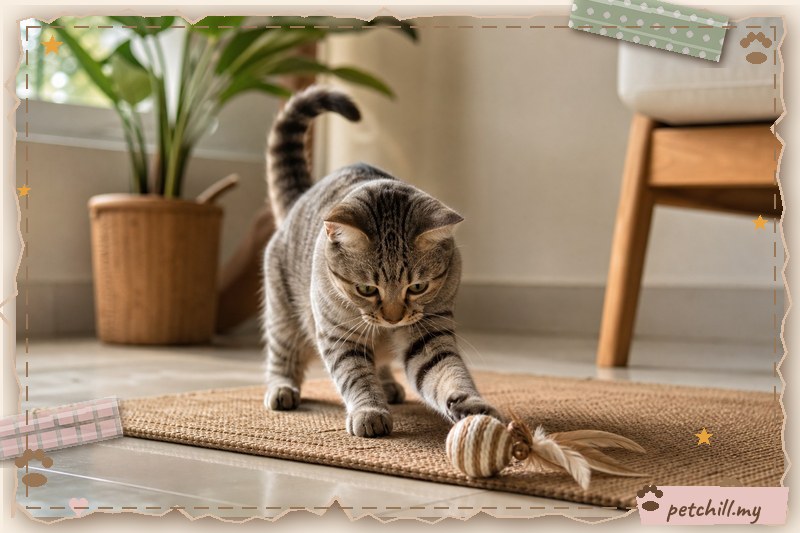
- Wand toys for chasing and pouncing. Move the toy away from the kitten, not towards it, and let the kitten catch it regularly so the hunt feels successful.
- Kick toys such as long fabric or plush toys the kitten can grab and bunny-kick. These are ideal for kittens that grab arms.
- Puzzle feeders and scatter feeding to use up mental energy and slow eating.
- Safe chew toys for teething kittens. Avoid small parts that can be swallowed, and check toys for loose eyes or stuffing.
- Cat trees, shelves and window perches so the kitten can climb and watch the outside world.
- A predictable routine with play before meals and quiet time afterwards.
In a Kuala Lumpur apartment, space is often limited, so vertical space matters more than floor space. A tall cat tree near a window and a few shelves can turn a small flat into a rich environment. In a Johor terrace house, a secure window screen or enclosed patio lets a kitten watch birds and lizards safely without roaming. In Penang, the rainy season can keep kittens indoors for days, so keep a box of rotating toys and schedule extra play sessions when outdoor time is not possible.
What not to do
Some old-fashioned advice makes biting worse. Avoid these:
- Do not tap, flick or scruff. Punishment can increase fear, defensive biting and hand-shyness.
- Do not shout or spray water. These may stop the moment but damage trust.
- Do not hold the mouth shut. It can cause injury and teaches nothing about bite inhibition.
- Do not roughhouse with hands. It is confusing for a kitten that is also expected not to bite hands.
- Do not isolate the kitten for long periods. Short time-outs are fine; long isolation causes distress.
Biting during teething
Between roughly three and six months, a kitten's mouth is changing. Baby teeth fall out and adult teeth push through, and gums can be sore. Mouthing, chewing and nipping often increase. Offer safe chew toys, including toys that can be chilled in the fridge, and avoid fingers. Soft food or slightly softened kibble may help if the kitten seems uncomfortable, but ask your vet before changing diet. If teething is severe, or if the kitten stops eating or drools heavily, book a dental check.
Biting in multi-cat and multi-pet homes
Kittens learn bite inhibition best from other cats. If you have a tolerant adult cat, supervised play can teach a kitten quickly, because adult cats give clear feedback. Make sure the adult has escape routes and high places, and separate them if the kitten is relentless. With dogs, supervise all interactions and teach the dog to leave the kitten alone. Never let a dog and kitten "sort it out".
If you are introducing a new kitten, keep initial meetings short and positive, and use gates or carriers so no one is cornered. Biting between kittens is normal play, but watch for bullying: one kitten always on the bottom, hiding, or avoiding the other.
When biting is a health or behaviour red flag
Most play biting improves with consistent redirection. Some signs need professional help.
See a vet if:
- A usually gentle kitten becomes suddenly aggressive or bites hard without warning.
- Biting is accompanied by limping, drooling, bad breath, appetite loss, vomiting, diarrhoea, fever, hiding or lethargy.
- The kitten bites only when a specific body area is touched.
- The kitten is not eating or is losing weight.
- There is any wound, swelling or discharge.
Ask a qualified behaviourist if:
- Biting is severe, frequent and not improving after several weeks of consistent training.
- The kitten shows fear, hissing or swatting when approached.
- There are children or vulnerable adults in the home and safety is a concern.
- You are unsure whether the behaviour is play or aggression.
When to see a vet
Book a vet visit if biting starts suddenly, becomes unusually hard, or comes with any sign of pain or illness such as limping, drooling, appetite loss, fever, hiding or a change in litter habits. Sudden behaviour change in a kitten is often medical until proven otherwise. Dental pain, ear problems, abscesses and injuries can all make a kitten bite defensively. A vet can rule out physical causes and advise on behaviour. If biting is severe or there are children at home, ask for a referral to a qualified behaviourist rather than relying on internet advice alone.
A simple daily routine
A predictable routine reduces biting because it meets the kitten's needs before frustration builds.
| Time | Activity |
|---|---|
| Morning | Short wand play, then breakfast |
| Midday | Puzzle feeder or scatter feed, quiet rest |
| Evening | Longer wand play, then dinner |
| Before bed | Grooming and calm cuddle, no rough play |
Keep play sessions short and end them while the kitten is still interested. A tired, fed kitten is far less likely to ambush ankles.
Final thoughts
Kitten play biting is a normal stage, not a character flaw. The fix is consistent: no hands as toys, calm interruption, immediate redirection to appropriate toys, and enough daily play. Most kittens improve within weeks when the whole household follows the same rules. If biting changes suddenly or comes with signs of illness, see a vet. For general pet care guidance in Malaysia, the Department of Veterinary Services and SPCA Selangor are useful starting points.
This article is general information only and is not a substitute for veterinary advice. Always consult a licensed veterinarian for diagnosis and treatment of your kitten.
Related reading
- Kitten Care Guide Malaysia: 0–12 Month Feeding, Vaccination, Deworming & Growth Timeline
- Kitten Sleep Needs: A Complete Guide for Malaysian Owners
- Kitten Socialization in Malaysia: A Practical Guide for Raising a Confident Cat
- Kitten Development for Cat Owners: A Complete Malaysian Guide
- Kitten Diarrhea: A Practical Guide for Malaysian Cat Owners
- Kitten Feeding Amounts in Malaysia: How Much to Feed a Kitten at Every Stage
- Kitten Sleep Needs in Kittens Malaysia: How Much Sleep Do Kittens Need?
- Kitten Socialization for Kittens: A Complete Malaysian Guide
- Kitten Socialisation in Malaysia: The 3-Week to 3-Month Golden Period, Week by Week
- Kitten Vaccine Schedule for Kittens: A Complete Guide for Malaysian Owners



