
The short answer
Kitten deworming is not a one-off task. It is a short, repeated schedule that starts when the kitten is very young and continues through the first six months. The core plan is simple: begin at about 2–3 weeks of age, repeat every two weeks until 12 weeks, then monthly until 6 months. Use a kitten-safe product, weigh the kitten accurately, and pair treatment with clean litter habits and handwashing.
This guide explains why that schedule exists, which worms matter most, how to give medication without stress, and what to do in a Malaysian home where kittens may be rescued, rehomed, or living in a multi-cat household.
Why kittens need deworming so early
Kittens are not small adults. Their immune systems are still developing, their body weight is tiny, and their exposure to parasites can begin before they are born.
The most important worm in kittens is the roundworm. Kittens can pick up roundworm larvae through the placenta before birth, and through the mother's milk while nursing. That means a kitten can already have worms in the first weeks of life, even if the mother looks healthy and has no visible signs.
Hookworms are another concern. They can be passed through milk and can also penetrate the skin. In young kittens, hookworm burdens can cause anaemia, weakness and poor growth. Tapeworms usually require a flea intermediate host, so flea control and tapeworm treatment go hand in hand.
Because these infections can start so early, waiting until a kitten is older is not a neutral choice. Early, repeated deworming reduces the worm burden at a stage when the kitten can least afford to lose nutrients or blood.
The kitten deworming schedule at a glance
The exact product and timing should be confirmed with a veterinarian, but the general framework below is widely used for kittens.
| Age | Typical action | Why it matters |
|---|---|---|
| 2–3 weeks | First deworming, if product is licensed for this age and weight | Roundworms can be present from birth or milk |
| Every 2 weeks until 12 weeks | Repeat treatment | Breaks the parasite life cycle during rapid growth |
| 12 weeks to 6 months | Monthly deworming | Continued exposure and developing immunity |
| 6 months onward | Adult schedule, often every 1–3 months | Based on lifestyle, outdoor access and flea risk |
| Throughout | Flea control and hygiene | Prevents tapeworms and reinfection |
This table is a general guide, not a prescription. Products differ in age and weight limits. A kitten that weighs less than the product's minimum should not be dosed without veterinary advice.
Which worms should you worry about?
Roundworms
Roundworms are the classic kitten parasite. They are long, pale and spaghetti-like, and they can sometimes be seen in stool or vomit. Kittens with roundworms may have a pot-bellied appearance, a dull coat, poor growth or diarrhoea. Many infected kittens show no obvious signs at all.
Hookworms
Hookworms attach to the intestinal wall and feed on blood. In small kittens, even a modest burden can cause anaemia, pale gums, weakness and dark, tarry stool. Hookworm larvae can also penetrate skin, so damp, contaminated environments matter.
Tapeworms
Tapeworms are usually acquired when a cat eats an infected flea or raw prey. You may see rice-like segments around the anus or in stool. Tapeworm treatment is important, but flea control is the real long-term solution.
Other parasites
Giardia and coccidia are not worms, but they are common causes of diarrhoea in kittens and are often discussed alongside deworming. They require specific testing and treatment, so persistent diarrhoea should be investigated rather than treated blindly with dewormers.
Choosing a dewormer for a kitten
There is no single best dewormer for every kitten. The right choice depends on age, weight, the parasites likely to be present, and whether the kitten is pregnant, nursing or unwell.
In general, look for a product that is explicitly labelled for kittens and that states the minimum age and weight. Common active ingredients used in kitten deworming include pyrantel, fenbendazole, praziquantel and selamectin, but they are not interchangeable. Some are effective against roundworms and hookworms; others also cover tapeworms. Some are given orally, others as a spot-on.
A few practical rules:
- Never guess the dose. Weigh the kitten on a kitchen scale and dose by current weight.
- Do not split adult tablets unless your vet has calculated the dose for you.
- Avoid dog dewormers. Some contain ingredients that are toxic to cats.
- Tell your vet if the kitten has diarrhoea, vomiting or is not eating, because the treatment plan may change.
- Keep a simple record of dates and products so you do not double-dose or miss a repeat.
If you are unsure, bring the kitten and the product packaging to a veterinary clinic. A vet can confirm the weight, check for dehydration or anaemia, and choose an appropriate product.
How to give deworming medication
Giving a tablet to a kitten can feel daunting, especially if the kitten is small and wriggly. A few techniques make it easier.
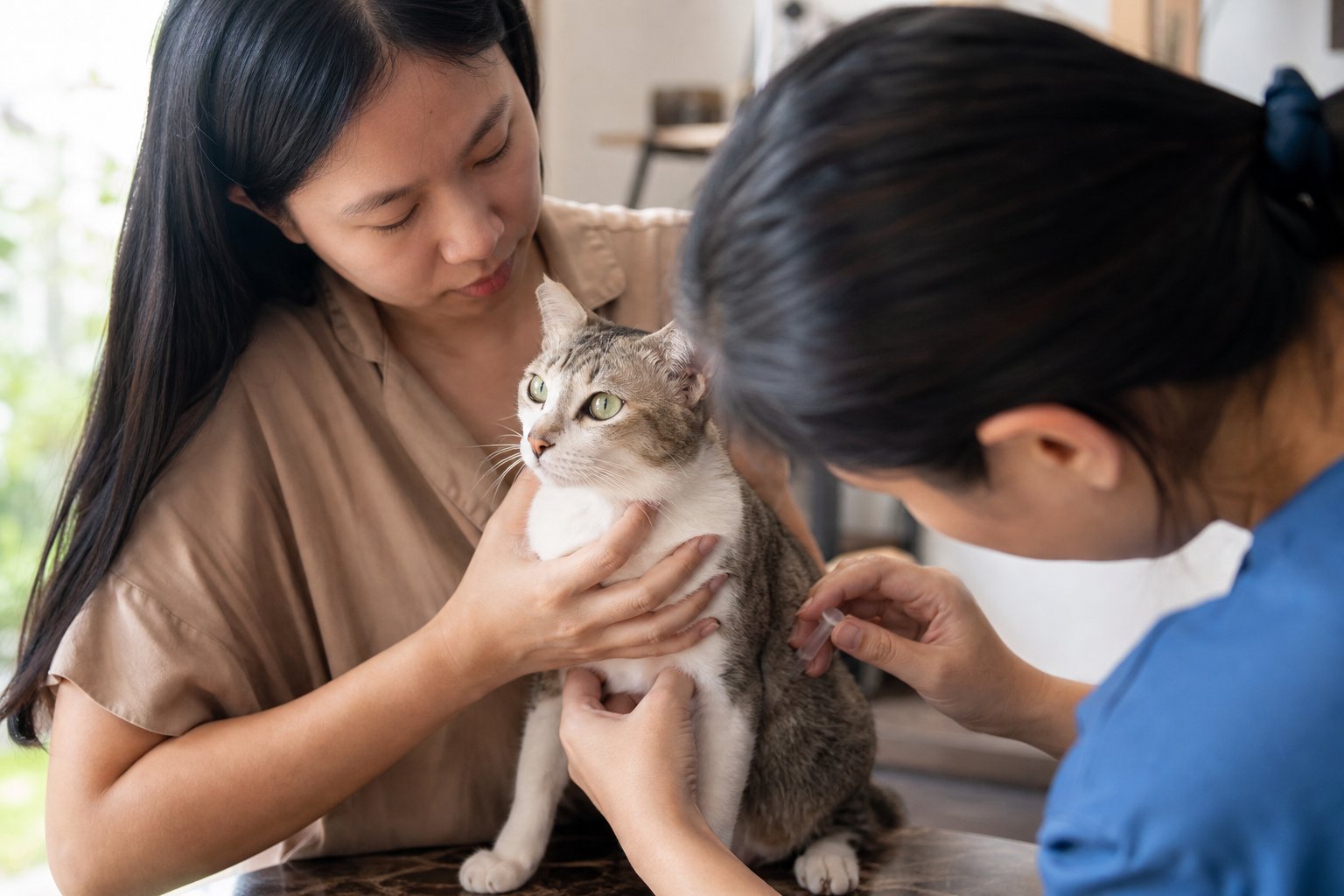
For tablets, place the kitten on a stable surface and gently hold the head. Place the tablet at the back of the tongue and close the mouth, then stroke the throat or offer a small amount of food. Some tablets can be crushed and mixed with a tiny amount of wet food, but only if the product allows it. Do not mix medication into a full meal, because you cannot tell how much was eaten.
For liquid dewormers, use the syringe provided and aim toward the side of the mouth, giving small amounts at a time. For spot-on products, part the fur at the back of the neck and apply directly to the skin, not the fur.
After treatment, watch the kitten for a short while. Mild drooling or a small amount of vomiting can happen, but persistent vomiting, weakness or wobbliness needs veterinary attention.
Hygiene and reinfection control
Deworming kills the worms inside the kitten, but it does not sterilise the environment. Reinfection is common if litter hygiene and flea control are neglected.
Key steps:
- Scoop litter at least daily and change it regularly.
- Wash hands after handling litter, soil or kittens, especially before eating.
- Clean food and water bowls daily.
- Treat the mother cat at the same time as the kittens, following veterinary advice.
- Control fleas on all cats and in the home, because fleas carry tapeworms.
- Wash bedding and clean carriers between litters.
Roundworm eggs can survive in the environment, and children are particularly at risk if they play in contaminated soil or sand. In Malaysian homes with gardens, sandpits or potted plants, covering sandpits and discouraging cats from using play areas is a sensible precaution.
Deworming in Malaysian homes and multi-cat settings
Malaysia's warm, humid climate supports parasite survival outdoors, and many kittens are rescued from streets, drains, markets or construction sites. Those kittens should be assumed to have worms until proven otherwise.
In a Kuala Lumpur apartment, a rescued kitten may be kept indoors, but it can still carry roundworms from its mother. Indoor status does not remove the need for early deworming. In a Johor terrace house with a garden, kittens may have access to soil and outdoor areas, which raises the risk of hookworm exposure and flea contact. In either setting, the schedule stays the same, but environmental control becomes more important where there is outdoor access.
Multi-cat households need a coordinated plan. If one kitten is treated but the mother or other cats are not, reinfection is likely. Ask your vet about treating the whole group, and keep a shared record of dates.

When to see a vet
Deworming is routine, but some situations need professional assessment.
See a vet promptly if a kitten:
- Is very young, very small or underweight
- Has bloody or black stool
- Has pale gums, weakness or collapse
- Is vomiting repeatedly or refusing food
- Has a swollen abdomen and is not gaining weight
- Has visible worms in vomit or stool despite treatment
- Has diarrhoea that lasts more than a day or two
- Has a known or suspected exposure to a toxic product
Young kittens can deteriorate quickly. If you are unsure, a phone call to a veterinary clinic is better than waiting.
Common mistakes to avoid
- Treating once and assuming the job is done. Kittens need repeated treatment.
- Using a product without checking the minimum age and weight.
- Sharing medication between kittens without weighing each one.
- Forgetting flea control, which allows tapeworms to return.
- Skipping the mother cat in a litter situation.
- Ignoring diarrhoea and assuming it is just worms.
A simple checklist for new kitten owners
- Weigh the kitten and record the weight.
- Confirm a deworming product and schedule with a vet.
- Mark the next two or three treatment dates on a calendar.
- Set up daily litter scooping and handwashing habits.
- Start flea control as advised.
- Book a check-up if the kitten has diarrhoea, poor growth or pale gums.
Final thoughts
Kitten deworming is one of the most effective routine care tasks you can do. It is not complicated, but it does require consistency, accurate weighing and a product suited to the kitten's age. Combined with clean litter habits and flea control, a simple deworming schedule gives a kitten the best start in its first six months.
This article is general information and not a substitute for veterinary advice. Always consult a licensed veterinarian for diagnosis and treatment of your kitten.
Related reading
- Kitten Care Guide Malaysia: 0–12 Month Feeding, Vaccination, Deworming & Growth Timeline
- Kitten Development for Cats in Malaysia: A Stage-by-Stage Guide
- Kitten Diarrhea: A Practical Guide for Malaysian Cat Owners
- Kitten Flea Treatment: A Complete Guide for Malaysian Owners
- Kitten Fleas in Malaysia: Safe Treatment for Tiny Cats
- Kitten Teething for Kittens: A Complete Guide for Malaysian Owners
- Kitten Vaccination for Cat Owners: A Complete Malaysian Guide
- Nursing Cat Nutrition for Cat Owners: A Complete Malaysian Guide
- Cat Birth for Cat Owners: A Complete Guide to Labour, Delivery and Newborn Kittens
- Kitten Development for Cat Owners: A Complete Malaysian Guide



