
The short answer
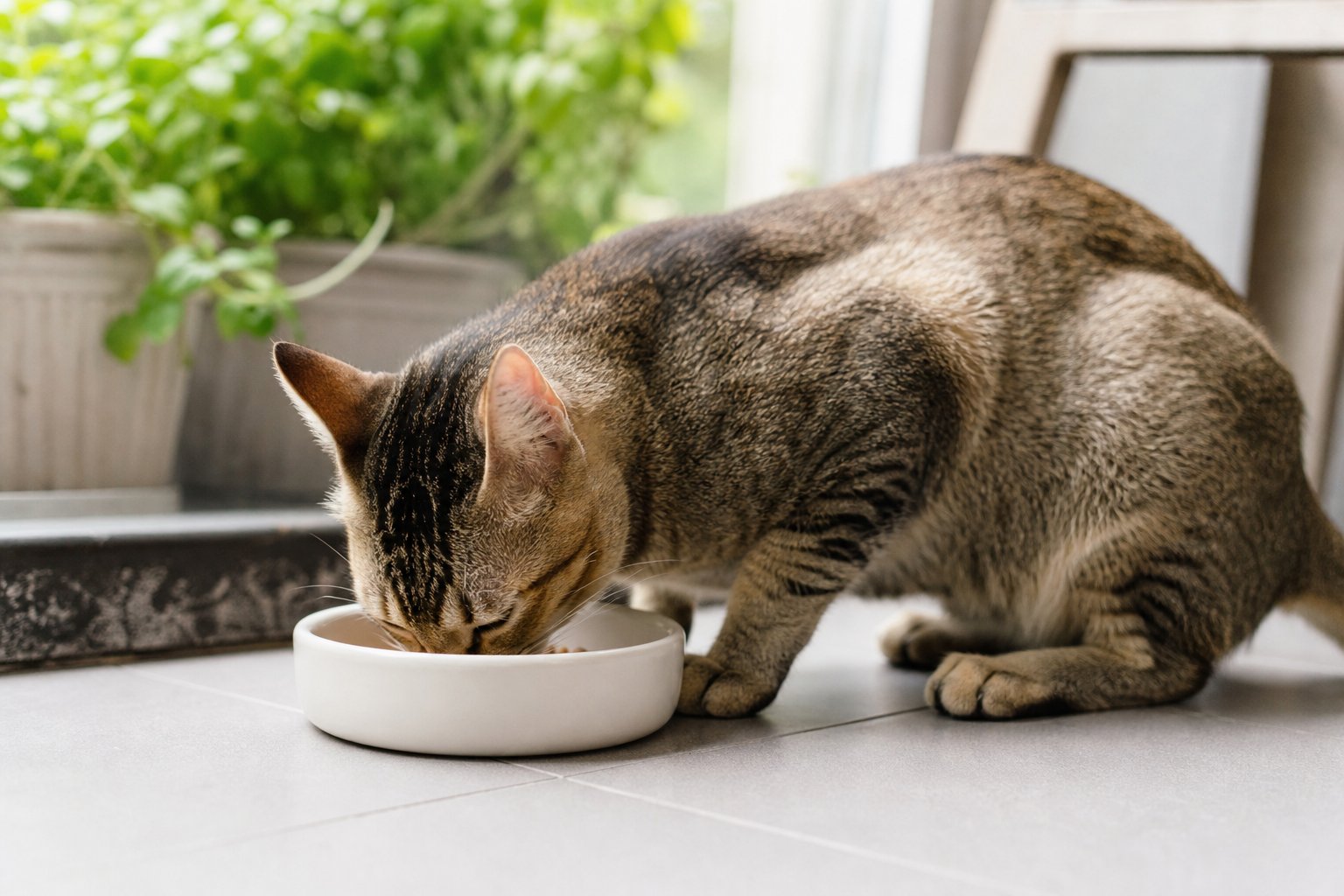
Switch a kitten's food slowly, over roughly 7 to 10 days, by blending a small amount of the new food into the old and increasing the new share every two to three days. Kittens have small, sensitive digestive systems, so a gradual change protects them from diarrhoea, vomiting and stubborn food refusal.
This guide explains the full process for Malaysian homes: when a switch is actually needed, how to mix the food, how wet and dry options compare, how to handle a fussy kitten, and the warning signs that mean a vet visit rather than another scoop of kibble.
Why a gradual transition matters for kittens
A kitten's gut is still developing. The community of bacteria in the digestive tract, along with the enzymes that break down fat, protein and carbohydrate, adjusts to whatever the kitten eats regularly. A sudden new food gives that system no time to adapt, and the result is often soft stool, gas, vomiting or a kitten that simply walks away from the bowl.
There is a second reason: kittens form food preferences early. Repeated exposure to a texture and smell builds acceptance. That is why a patient transition is not just about digestion, it is also about teaching your kitten that the new food is normal and safe.
Finally, kittens have high energy needs relative to their body size. A kitten that refuses food for a day or two loses condition quickly. Slow transitions keep intake steady while the diet changes.
When does a kitten actually need a food change?
Not every situation calls for a new diet. Here is a practical breakdown.
| Situation | Is a change needed? | Notes |
|---|---|---|
| Moving from breeder or rescue food to your chosen brand | Yes | Do it over 7 to 10 days |
| Weaning from mother's milk to solid food | Yes | Usually weeks 4 to 8, guided by the mother's milk supply |
| Moving from kitten formula to kitten food | Yes | Gradual, texture by texture |
| Switching from kitten to adult food | Yes, but later | Typically around 10 to 12 months, vet-confirmed |
| Changing flavour within the same complete kitten range | Usually mild | Still mix over 3 to 5 days |
| Switching to a vet-prescribed therapeutic diet | Yes, as directed | Follow your vet's timeline, which may be faster |
| Kitten is bored of the food | Not necessarily | Try warming wet food or a topper before a full switch |
| Kitten has diarrhoea | No, not by yourself | See a vet first |
If you are unsure which category you are in, the safest default is a slow mix and a call to your vet.
The 7 to 10 day mixing plan
The classic ratio method works well for most kittens. Use the same measuring cup or spoon each time so the proportions stay consistent.
| Day | Old food | New food |
|---|---|---|
| 1 to 2 | 75% | 25% |
| 3 to 4 | 50% | 50% |
| 5 to 6 | 25% | 75% |
| 7 to 10 | 0% | 100% |
Practical tips for making this work:
- Mix thoroughly rather than layering, so the kitten cannot pick out only the familiar pieces.
- For wet food, stir the two foods together in the bowl just before serving.
- For dry food, mix in a container and shake gently, or mix per meal if your kitten eats small portions.
- Keep meal times and portion sizes the same during the transition. Only the food changes.
- If stools soften, hold at the current ratio for an extra two to three days before increasing again.
- If a kitten is very small or underweight, stretch the plan to 14 days.
A simple rule: progress is earned by firm stools and a clean bowl, not by the calendar.

Wet food, dry food and mixing both
Malaysian owners often ask whether wet or dry food is better for a kitten. The honest answer is that both can be complete and balanced, and the choice depends on your routine, budget and the kitten's preferences.
Wet food is useful in a hot, humid climate because it adds water to the diet, and kittens are not always keen drinkers. It is also easier to mix and easier to warm slightly to release aroma, which helps fussy eaters. The trade-off is cost, storage and faster spoilage once opened.
Dry food is convenient, stays fresh longer in a sealed container, and gives the teeth something to crunch. However, dry food alone does not guarantee good hydration, so always provide fresh water in more than one spot.
Many households feed a combination: wet food at set meals and a measured portion of dry food for free feeding. If you do this, calculate the total daily calories from both sources rather than treating them as separate diets. Overfeeding is a common mistake when owners add wet food on top of an unchanged dry ration.
Whichever you choose, the label should state that the food is complete and balanced for growth, or for kittens. Treats and toppers should stay a small fraction of the daily intake.
Feeding schedules that fit Malaysian homes
Kittens under about six months do best with three to four small meals a day. From six months, two to three meals is usually enough. Free feeding dry food can work for some kittens but makes portion control harder, especially in multi-cat homes.
A workable routine for a Kuala Lumpur apartment where the owner is out during the day:
- Early morning: wet food meal, measured.
- Midday: a small measured portion of dry food, or a timed feeder portion.
- Evening: wet food meal.
- Before bed: a small dry portion if your vet recommends it for your kitten's age.
In a Johor terrace house with more space and family members at home at different times, meals can be split among people, but write the plan on the fridge so nobody double-feeds. In a Penang rainy season, when kittens may be indoors more and less active, watch portions so weight does not creep up.
Always place food away from the litter tray, and in a quiet spot where the kitten is not competing with older cats. In multi-cat homes, feed separately so the kitten is not chased off its bowl.
Weaning: the first transition of all
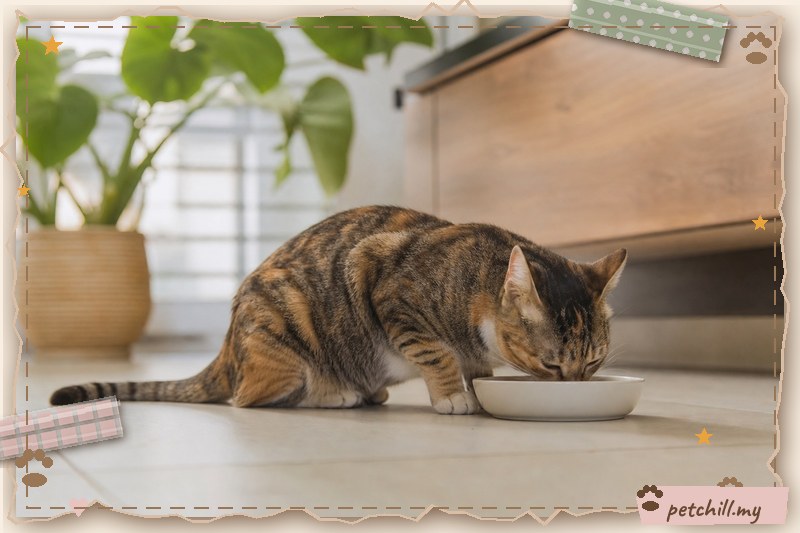
If you are hand-rearing or the mother cat is not producing enough milk, the first food transition is from milk to solids. The usual approach is to offer kitten milk replacer mixed with a small amount of kitten food to form a gruel, then gradually reduce the liquid and increase the solid texture over a couple of weeks.
Key points:
- Never give cow's milk, which many cats cannot digest well.
- Use a shallow dish so the kitten can lap without dunking its nose.
- Expect mess. Weaning is a learning process.
- Keep the kitten warm and monitor weight; a kitchen scale used weekly is a simple tool.
- If a kitten is not gaining weight or is persistently loose, speak to a vet.
By around eight weeks, most kittens are eating solid kitten food reliably.
When your kitten refuses the new food
Refusal is common and usually not an emergency if it lasts less than a day. Try these steps in order:
- Reduce the proportion of new food and hold at a level the kitten accepts.
- Warm wet food slightly to body temperature to boost aroma.
- Add a small amount of the old food as a topper.
- Offer the new food at the hungriest meal of the day.
- Avoid free feeding dry food all day, which reduces hunger at meal times.
- Keep the bowl clean and use a shallow, wide dish so whiskers are not pressed.
Do not add human seasonings, garlic, onion, or random supplements. Some human foods are toxic to cats, and unnecessary supplements can unbalance a complete diet.
If a kitten refuses all food for more than 24 hours, or shows lethargy, vomiting or diarrhoea, stop experimenting and contact a vet. Kittens can become weak quickly.
Common mistakes to avoid
- Switching brands and protein source at the same time. Change one variable at a time.
- Free feeding unlimited dry food while also adding wet meals.
- Assuming a kitten will self-regulate. Some will overeat.
- Using treats as a substitute for meals during a transition.
- Changing food because of a single soft stool, then changing again a day later. Repeated abrupt switches are worse than a steady plan.
- Ignoring water intake. Offer fresh water in ceramic or stainless steel bowls and refresh it daily.
- Storing dry food in hot, humid conditions. Keep it sealed, cool and dry, and check the expiry date.
When to see a vet
Contact a veterinarian promptly if your kitten shows any of the following during or after a food change:
- Diarrhoea lasting more than 24 hours, or any diarrhoea with blood or mucus.
- Repeated vomiting, or vomiting with lethargy.
- Complete refusal to eat for more than 24 hours.
- Visible weight loss, or a kitten that feels bony along the spine and ribs.
- Sunken eyes, tacky gums, or reduced urination, which can suggest dehydration.
- Swelling of the face, hives, or difficulty breathing after a new food, which may indicate an allergic reaction.
- Persistent scratching, ear problems or skin issues that appear alongside a diet change.
Bring the food labels, or photos of them, to the appointment. Your vet can assess body condition, rule out parasites or infection, and advise whether a therapeutic diet is appropriate.
A quick checklist before you switch
- Confirm the new food is complete for kittens or growth.
- Buy enough of the current food to last the full transition.
- Write the mixing ratios on a calendar.
- Weigh your kitten at the start and once a week.
- Note stool quality daily for the first two weeks.
- Keep fresh water available at all times.
- Have your vet's contact number saved.
Local context and where to get reliable advice
Malaysian pet owners have access to official guidance through the Department of Veterinary Services, and animal welfare organisations such as SPCA Malaysia provide general pet care information. For travel and identification questions, the animal passport portal is a useful reference. None of these replace a hands-on examination, so build a relationship with a local clinic you trust.
Prices for kitten food vary widely by brand, pack size and retailer, so compare locally rather than relying on overseas figures. Ask your Malaysian vet or pet retailer for a recommendation suited to your kitten's age and body condition.
Final word
A kitten food transition is a simple process done patiently: mix, increase, observe, and hold steady if the stomach objects. Most kittens handle a 7 to 10 day change without drama, and the ones who struggle usually just need more time. Watch the stool, watch the weight, and let your kitten set the pace within reason.
Disclaimer: This article provides general information only and is not a substitute for veterinary advice. Always consult a licensed veterinarian about your kitten's diet, health and growth.
Related reading
- Kitten Care Guide Malaysia: 0–12 Month Feeding, Vaccination, Deworming & Growth Timeline
- Kitten Feeding Amounts: A Complete Guide for Malaysian Owners
- Kitten Food Transition for Kittens: A Complete Malaysian Guide
- Kitten Feeding Amounts in Malaysia: How Much to Feed a Kitten at Every Stage
- Kitten First Year Checklist in Malaysia: Supplies, Vet Schedule and Monthly Milestones
- Kitten Flea Treatment in Kittens Malaysia: Safe Options by Age
- Kitten Litter Box Training: A Complete Guide for Malaysian Owners
- Kitten Sleep Needs in Kittens Malaysia: How Much Sleep Do Kittens Need?
- Kitten Teething in Malaysia: A Complete Guide to Your Kitten's Baby Teeth



