
Quick answer
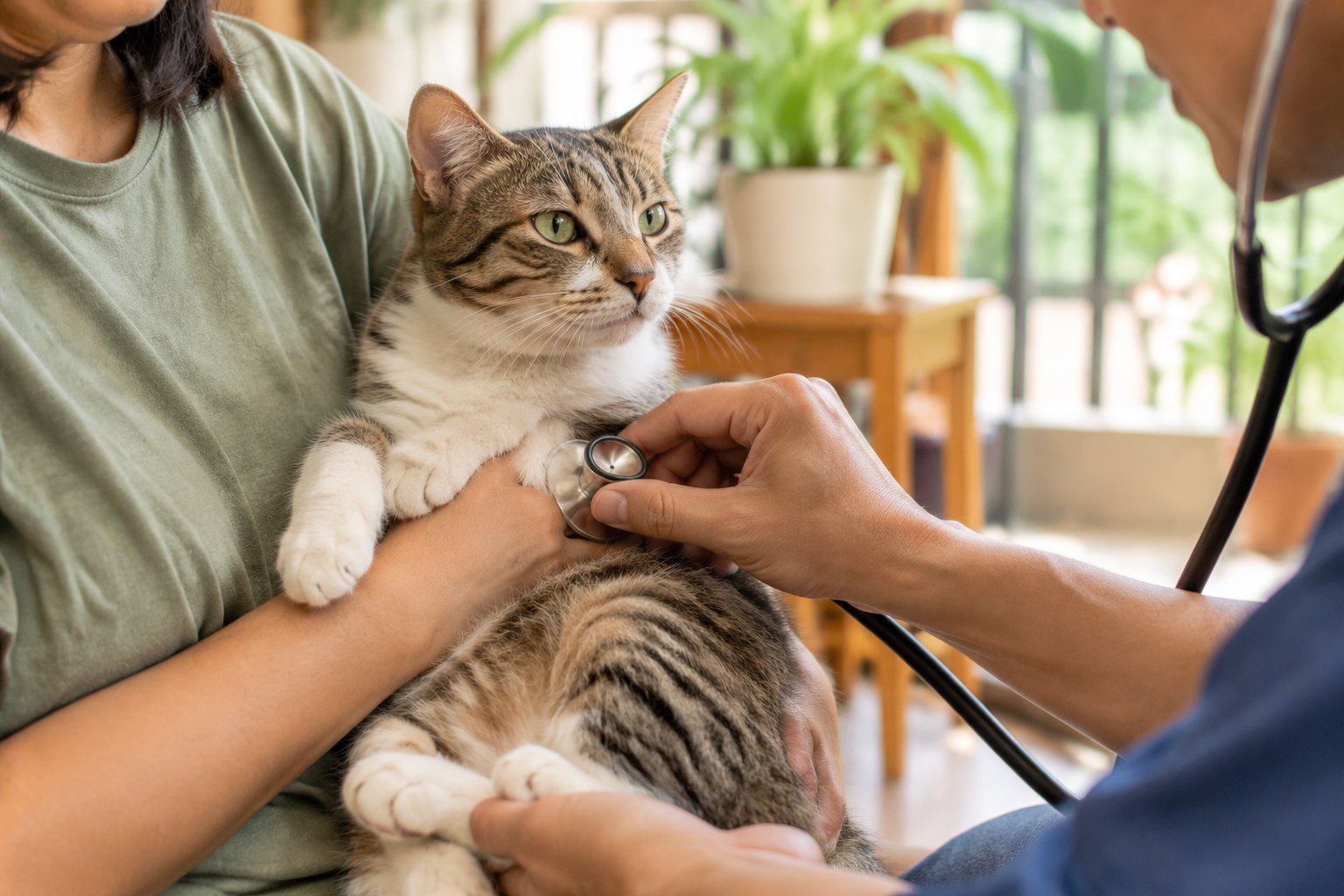
Feed a nursing cat unlimited kitten food and fresh water. She needs two to four times her normal calories, high protein and fat, and constant hydration. Offer small meals often, keep food fresh in Malaysia's heat, and see a vet if she loses weight, stops eating, or her milk seems low.
Why nursing nutrition is different
A mother cat, called a queen, is doing one of the most energy-demanding things a cat can do. She is producing milk for a litter that may double its weight in the first week. That milk is rich in protein, fat and water, and every drop comes from her own body reserves and her diet.
If her food does not match her output, she will lose weight, her coat will dull, and her milk supply may fall. In Malaysia's warm climate, she also loses water through panting and evaporation, so hydration matters even more.
The goal is simple: give her as much good-quality food as she wants, keep her water fresh, and watch her body condition daily.
Energy needs through lactation
A nursing cat's energy needs rise steeply after birth. In the first week, she may need about 1.5 times her normal calories. By the third to fifth week, when the kittens are growing fastest, she may need two to four times her pre-pregnancy intake. The exact amount depends on litter size, the kittens' growth rate, and the ambient temperature.
| Stage | Approximate energy need | Feeding approach |
|---|---|---|
| Late pregnancy | 1.2–1.5× normal | Switch to kitten food, feed small meals |
| Week 1 of lactation | 1.5–2× normal | Unlimited food, 4–6 small meals |
| Weeks 2–4 | 2–3× normal | Unlimited food, free access |
| Weeks 4–6 (peak) | 3–4× normal | Unlimited food, add wet food |
| After weaning | Back to adult | Gradually reduce over 1–2 weeks |
These are general guides, not prescriptions. A cat with one kitten needs less than a cat with six. A cat with a large litter may need more than four times her normal intake. The best measure is her body condition: you should be able to feel her ribs easily but not see them sharply, and she should not look bony.
What to feed: protein, fat and nutrients
Protein
Milk is protein-rich. A nursing cat needs a diet with high-quality animal protein. Look for a complete kitten or growth formula where protein is at least 30–35% on a dry matter basis, and ideally higher. Named meat sources such as chicken, turkey, fish or egg are good signs.
Fat
Fat provides concentrated energy, which is exactly what a nursing cat needs when her stomach is compressed by kittens or she simply cannot eat enough volume. Kitten foods are usually higher in fat than adult foods. Do not add extra oil unless your vet advises it; too much fat can cause digestive upset.
Calcium and phosphorus
Milk production draws calcium from the queen's body. A complete kitten food has the right calcium-to-phosphorus ratio. Do not supplement calcium without veterinary advice, because excess calcium can cause problems. If the queen is fed a home-cooked diet, ask your vet for a recipe that is complete and balanced.
Water
Water is the most overlooked nutrient. A nursing cat may drink more than usual, but many cats do not drink enough. Offer wet food daily, provide several water bowls around the house, and consider a pet fountain. In Malaysia's heat, change the water at least twice a day so it stays cool and fresh.
Feeding schedule and practical tips
- Start kitten food before birth. Switch gradually in the last third of pregnancy so her gut adjusts.
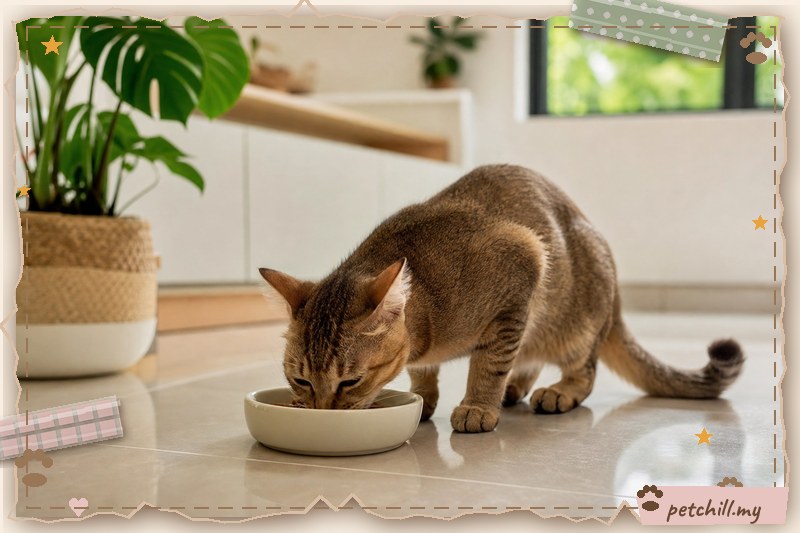
- Feed small meals often. A nursing cat may eat 4–6 small meals a day. Free-feeding dry food works for many cats, but wet food should be offered at set times and removed after 20–30 minutes.
- Keep food fresh. In Malaysia's humidity, wet food spoils quickly. Do not leave it out for more than half an hour. Wash bowls daily.
- Offer food near the nest. She may not want to leave her kittens for long. Place a bowl within sight of the nesting box.
- Warm the food slightly. A little warmth can increase aroma and encourage eating, but do not make it hot.
- Track her weight. Weigh her weekly if possible. A sudden drop is a red flag.
Hydration in Malaysia's climate
Malaysia's heat and humidity increase water loss. A nursing cat in a Kuala Lumpur apartment with air-conditioning may drink less than one in a naturally ventilated Johor terrace house, but both need constant access to water. Signs of dehydration include tacky gums, skin that stays tented when gently pinched, and lethargy. If you see these, offer water and see a vet.
Wet food is a powerful hydration tool. Even a few spoonfuls of wet kitten food mixed with warm water can help. Never restrict water to reduce milk supply; that is dangerous.
Body condition and weight checks
A nursing cat should not become thin. Some weight loss after birth is normal because she has lost the weight of the kittens, placenta and fluids. But continued loss is not normal. Check her body condition score weekly. You want to feel her ribs under a thin layer of fat, see a slight waist from above, and feel her spine without sharpness.
If she is losing weight despite unlimited food, she may need a more energy-dense diet, more wet food, or a vet check for underlying problems such as mastitis or metritis.
Common mistakes to avoid
- Feeding only adult maintenance food. It is usually not dense enough. Choose kitten food.
- Restricting food to prevent weight gain. Lactation is not the time to diet. Let her eat.
- Giving cow's milk. It can cause diarrhoea and does not replace a balanced diet.
- Leaving wet food out all day. In Malaysia's heat, bacteria multiply fast. Remove leftovers.
- Skipping water changes. Fresh water encourages drinking.
- Ignoring weight loss. It is a sign something is wrong.
- Supplementing calcium without advice. It can do more harm than good.
Home-cooked and raw diets
Some owners prefer home-cooked or raw diets. If you choose this path, work with a vet or a qualified pet nutritionist to ensure the diet is complete and balanced for lactation. Nursing cats have high demands, and deficiencies can affect both mother and kittens. Raw diets carry bacterial risks, especially in a household with kittens. If you feed raw, follow strict hygiene: separate boards, fridge storage, and immediate bowl removal.
When to see a vet
See a vet promptly if your nursing cat:
- Refuses food for more than 24 hours
- Loses weight rapidly or looks bony
- Has a fever, foul-smelling discharge, or painful, hot, swollen mammary glands (possible mastitis)
- Seems weak, wobbly, or has muscle tremors (possible eclampsia or low calcium)
- Has diarrhoea or vomiting that lasts more than a day
- Produces very little milk or the kittens cry constantly and fail to gain weight
- Has not eaten the placenta and has a dark discharge (possible retained placenta)
Eclampsia is an emergency. Signs include restlessness, panting, muscle twitching, and seizures. If you see these, go to a vet immediately.
Frequently asked questions
How many calories does a nursing cat need per day? A nursing cat may need two to four times her pre-pregnancy calories, depending on litter size and stage of lactation. Peak demand is usually around weeks three to five. Feed unlimited kitten food and let her eat freely.
Can I feed a nursing cat regular adult cat food? Adult maintenance food is usually not energy-dense enough for lactation. Choose a complete kitten or growth formula, which has more protein, fat and minerals. If she refuses kitten food, ask your vet about a high-energy adult food.
Does a nursing cat need extra water? Yes. Milk production uses a lot of water. Provide fresh water at all times, consider a water fountain, and offer wet food daily. In Malaysia's heat, dehydration can happen quickly, so check her water bowl often.
What should I do if my nursing cat stops eating? Stopping eating is an emergency for a nursing cat. She can develop fatty liver and her milk supply can drop within a day or two. See a vet immediately if she refuses food for more than 24 hours.
Can I give cow's milk to a nursing cat? No. Cow's milk is not a suitable substitute and many cats are lactose intolerant. It can cause diarrhoea. Offer fresh water and a complete kitten formula instead; never feed cow's milk as a milk replacer.
How long should a mother cat eat kitten food? Continue unlimited kitten food until the kittens are fully weaned, usually around six to eight weeks, and for about two weeks after weaning. Then gradually transition back to adult food unless your vet advises otherwise.
Vet disclaimer
This article is for general information only and is not a substitute for veterinary advice. Every cat is different. Always consult a licensed veterinarian in Malaysia for diagnosis and treatment, especially if your nursing cat shows signs of illness.
Related reading
- Kitten Care Guide Malaysia: 0–12 Month Feeding, Vaccination, Deworming & Growth Timeline
- Kitten Weaning for Cat Owners: A Complete Guide (Malaysia)
- Kitten Weaning for Cats in Malaysia: A Complete Step-by-Step Guide
- Kitten Development for Cat Owners: A Complete Malaysian Guide
- Kitten Diarrhea: A Practical Guide for Malaysian Cat Owners
- Kitten Feeding Amounts in Malaysia: How Much to Feed a Kitten at Every Stage
- Kitten First Vet Visit: A Complete Guide for Malaysian Owners
- Kitten Play Biting in Kittens Malaysia: Why It Happens and How to Stop It
- Kitten Sleep Needs: A Complete Guide for Malaysian Owners
- Kitten Socialization for Kittens: A Complete Malaysian Guide
- Kitten Socialization in Malaysia: A Practical Guide for Raising a Confident Cat



